Building for Scale

This year’s pandemic has moved a lot of business to the digital world. We see that with increased ecommerce from many companies, including lots of local business, like restaurants, that have embraced online ordering, pickup, and delivery. In many cases, the companies providing these services were able to scale and meet the additional load, which arguably wasn’t that high for any individual organization.

However, some services aren’t able to handle the loads, especially government services. Recently the Florida voting registration website crashed under a larger than expected load. We’ve seen unemployment sites crash in the US, the contact tracking website in the UK, and plenty more.

I can understand the challenges of government sites, many of which were built on older technology and rarely upgraded with budget restrictions. Investing in new technology is not only expensive, but it can be a huge challenge to ensure systems work through a transition, especially when many users are counting on services to be available.

I do think that the future of much software development needs to be with a hybrid cloud architecture. There are great government secure options from AWS, Azure, and other providers. However, even if you build software that is intended to be in your data center (or a rented one), you ought to be thinking about how to scale it beyond the machines on which it exists, especially if you provide public facing access.

Whether in government or private enterprises, we see the demand for systems grow and shrink rapidly. You can have incredible success, or face shrinking demand quickly. This isn’t like an investment in a large physical plant. The digital world allows us to easily scale up and down, using the cloud concepts and architectures developed over the last decade. Learn about the patterns, and ensure your systems can scale as needed.

Steve Jones
Posted in Editorial | Tagged | Comments Off on Building for Scale

Book Review: Making Work Visible

I was recommended Making Work Visible by a developer at Redgate Software. The book caught my eye as it seeks to ensure you can work more efficiently by watching out for some of the common things we do wrong in software development. It’s a DevOps related book, and many of the concepts of flow, work in progress, etc. that we talk about in DevOps are things that I saw in the book.

The overall message is that there are five main time thieves that cause you to work less efficiently than you or your team might otherwise function. These are:

  • Thief Too Much Work-in-Progress
  • Thief Unknown Dependencies
  • Thief Unplanned work
  • Thief Conflicting Priorities
  • Thief Neglected Work

The different issues are introduced early on, with each getting a few pages to describe them. Then later in the book, the author delves into more detail on the issues of this type of time thief, the impact, and ways you can think about working around the issues.

I read this book alone, but I might recommend you work in team here and do some of the exercises shown in the book. Each is really a physical activity, but I’m sure it would work with a virtual meeting these days.

The book is really built around Kanban boards, and there is a lot of detail on the ways to organize, or not organize, your board and team. I’ve seen some of the positives at Redgate, and some negatives as well, though I’ve seen more negatives at other companies.

There are suggestions for meetings, techniques for informing others of status and progress, and even some “beastly practices. There is lots of information supporting why something is good or bad, or really, more or less helpful.

I read most of this book in my Kindle app, but I did go through some in the cloud reader from Amazon. There are lots of images and illustrations, and lots of color, so I might recommend that you get the physical book, or if you like Kindle, read it online at times, especially with the examples and diagrams of the Kanban boards.

For me, personally, I get caught up in unplanned work at times, but often I have too much WIP and neglected work. I start things and don’t finish them quickly enough, or focus on getting them out of the way. One thing I took away from this book is to slow down and dedicate more blocks of time to knocking items off my list, rather than doing some things when I feel like it.

Posted in Blog | Tagged , | Comments Off on Book Review: Making Work Visible

The Silliness of a Group

Recently we had a quick online tutorial for Mural, a way of collaborating online with a group. It’s often used for design, but it can be used for brainstorming and more. There are templates for standups, business models, roadmaps, and more.

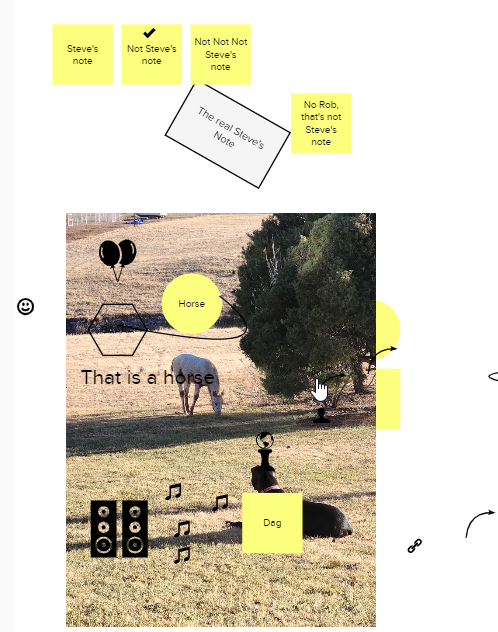
Anyway, we had a designer showing a bunch of others how to do this. Some product developers, team leads, advocates, and more. During the session, as we were watching, we were in a live mural where we could add items. I added a post-it with “Steve’s Note” on it, just to get a feel. I also added a photo I’d taken. Before long, the group chimed in, especially when the host misidentified Phoebe the horse as a goat.

2020-11-19 09_23_58-Online Collaboration with Mural • Redgate

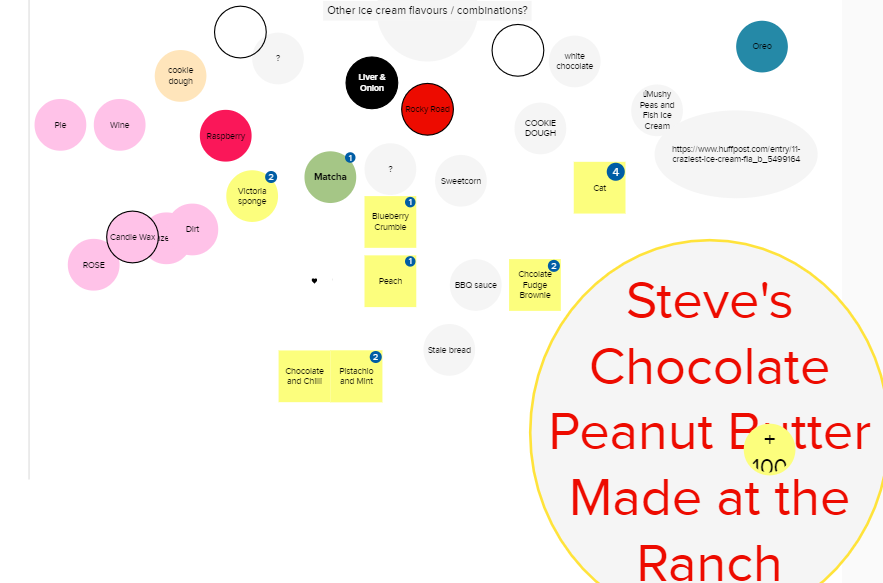
We had another part of the session dealing with voting and making choices. The demo was with ice cream, allowing each of us to vote on a set of choices. Next we went to a template where we could add our own choices and people had fun, including me.

2020-11-19 09_36_18-Online Collaboration with Mural • Redgate

All in all, I see Mural as an interesting tool that I could see different groups using this in a variety of ways to collaborate, with some sort of Zoom/audio call and then focusing on a virtual whiteboard, there’s a lot here.

I actually think this could be a neat way of posing questions, taking votes or polls, and sharing information in a group that can’t get together in person.

.

Posted in Blog | Tagged , | Comments Off on The Silliness of a Group

Daily Coping 20 Nov 2020

I started to add a daily coping tip to the SQLServerCentral newsletter and to the Community Circle, which is helping me deal with the issues in the world. I’m adding my responses for each day here.

Today’s tip is to choose a different route and see what you notice on the way.

The pandemic has kept most of us at home. We drive less, go less places, do less. For me, while I still go a few places, I do less for sure.

When I saw this item pop up, I had to think about how I’d choose a new route. Walking from my house only gives me one route for a mile to get to the end of my street and out to a place where I can then go in a few directions. Driving around, it often doesn’t make sense to go a different way, but I thought this might be a good way to change my day.

I’m lucky in that my gym has been open since May, and while there are restrictions and limitations, I can go. My week usually has 3-4 trips, twice for yoga and 1-2 trips for weights. I’ve avoided most classes, though I may go back to a swim a week as well.

The route there is pretty simple, and while the facility is about 10mi away, I can take a separate route, wind through some neighborhoods slightly out of my way, and keep this to about 14mi.

I did that recently. I took the long way, which winds alongside E-470 in S Denver, but also has a small bridge over the highway. That leads to the back of the neighborhood where I used to live. I drove through, looking at houses where friends used to live, or I used to bike/walk/horseback ride through. It was a nice trip on which to reminisce.

Posted in Blog | Tagged , , | Comments Off on Daily Coping 20 Nov 2020