Category: Blog

  • Daily Coping 14 Oct 2020

    I started to add a daily coping tip to the SQLServerCentral newsletter and to the Community Circle, which is helping me deal with the issues in the world. I’m adding my responses for each day here.

    Today’s tip is to do something to overcome an obstacle you are facing.

    ob·sta·cle /ˈäbstək(ə)l/ – a thing that blocks one’s way or prevents or hinders progress.

    I’ve got speaking engagements coming up. Virtual ones, but still, I have to be ready. To be ready, I need to record the sessions. To record them, I need to practice and prep.

    I also lost time because I need to get these things done not by the event, but a couple weeks ahead of time. I also have a vacation scheduled.

    I took some time and closed down most things to focus on the main obstacle for moving forward: Powerpoint.

    The big issue is getting the outline into PPT with some slides and starting a flow. From there, as I practice, I’ll refine the talk and slides and get ready to record.

  • Daily Coping 13 Oct 2020

    I started to add a daily coping tip to the SQLServerCentral newsletter and to the Community Circle, which is helping me deal with the issues in the world. I’m adding my responses for each day here.

    Today’s tip is to put down your To-Do list and let yourself be spontaneous.

    The weekends are my time to usually get a few things done. A couple weekends ago my wife was gone, so I got up to manage morning chores, including letting baby Phoebe and Saturn out.

    20201006_082851

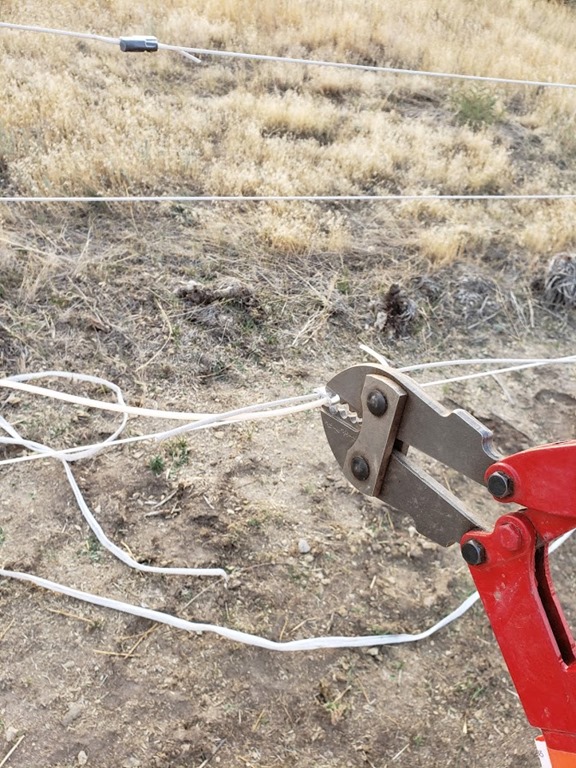
    Then it was going to the gym to weight lift, then volleyball practice (coaching), then coming home and fixing fence until it got dark.

    20201003_180755

    The next day wasn’t better. Morning yoga, then packing up and driving 2 hour for a scrimmage for 4 hours, then returning home late.

    That’s not uncommon for my weekends, with a list of things to do, and moving from thing to thing. Some are for me, some for others, but it’s busy.

    I can’t let go of things today, but I was thinking about this a few days ago as I started this post. I was exposed to someone that had someone in their household test positive for COVID-19. Not direct exposure, but this is how things spread rapidly.

    • Person 1 exposes person 2
    • Person 2 exposes person 3
    • Person 3 thinks everything is fine and goes about their day exposing Persons 4-100.

    I didn’t think I had it, and it was unlikely, but you never know. Being cautious, I cancelled some things and rather than look at a todo list, I decided to do a few things I rarely do lately. I ordered some takeout (curbside, after all I live in the country), sat on the front porch, ate, played some guitar, read a book, watched some sports, and let a portion of my day just go away, unwinding.

    I briefly felt guilty, but decided this was a good choice for a day.

  • T-SQL Tuesday #131–An Analogy

    tsqltuesdayThis month the T-SQL Tuesday invitation is from Rob Volk, the last of the crew that I pushed to host last year at a SQL Saturday. I managed to get four people to agree to host, and all did so. Rob is the fourth this year, and I’m grateful for him and the others for doing this.

    In any case, this month’s invitation asks us to explain what we do. The title is data analogies, which makes sense as most of us participating work with data and so we likely all get asked what we do and we talk about databases. I’ve often said I worked with computers, then I work with databases if someone asks more. Few people want more depth.

    However, while I do work with data, that’s not really the main part of my job. It’s more an adjunct responsibility that I enjoy.

    A Newspaper

    When I started SQLServerCentral with my partners and worked for myself, I had no shortage of people asking me what I did. At Boy Scouts, Volleyball practices, scholarship committees, and more, I was regularly asked what I did for a living. I tried a number of ways to explain the site, but eventually settled on this.

    “I run a newspaper.”

    I really do. I have a daily publishing newsletter that contains information for subscribers. Ads, sometimes funnies or puzzles, and articles they want to read. I have a daily deadline of getting things ready, but fortunately, I don’t have a lot that is time sensitive. It’s hard enough to keep up with a schedule without worrying about article A publishing tomorrow and article B needing to go out the next day.

  • A Limited User for SQL Data Catalog

    One of the things I’ve pushed for at Redgate is to document the minimum permissions needed for our products inside a database. Often this isn’t possible as some of our products require sysadmin, but some don’t. I was resetting Data Catalog up on a new machine and decided to limit things.

    Installation

    The installation does create a database, which you can do separately, but if you don’t do this, you need to grant dbcreator for the service account, at least for the install. If you create it, this page shows the more granular permissions if you want to do that.

    The permissions needed are:

    1. ALTER ROLE [db_ddladmin] ADD MEMBER
    2. ALTER ROLE [db_datareader] ADD MEMBER
    3. ALTER ROLE [db_datawriter] ADD MEMBER
    4. GRANT CONNECT SQL

    These permissions allow the service to write data to the various objects in the database.

    Classifying Databases

    Classifying databases is different. For this task, the account used to connect, which doesn’t need to be the service account, will read information about the tables, but does not read data. We just need to capture the column name and some metadata.

    Again, this page gives a script, but essentially, we need these permissions.

      1. GRANT CONNECT SQL
      2. GRANT CONNECT ANY DATABASE (2012+)
      3. GRANT VIEW SERVER STATE
      4. GRANT VIEW ANY DEFINITION
      5. GRANT VIEW ANY SENSITIVITY CLASSIFICATION (2019+)

    Once those permissions are granted to an account, you use the account to add the instance to SQL Data Catalog.

    I’m glad that we’re documenting and limiting permissions where possible. We do understand data privacy and protection are important, and the advocates at Redgate try to push developers to use as limited permissions as possible when building products.