Category: Blog

  • Off to SQL Nexus

    This week begins my two city, two conference journey across the Atlantic. I arrive in Copenhagen today, after traveling overnight from Denver. I wrote this before leaving, knowing that I’ll likely be a bit worn out as I make my way from Denver to Washington D.C. to London to Copenhagen.

    This is the most relaxing part of my trip, with a day to adjust in a new country before the SQL Nexus conference starts tomorrow. I’m looking forward to getting some coffee and exploring the city.

    Tomorrow is a conference day, hanging out and learning a bit before I speak on Wednesday morning. I’ll be talking about SQL Server 2016 Encryption, and I expect that if SQL Server 2016 hasn’t RTM’d by this time, it will either Tuesday am at SQL Nexus or Friday am at SQL Bits. I could be wrong, but as I write this, I expect those are the likely dates.

    I’m looking forward to Nexus, which has lots of SQL 2016 content scheduled. I just hope all the sessions are in English Winking smile

  • Am I a sysadmin?–#SQLNewBlogger

    Another post for me that is simple and hopefully serves as an example for people trying to get blogging as #SQLNewBloggers.

    I was doing some security testing and wondered if I was a sysadmin. There are a few ways to check this, but I thought there should be a function to tell me.

    There’s this code, of course:

    SELECT
    ServerRole = rp.name,
    PrincipalName = SP.name
    FROM sys.server_role_members rm
    Inner JOIN sys.server_principals rp
    ON rm.role_principal_id = rp.principal_id
    Inner JOIN sys.server_principals SP
    ON rm.member_principal_id = SP.principal_id
    where sp.name = SUSER_SNAME()
    and rp.name = ‘sysadmin’

    That lets me know if my login is a sysadmin. However, there is a function that you can use. IS_SRVROLEMEMBER() is a function that you can use, passing in a server role as a parameter. The code I’d use to check on sysadmin membership is this:

    SELECT IS_SRVROLEMEMBER(‘sysadmin’);

    If I run this, I get a 1 if I’m a member, or a 0 if I’m not.

    2016-04-12 11_38_34-Settings

    Using this function in your code allows you to make decisions based on role membership for the users involved, and perhaps alert them of needs for certain rights.

    SQLNewBlogger

    This was a quick one, really about 10 minutes to organize and write. Most of the time was writing the code to join system tables. If you tackle this subject, talk about how you  might use this, or where this type of check could come in handy in your code (maybe before taking some action).

  • Explicitly using tempdb with ##tables

    I had someone ask me last night if this statement would create a permanent table in tempdb with a strange name or a global temp table:

    CREATE TABLE tempdb..##mytable
    ( id int
    );

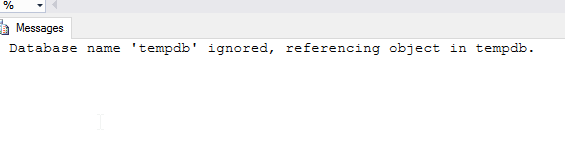
    My suspicion was that this would always be a temp table, but since I usually don’t include tempdb, I decided to test things. I quickly opened up SSMS and tried it. I got this message:

    2016-04-21 13_55_14-Microsoft Solitaire Collection

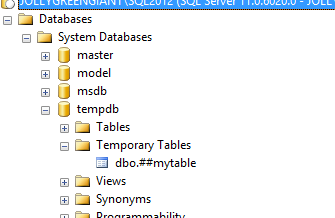
    That seems to imply what I suspected. The ## override everything and determine the table type. When I look in the list of tables, I see my table there as a temporary one.

    2016-04-21 13_56_21-Start

    This is the behavior I’d expect, and it acts the same in SQL 2012, 2014, and 2016 (RC2).

    I don’t think there’s an advantage to using tempdb..##mytable, or even creating a permanent table (until restart) using tempdb.dbo.mytable, but if there is, please note something in the comments.

  • Changing the sa Password with SQLCMD

    Another post for me that is simple and hopefully serves as an example for people trying to get blogging as #SQLNewBloggers.

    I wanted to make a quick note on changing the sa password, as this is a sensitive account, and the password should be changed if you ever suspect it is compromised. I’d also recommend you change this if anyone that knows the password leaves your group.

    I wrote about using SSMS, but that’s not always convenient. If you need to change this remotely, perhaps in a hurry, SQLCMD is a quick way to do this.

    SQLCMD is a command line tool, so open a command prompt.

    2016-04-06 12_47_33-Photos

    Run SQLCMD and connect to your instance as a sysadmin. If you have any doubt, you can enter the query from my previous post to check your connection.

    Once you’ve connected, you can issue this code:

    ALTER LOGIN [sa] with PASSWORD = N‘Sup#rAmaz!ngP@$$w0rd’

    This is the code that will change the password for the login specified, even if I’ve logged in with a different account.

    Once I’ve done this, test the sa login from a new session and verify it works.

    SQLNewBlogger

    Make sure you know how to do this. It’s a basic skill, so learn it, blog about it, and use it where appropriate. Maybe write about why you’d do this in your own post.

    References

    SQLCMD – https://msdn.microsoft.com/en-us/library/ms162773.aspx

    ALTER LOGIN – https://msdn.microsoft.com/en-us/library/ms189828.aspx