I haven’t worked with Window 8 at all. I’m not a big beta tester, and it’s been a busy few months for me, so I haven’t bothered to mess with any of the previews. My Win 7 desktop works well for me, and I haven’t bothered to think about doing anything different.
Today I was at Best Buy, needing to get a new UPS for my computer since I had a power outage and a failure of the battery in my existing system. I grabbed two, but as I was walking by, I saw laptops with Windows 8 on them. It isn’t supposed to release until Friday, and perhaps these were just setup since there weren’t prices, but I stopped to look at them.
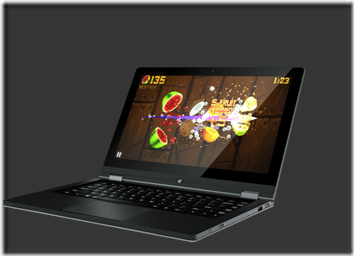
The first one was a Lenovo Yoga. It’s interesting, and I was reading about it recently in that it has a cover that folds completely over. It can become a tablet, but the keyboard is exposed.
The other was a Toshiba Satellite S4310. Nothing fancy here, but definitely a more reasonable cost. I checked later and found it at $900 for a nice setup.
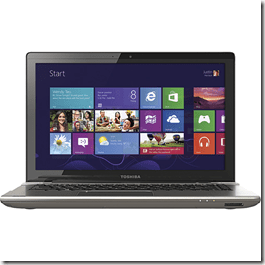
In both machines the start menu was up, and it’s obvious you pick one of the tiles to get to the app. However getting back to the start menu wasn’t obvious. I hit the Windows key, which brought it up, but I couldn’t figure out a swipe method to get it back. I’m sure there’s a shortcut, but in 4-5 minutes of trying stuff, I couldn’t figure it out.
I did get to swipe over from the left and change applications. That was interesting, and it worked fine. It was smooth and while I only ran 3 things, this hardware performed fine. The placement of the title bar and the view was different, but the applications are the applications. They work fine.
I will say the response to touching the screen was fast and quick, almost too quick. In trying to scroll, two fingered, OSX style, I found it trying to zoom in or out as I moved. More me than the system, and I’m sure it’s something I’d get used to quickly.
I like the idea of having this start screen with some information on it, but that’s more for a tablet. I can’t imagine seeing this much in my work, and wouldn’t even want to bring it up as a screen saver.
Using a few apps, browsing, typing, it just works. I’m not sure how much of the “Windows 8” experience, I’d even bother with in daily life if I didn’t have a tablet. As it is on the iPad, I mostly live in apps. The OS isn’t really important.
Not sure if I’ll upgrade or get anything for me, but my wife needs a new laptop, and a few of these look nice. Not sure if she’d like the tablet interface, and the Yoga seems weird, but I’ll ask her and see.
 Voice of the DBA