Category: Blog

  • Close, but no MCM Cigar

    I failed.

    There’s no other way to say it, but I’m not really disappointed or discouraged. I’m actually fairly upbeat about it. I went into the Microsoft Certified Master test thinking that I’d fail because it aims to be a high end certification. I felt like I had a huge knowledge gap going through the study resources on the SQLskills MCM page.

    I plugged away, and learned a lot. I listened to content on long car trips and airplane rides. I read white papers at night and while waiting for kids at various events. I practiced working through some of the code examples, and came up with new ideas along the way. And I got a lot of notes, so many notes that I didn’t even review half of them as the test got closer.

    And I was surprised. As I wrote about my test experience, I think I was well prepared, and I knew more than I thought. Every question made me think and made me deduce some solution, but very few of them had me throwing up my hands and feeling like a complete idiot.

    My score was close to passing. It wasn’t the single digits I joked about on Twitter, nor was it the low 200-300 score I was thinking I might end up with. The passing score is 700, though it isn’t clear if that’s out of 1000 or 800 or 743. We don’t know how the exam is scored, and I’m not sure if that’s good or bad, but that’s a separate blog.

    In my case, I got a 620 with bar graphs that listed my relative strength in a few areas. I scored highest in Scalability and Availability, with my graphs about 8/10 of the way across. In Recoverability and Managability I had about 7/10 of the total distance. That’s not surprising since I think those administrative areas are my strongest skills.

    In security I was about 6/10, which is a little surprising. I thought I knew SQL Server security very well, but I’ve always been a “practical” security guy, and not necessarily conforming to what the MCM might see as the best way to implement security. Definitely need to work on this area a little more. In Performance, I was about halfway, which is probably true. Without spending a lot of time on this in a practical sense in recent years, I’m relying on my memory in studying and not using field-skills.

    Developer Support, which I assume means XML, Spatial, CLR, and other similar code oriented areas I was the lowest, about a 4/10. That’s not surprising since I don’t write a lot of code and really haven’t spent much time in those areas. They feel to be a little outside of the core of what I really enjoy in SQL Server, and I’m sure I didn’t focus here all that well. I know I listened to the SQL CLR prep four or five times and was still slightly confused as to what was covered.

    There were no areas that were incredibly weak, but a few that need improvement, and I know that I have a few things in the manageability to work on after the test. I won’t go into specific areas, but suffice it to say that one particular topic had 3 or 4 questions and I struggled with them talking about a certain implementation of the technology that I hadn’t spent much time on.

    Moving On

    What do I do from here? I was thinking this was a one-shot deal for me and I’d get an assessment of where I stood. I definitely got that, and the results seem to mirror what I would have thought were my strengths and weaknesses. My higher-than-expected score has me wondering a little about which of these is true:

    · I know more than I thought

    · The exam doesn’t test real world skills as much as I thought

    It’s hard to know which is true. I don’t do a lot of real world work, but I read a lot, and I talk with many people about what real world problems and solutions they use. So I have a wide set of knowledge, but not necessarily deep in places. The exam can only test me on the areas it tests me, and with a limited time, there is only so much it can test.

    I have the chance to take the exam again as there are still vouchers available and I think I will. I’d like to try again to pass it since I have a little competitiveness left in me and I thought I was close after taking the exam. If I can improve in a few areas, I’d think I would do better, though I expect different questions and would need to review all the material again.

    The lab? That’s a whole ‘nother story. The lack of practice in some areas might have me fumbling around more than I could afford in a limited time frame. I have less confidence I would pass that, though more than I would have had a few months ago. That’s if I could sit still for 6 hours and focus on SQL Server that long.
  • T-SQL Tuesday Reminder – Coming next week

    Matt Velic is hosting T-SQL Tuesday this month. You have a week to get a post ready on the apply operator.

    To help you out, here’s the BOL page on Using the Apply operator. It’s an operator that essentially lets you invoke a table valued function for each row of a result set. Not necessarily the most efficient way to get some things done, but it can be a powerful way of combining complex data that requires a function to interpret.

  • SQL Saturday #63–Dallas

    I have been trying to get to Dallas for a SQL Saturday for nearly a year, when the first event was announced last May. I finally made it this past weekend with the third SQL Saturday in less than a year taking place on April 2, 2011 in Richardson, TX.


    The Location

    The event was great, lots of people (nearly 400) and it was an extremely smooth running event. Sri, Tim, Sean, and the rest of the North Texas SQL Server User Group put on a great event and made me and a number of other out of town speakers very welcome.

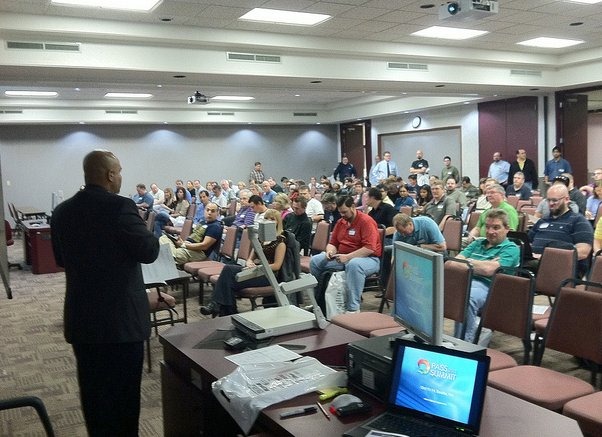
    The event was at a local training center, Region 10, with large rooms and large projection screens for the most part that made it easy to see what was being talked about.

    Saturday started with a crowd of people arriving early and ready to check in. I set up a Red Gate table with some swag and flyers, all of which were gone before the opening session. Sri gave a short opening, recognizing Andy Warren (LinkedIn | Blog | @sqlandy) and I as the founders of SQL Saturday. We each said a few words, nothing memorable, and we are both amazed that in four and a half years there have been over 70 events and over 15,000 people that have gotten a free day of training.

    sri

    I appreciate the recognition, but it’s not about us. It’s about the people getting some knowledge and help in their careers, and I struggle with how to get that message across. This whole franchise/framework was really about how to help people grow, people that can’t afford to go to a conference. Any ideas on how to get the focus on that and not the events would be appreciated.

    There was a few minutes when people were asked to remember to network and they took a minute to introduce themselves. After a few logistics announcements, the first session kicked off  in the beautiful Richard 10 training center, and the hallways emptied. I was about to get ready for my session during the next hour when I saw a tweet from Jessica Moss that she needed a ride from the hotel. The power of Twitter! I drove back since it was only a mile or so and picked Jessica up since we both had sessions at 9:30.

    My Session

    I did The Modern Resume: Building Your Brand with a packed room. A small room, but still packed with a few people sitting on the floor. Quite a few students, with some good questions on how to get started, but overall a fairly quiet presentation.

    People must  have enjoyed it as the 20 or so evaluations I got were almost all 5s. Nice to see that but I’m not sure if I need to change anything. I did make a couple notes based on questions to add to the next time.

    Other Sessions

    I went to see Andy Warren’s “Building a Professional Development Plan, which I highly recommend. It was excellent, and while it was a bit of “tough love” at times, there are some things in there that I would highly recommend to people.

    sqlandy

    I caught a bit if Tim Costello’s introduction to dimensional modeling. I met Tim last year in Baton Rouge, and gave him some feedback on his session. I went to this one to see how he did and also to get a little info on a topic that I don’t know much about.

    timcostello

    I thought he did a nice job explaining the topic, walking through different aspects of what a dimension is and how they are defined. Worth seeing Tim talk on BI stuff if you get the chance.

    jessicamoss

    Jessica Moss had a bit of a technical snafu at the start of her talk, where the projector did not want to pick up her laptop. She left it alone in the capable hands of David Stein, Jeremy Marx, and a few others and walked around, starting to talk to the audience about data management topics. Once the projector was fixed, she dropped right into her slides and demos.

    Jessica is a great speaker, and a popular author at SQLServerCentral, and if you get the chance to read her work or see her speak, do so.

    I glanced into a few more sessions, many of which were almost full of people and it seemed that everyone was focused on learning at the event.

    Food

    The food was plentiful, with lots left over from what I could see. Breakfast was a series of muffins and danishes with apples and bananas available as well. Most of this was left in a break room for the day, so you could go get more if you wanted

    Lunch was a boxed deal, set up outside, and I had to follow the crowd to find them setup in a small courtyard, so a few more signs would be nice, but people walked through one door, picked up a lunch, and went through another one, so things flowed smoothly.

    The afternoon snack was a gelato cart that created a line stretching through the middle of the center. There were 4 or 5 choices, and plenty of the tasty dessert. Quite a few people, including myself, went back for seconds.

    Afterwards

    The speaker dinner and the after-party were both held a Dave and Busters, with lots of drinks, billiards and shuffleboard for everyone. I enjoyed both nights there, getting the chance to catch up with lots of old and new friends.

    afterparty

    I wandered around, talking with different people, and had the chance for some long conversations with David Stein, Jessica Moss, Tim Mitchell, Kevin Boles, Jim Murphy, and Sri Sridharan. I have probably missed a few people, and I apologize, but it was a long weekend that came right after SQL Server Connections.

    Both nights I managed a late dinner with Andy Warren and a few other people, getting back to the hotel ready for sleep.

    It seems that more and more I find that people all over the country are running very smooth events with almost no issues. I found the center easily, speakers showed up, people learned things, and there were no real issues.

    I enjoyed the event in Dallas, and am looking forward to going back next year if I can work out the scheduling.

  • Am I a sysadmin? (or other SQL Server role)

    How do you check if you are a sysadmin? It’s fairly easy to do in Management Studio. You can go to Security \ Server Roles \ Sysadmin, as shown here:

    sysadmin1

    You right click sysadmin and click properties to get a list of sysadmins. You can do this for any role, and that’s the easy way if you want to verify permissions.

    sysadmin2

    What if you have an open connection to the server, say in a Query window or Powershell session and want to verify your role. There’s a function to help you: Is_SrvrRoleMember().

    If you execute something like this:

    SELECT IS_SRVROLEMEMBER('sysadmin');

    You’ll get a one back if you are a member of that role, and a 0 otherwise. That will allow you to easily determine your current permissions, or check permissions programatically and continue on with your work depending on the results.