Tag: career

  • Give

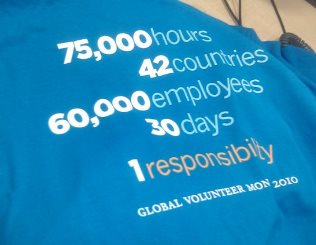
    volunteerThere’s a lot more to life than just working to support yourself. Sometimes you need to do just that, but often we have more flexibility to enjoy and appreciate the world around us. We can take joy and pleasure in the experiences we have, the people we encounter, and the accomplishments we achieve. However there’s another part of life that I think is important for everyone, and that’s giving of yourself to help others.

    I believe that almost everyone should volunteer their time or resources and give back to society. We should all work to make this a better world for everyone. Whether this is through a church, a non-profit, your local community or some other way, we are all better off for the efforts. I also believe this isn’t something you do constantly throughout your life, though if please feel free to do so. Some of us will volunteer when we are young, some when we retire. The important thing is that when we are able to do so, we act.

    Giving of yourself helps others, and it can provide you with positive feelings. It can also be good for your career. This piece talks a bit about the traits of those people that give, and it seems they often find their own personal success grows. This is because the way they view themselves, their time, and their accomplishments, changes when they help others. Volunteering can reduce stress, and may help you enjoy your job more. That last item might be the most important reason of all.

    This is something you can learn to do, by making time to help others at work, or in your life. Please be sure to balance this with the rest of your life, but you might find that taking a little of your free time to help others ends up improving the quality of your life, well beyond the price you pay in accomplishing less yourself. However please volunteer because you want to, not because you want to look good or add an item to your resume. Give because you want to give.

    Steve Jones


    The Voice of the DBA Podcasts

    We publish three versions of the podcast each day for you to enjoy.

  • Better Technical Interviews

    Is the tech interview dead? An interesting case made in the article, and some links ideas on how to better interview and hire technical developers. I think some of the ideas are specific to developers, and while they can work, they don’t necessarily translate to other professions, like database people. Developers are tinkerers and while there are lots of projects they can tackle outside of work for fun, I don’t see a lot of database project type work for database administration.

    However I think the main problem with trying to recast technical interviews and ensure you have better success in hiring is that interviews aren’t good models of the real world. In trying to evaluate a person’s skills, and ensure the process is efficient enough to talk to 2, 3, or 10 people for each position, you have to sacrifice something. Usually you end up sacrificing the fidelity of the insight into how the person will perform.

    The idea of hiring someone for a side project is a good one, though not that scalable. However in many of the non-tech companies I’ve worked in, this would have easily have been possible. We didn’t hire new people that often, and having them spend a week on a project, maybe 20 hours of side time, would have worked well and been affordable. The constraints would actually have been finding time to assemble the side projects. We’re usually hiring because we can’t get our work done, and we would have struggled to find time to assemble a project.

    Ultimately I think that prep time is perhaps the best way to hire better. Spend time teaching a few of your managers or other employees how to evaluate someone, perhaps even by interviewing and evaluating existing team members. Learn what things have helped people fit in better, and what haven’t. What traits make sense in your environment. Maybe then you’d have a better chance of finding employees who would both fit in and be productive.

    Steve Jones


    The Voice of the DBA Podcasts

    We publish three versions of the podcast each day for you to enjoy.

  • Great Engineering Culture

    engineer

    There are some nice quotes in this piece, and it’s an interesting talk to watch as well. The talk is aimed at people starting companies that are based on technology and how to build the culture from the beginning. However I’d argue these same techniques can change culture in an existing company as well. It takes time, and patience, but you can slowly transform your technology department one that people want to work in. More importantly, you can make it much more effective and efficient.

    Way too many managers don’t communicate effectively. They want to use the military techniques of command and control, broadcasting a message and assuming everyone will follow along. Instead it would be better if managers listened more to the opinions and ideas of their technologists, especially when it comes to technology issues. The management part of your job comes in when you help your staff mitigate problems, and help them understand the issues and constraints of the business. Giving someone real, logical, valid reasons for adhering to deadlines or requirements often works well. Most technology people are smart and respond much better to discussions and debates based on reason rather than edicts backed by fear or power.

    I love the section titled “Firing A**holes”. This quote is especially important: “Even if you have an engineer who is exceptional, but an asshole, you should fire them immediately. Your team will thank you for it afterwards. It only takes one asshole to destroy an entire team“. I completely agree. It doesn’t matter if someone is an average or even poor worker. If their attitude is corrosive, disruptive, and upsets people, move them on.

    I especially like the part about promotion. Most of us want ownership, responsibility, or as I’ve thought about it, autonomy. Most of us want to make decisions and have control over what we do. Give more responsibility as people do better and drive forward. When they don’t, remove some. That alone will probably help motivate and drive your people forward.

    Building great culture is hard. It isn’t something you set up and it will maintain itself, but rather something that you constantly work on, and tweak to make better. There will be regular arguments and minor disruptions, but if you have people actively managing and working to make the environment better for other technologists, you’ll get great things done.

    Steve Jones


    The Voice of the DBA Podcasts

    We publish three versions of the podcast each day for you to enjoy.

  • When Is Work, Work?

    pearl81001This editorial was originally published on Sept 11, 2008. It is being re-run as Steve is out of the office.

    More and more people carry Blackberry phones for work, getting push email and a constant connection to the office, it is sometimes hard to tell when someone is working and when they are not. It’s not just Information Technology workers, but everyone from paralegals to facilities workers carry the devices. And with the iPhone connecting to Exchange servers and Windows Mobile devices getting push emails, we’re all likely to be more and more connected in the future.

    It is debatable if that’s a good or bad thing, but in either case, there might be a side to this debate that you haven’t considered. Is it legal? This article talks about how some workers, specifically those non-exempt workers that receive overtime, may end up suing over the devices long leash. For those workers who are paid by the hour, and that includes some technology workers, is time spent on their phone work time or personal time? If they’re answering email on a commute or during downtime away from the office, are they working?

    There haven’t been any lawsuits, but a number of lawyers are asking companies to update their handbooks. The article mentions Disney asking non-exempt workers to sign a waiver that they would not be compensated for after hours work on Blackberry devices. I can’t imagine that standing up in court, but time will tell.

    Most DBAs and developers I know are exempt from overtime pay. They are asked to work in excess of 40 hours on a regular basis with no change in pay. Now some get paid for on-call work, some don’t, some get comp time, or extra time off, for extra work and some don’t. No one I know gets paid for taking a phone call or answering an email away from work, Blackberry or not, unless it’s a specific on-call responsibility.

    It’s an interesting question to ask as the line between when is work time and when is personal time with devices like Blackberrys. It’s not as though RIM is to blame as similar issues have existed as long as there have been exempt workers. At least now we get to go home at a reasonable hour. In past times, people would stay at work until all hours of the day or night. Look at lawyers, doctors, and bankers for examples of how things could be with remote capabilities for work.

    Personally I think boundaries should be setup. That might sound silly coming from the guy that was answering posts at 9:00pm on a Sunday night (and Friday), but I’m the exception that proves the rule. And that’s my own decision; no one asks me to work on a weekend.

    For most normal people, I think you have a right to ask for a policy and some boundaries to be set. We all need time off, we need time when we don’t have to think about work, or worry about being called. Time to enjoy the rest of your life outside work, is valuable to us enjoying life overall, and it’s valuable to us being more productive at work. That downtime, whenever we can get it, that time to recharge, gets us ready to face another day, week, or hour at work.

    Steve Jones


    The Voice of the DBA Podcasts

    Everyday Jones

    The podcast feeds are now available at sqlservercentral.mevio.comto get better bandwidth and maybe a little more exposure :). Comments are definitely appreciated and wanted, and you can get feeds from there.

    Overall RSS Feed: or now on iTunes!