Tag: career

  • Learning and Building Skills

    This is completely off topic and feel free to stop reading if you don’t care about how to tap a bolt, but it was something that I had to a) learn, b) spend time practicing, and c) get done to save money.

    tl;dr it’s not hard, but it was interesting.

    Bear with me as I’ll explain the situation, what happened, and what/how I learned.

    We have this building on the ranch.

    IMG_2882

    That’s not a great show, but it is cool at night. Here’s a better shot.
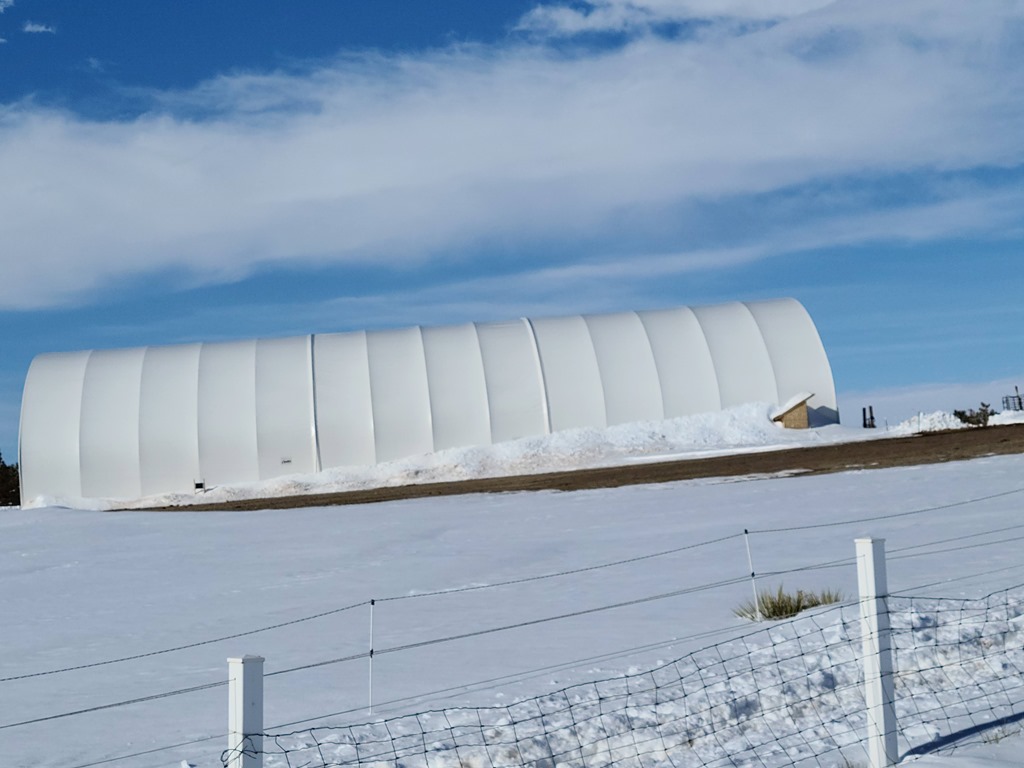
    20210315_161916

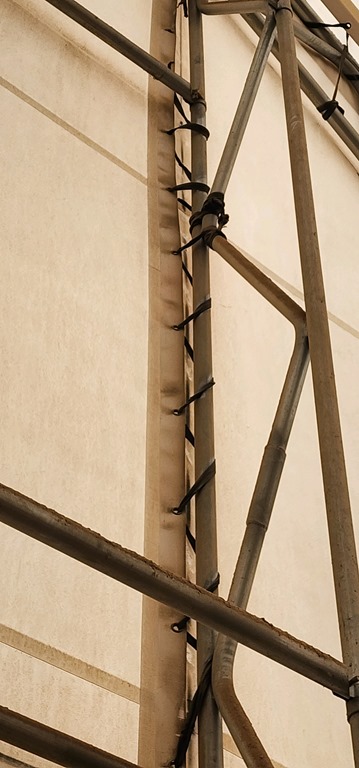
    This is a fabric building, made of a steel frame that’s anchored to the ground and fabric pulled around it. The fabric is actually secured by weaving straps through the frame. Here’s a good shot of how this works, albeit with a broken strap. We actually had to climb up here and tie a new strap to the existing one to secure things. Another skill, but a simple one. Mostly climbing and tying strings.
    messages_0 (1)

    At the bottom of the the fabric, there is a pocket. It’s actually a loop that runs horizontally along the material. Similar to how a hoodie has a pocket around the hood in which a string is threaded. In this case, there’s a steel pole in there. You can see this below, as the white material at the bottom is doubled over and a different color. There is a small pocket cut out towards the middle left where you can see the steel pole.

    20230225_161501

    This steel pole is secured to the bottom frame with a threaded rod. You can see a couple of these in the image, with a washer and nut on it. These go through the pole and screw into the frame that’s on the ground. The nut is tightened and holds the walls down in the wind. There is some space in some places where the wind and go in and out, which allows pressure to equalize inside and outside the building, and also helps the frame resist strong winds by having it flow through.

    I didn’t think much of this when the building was built, but at some point my wife told me a rod had broken and the building was flapping. In this case, part of the wall was moving, which wears the fabric down and can tear it.

    Not an easy thing to fix and potentially something that will cost a lot.

    Repairs

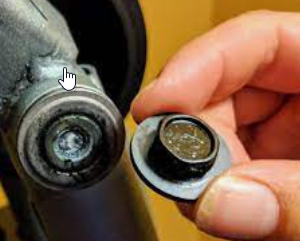
    When I examined the rod, I saw it had broken off in the base frame. I don’t have a great picture, but this is roughly what I saw, albeit in a round steel frame. This picture shows a bolt head broken, but for me, it was a longer rod.
    2023-04-26 13_45_07-bolt broken off in hole - Google Search

    I did what I often do. I triaged the scope and scale of this problem. I saw articles like this one from Bob Vila. That didn’t look took hard, so I decided to see if I could remove the old bolt with a left handed bit and easily fix things.

    I bought a left handed bit and tried and failed. The old bolt is exposed to dirt and the weather and I think it slightly rusted in the nut, or perhaps it was too clogged from dirt, but I couldn’t get it out.

    My thought was to call a service person, but I also know this is a small job. Likely someone can do this in minutes, which means it’s not much $$ and hard to get someone to come.

    A little more research led me to videos like this one, which shows how to make a mark and drill out the screw. In checking with the costs of the tools, I found some that weren’t expensive, and certainly less costly than getting a handyman out.

    So I tried this. I took the broken rod to the store, found it was 1/2”, bought a slightly smaller drill bit (29/64) and a tap/die set.

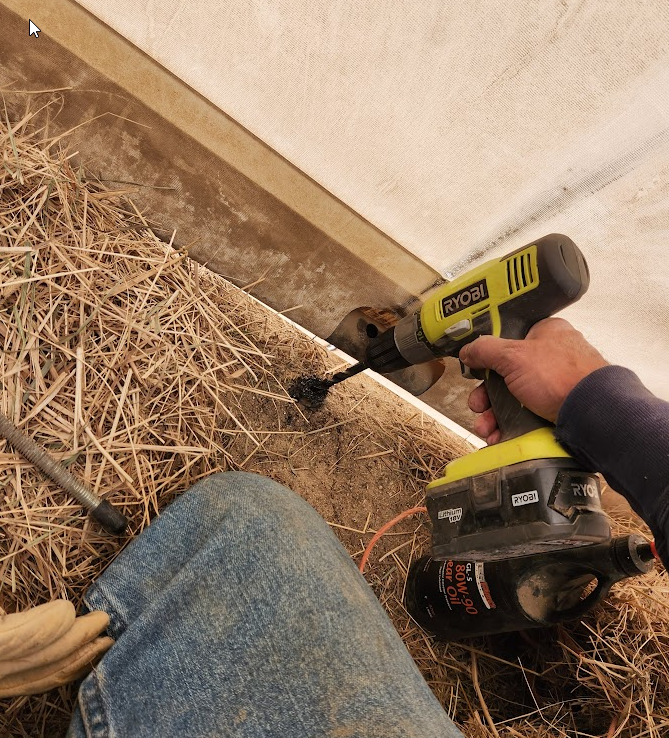
    I got a hammer and a metal drill bit and drilled down into the hole. I used a little gear oil to keep things cool and worked my way down.
    2023-04-26 13_53_10-Photo - Google Photos

    Once I had a hole, I read instructions, watched a video, and then tapped new threads into the space. This is really keeping this tool aligned and screwing it down into the hole. It’s hard, and definitely tiring on the hands.
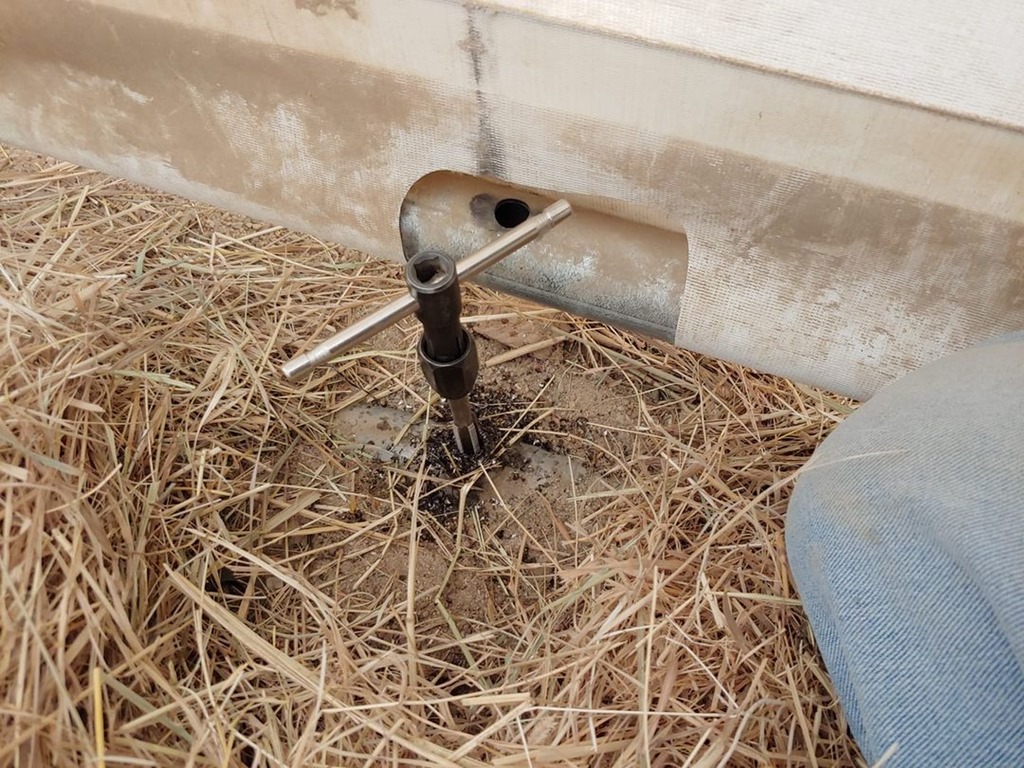
    82580967_10220563234979744_3451612706077933568_n

    Once I have this through the metal, I usually can easily go up and down a bit, threading it into and out of the hole. This is really only about 1/2-3/4” of metal as the horizontal tube below is hollow.

    The last part is threading in a new rod and tightening down the not on the bolt to hold the base.

    Reusing New Skills

    Once I did one, I felt confident in doing others. In fact, the first time my wife pointed out the problem, there were 2 to fix. Since then, I find that I need to fix 2-3 every year, in different places. Some from weather, some perhaps from horses or people kicking the base.

    I found that after the second time, I didn’t even need to go look up the process, as I internalized what needed to be done.

    There are quite a few skills like this I’ve learned in my lifetime, and plenty here at the ranch, that save money, and more importantly, time. They also give me a sense of satisfaction.

    On the list this year is to teach my daughter this skill as she’s hoping to come work on the ranch after college and this is something she can do.

  • AI Concerns

    I hosted a webinar a few weeks ago about Artificial Intelligence and how it might affect data professionals. It was an interesting discussion with Kellyn Pot’Vin-Gorman and Brian Randell, with all of us having slightly different perspectives. Overall, we all agree AI is amazing and can be a useful tool for data professionals.

    This week I’ve been in Redmond at the MVP Summit, and AI has been a topic among many MVPs. Lots of jokes have been told, no shortage of which dealt with getting rid of staff. Not that these MVPs want to see less staff, but they know that executives and managers might see all the AI hype about how GitHub CoPilot writes code and think they need less developers.

    I don’t know if that is really how executives will view the world, especially as most IT departments have more work than resources to complete their list of tasks. I can see AI helping get more done, which might mean less hiring (or slower hiring) in the future.

    There was an article this week talking about ways to protect your job in the age of AI hype. It was interesting in that the suggestions all revolve around bringing more value to your job. The suggestions about working in specialized areas, complex areas, being a better employee with documentation, these are all things that I’ve done in my career. It’s what I also see from many MVPs.

    Maybe the most interesting item was to think about incorporating AI into your work now. It’s not necessarily an expert on your work, but it is a tool. As the models absorb more information and become better trained, they can be a level to help you get more work done. They can assist you in tedious work, which is something many of us can benefit from.

    I am looking forward to getting access to CoPilot and keeping an AI tool up on my desktop, learning how it might help me, and maybe more importantly, where it won’t help me.

    I can’t stop this trend, but I can better understand it and learn how it might fit with my daily work. Knowing that helps me better understand how I might have an informed and rational discussion with management about the advantages or disadvantages of this new technology.

    Steve Jones

  • The Loss of Knowledge

    This article has a great opening quote. It says: “We are drowning in information but starved for knowledge”. It’s from John Naisbitt, who wrote the book, Megatrends in 1988. I think this quote can be very apropo in organizations as we have data, we have plenty of reports deriving information, but sometimes we don’t have a lot of knowledge, especially when there has been turnover in our staff.

    We can train new people on many things, but not everything. The knowledge of the culture, of what others know, of the little strange bugs or behaviors that can’t get fixed, the tribal knowledge accumulated by living in an environment. These are the learnings that can’t easily be replaced, and until they are, often new employees are less productive.

    Of course, sometimes new employees will view the world in a different light and find solutions others haven’t considered. That happens, but it’s more likely that they will make mistakes, break something, or just be less effective than their predecessors.

    There are no shortage of articles, like the one above or this one, that discuss the concerns IT leadership has about employee turnover. Perhaps the leadership does see that as a problem, but often first level managers don’t. Often leadership doesn’t realize how poorly trained or effective first line managers are in working with their technical staffs. I sometimes think that the world in Dilbert is far too prevalent precisely because of very poor management skills. It certainly seems that efforts made to retain employees are relatively rare in many companies.

    In my career, we’ve had some boom and bust times in the market for developers. There have been times where anyone with a certification or a hint of experience could get hired (or get a raise). There were other times when people were careful to hold onto their jobs because finding a new one could be hard.

    I think employers should not only invest in their staffs, but work to train and upskill them, demand more from them over time, but treat them fairly with more than just a paycheck. The dividends from a hardware allowance, a training budget, and more can easily pay for themselves with better productivity and the lack of fees to recruiters. You should certainly hold staff accountable and responsible for getting work done, but make sure you also treat them fairly and support them.

    That’s if you also spend time managing your managers and ensuring they balance the demands they make of employees with the support needed to ensure their staff performs well. If you ignore the managers, you might as well ignore the staff, set aside more recruiter fees in your budget, and hope for the best.

    Steve Jones

    Listen to the podcast at Libsyn, Stitcher, Spotify, or iTunes.

  • A Prompt Engineer

    No, Redgate Software isn’t hiring for SQL Prompt. I’m sure quite a few of you depend on SQL Prompt and would like more engineers working on it. Maybe a few of you would find that an interesting piece of software to work on.

    Rather, a Prompt engineer is someone that works with AI, trying to get a system to produce better results. I can’t decide if this sounds like an interesting job that stretches your brain or the equivalent of a mediocre developer that just keeps copying something from Stack Overflow, hitting compile, getting an error, and repeating that cycle.

    I can picture a scientist using their voice to continually correct some AI system by saying “no, that’s not quite right. I want to see more blue” or some other type of guidance. Is this job the equivalent of raising a digital toddler?

    I actually found one of these jobs on Indeed.com. For a company in San Francisco, a hybrid position paying between US$175k-335k to help create steerable AI systems. I’m not entirely sure what this is, but at that pay rate, it is tempting to learn.

    I think AI systems are fascinating, especially for someone that has done some development and can see how difficult it would be to specify an algorithm that can handle some tasks. Like composing some prose result. Or suggesting code based on what you’ve typed. These are some handy features that have been added to some IDEs and services.

    GitHub CoPilot is interesting, and if you haven’t tried it, I think it helps Java/C#/app programmers. Go watch some videos or sign up for a trial. I am not sure about these helping us in database work. There is probably a little more work needed before an AI delivers help for your particular database issue. However, I’ll be testing and working with some tools to see what I think.

    If you are interested in AI and have a lot of patience to train models, and a lot of patience to work on data cleansing and loading, then maybe you can find a new career in AI. It might be a fad, but I don’t think it will ever go away, and I do think there will be a lot of opportunities in this space in the next decade.

    Note: If you find this interesting, I had a discussion recently with a few others in a webinar.

    Steve Jones

    Listen to the podcast at Libsyn, Stitcher, Spotify, or iTunes.