Tag: career2

  • Our Race with Machines

    Terminator2-580-75
    Hopefully we aren’t racing these types of machines for our jobs.

    The Terminator andMatrix movies showcase a world where our computing machines have taken over the world to the detriment of humanity. These are worlds were the machines are superior to humans in many ways. It’s a view that scares many people and has them concerned about the future as we find machines doing more and more work for us humans.

    Whether you think we’ll reach a point where machines are sentient or not, we do know that for single tasks, or a limited domain of tasks, machines can excel at some tasks. We’ve seen tremendous improvements in any number of fields where computer technology combined with machinery has greatly improved the way in which a business can function. These improvements have sometimes come at the cost of jobs, which can be a problem in some cases as humans must adapt to the changing ways that organizations function.

    However the news isn’t all bad for human workers. I ran across a very interesting TED talk about machines and how we might compete or work with them. It’s from Erik Brynjolfsson and discusses some of the advancements, including the Deep Blue and Watson projects from IBM. While these projects have sometimes proved they can beat individual humans, groups of both humans and machines have proven to be even more capable of solving problems.

    I don’t know how the world will change, especially our jobs, but as I’ve watched technology be introduced, grow, and dominate business in the world, I’ve also noticed that there are more and more opportunities for those of us willing to work hard, learn, and adapt.

    Steve Jones


    The Voice of the DBA Podcasts

    We publish three versions of the podcast each day for you to enjoy.

  • Factivism

    Bono is embracing his inner nerd.
    Bono is embracing his inner nerd.

    I believe that we should all give back to the world outside of our families at some point in our lives. This might not be the time for you, and you might not have a cause right now. However I think at some point performing volunteer work to better the world will give each of a deep sense of purpose in our lives. I was reminded of this recently while watching a talk from Bono, on the state of hunger and poverty in the world. Bono has devoted considerable personal energy and resources in working with one.org to fight extreme poverty around the world. This may or may not be your cause, but it was an interesting talk, one worth watching.

    The presentation wasn’t what I expected, with Bono embracing his “inner nerd”, as he put it. He talks not only about the state of his cause, but he uses data to present his case and inspire people to continue to work to make things better around the world. The term he used was not activism, but factivism. This is the idea of using facts and knowledge to further a cause. Whether you agree with Bono’s vision, his case, or his goal, the idea of using data to make changes is something most of us embrace as data professionals.

    The idea of using more data, more information to make decisions is something most of us do each day. However we don’t have to limit ourselves to just the data and knowledge we have at work. I find many people looking to showcase their skills or improve their brand. This might be a way in which you choose to do this. With the availability of data from governments and organizations, you can present your own data analysis, or even a visualization that shows how you work with a set of data. It’s the chance to make your own mark on the world, perhaps making the world better, or perhaps disputing the claims of others. Having data freely available allows us to check and verify someone’s work or dispute their conclusions. Both of which are important for a healthy debate.

    However you might tackle some data interpretation, you don’t need to make a political or social statement. You could just provide a story on how you examine the data, perhaps learning along the way. By showcasing your knowledge of data in some way, perhaps even explaining how to load the data, you get experience and practice in both a technical area, as well as in communicating your knowledge to others. If you choose to do so in pursuit of a cause, perhaps the world may be a little better for your efforts.

    Steve Jones


    The Voice of the DBA Podcasts

    We publish three versions of the podcast each day for you to enjoy.

  • Accelerating Your Career

    Climbing the ladder isn't for everyone, but that doesn't mean you ignore your career.
    Climbing the ladder isn’t for everyone, but that doesn’t mean you ignore your career.

    I ran across an article on ways to accelerate your career and for the most part I think these are good ideas and suggestions. Networking, finding a mentor, and more will help you no matter what business or field you are working. Some of the advice is geared towards those people looking to climb the corporate ladder and move into management, which is not necessarily what many of us want. If that’s the case, ignore those items. There was one item, however, that I thought was particularly interesting for data professionals.

    The seventh item on the list notes that you should spend 10-15% of your time working on a project that’s outside of the scope of your job or team. That might sound crazy, and even dangerous, but it’s a good idea if your boss isn’t opposed to it. Having knowledge about the way your business works, the way they use data, or solve a problem, could be valuable in your existing job. You might notice a pattern or way in which you could improve either your job or someone else’s. Over time, helping in a variety of departments builds friendships, increases your networking, and might show your boss you deserve a raise.

    Many of us end up working with data as a widget. The job of a developer or DBA is writing code or managing data, and sometimes don’t often think much about the actual industry in which we are working. Gaining deeper knowledge of the way your particular business works means you can better understand why you are asked to solve a particular problem. That knowledge can lead to a better solution. It might also make your job just a little more interesting.

    For the typical US worker, that’s 4-6 hours a week. For the IT person, that might be a little more time, but I think it’s worth the investment. I wouldn’t be overly driven in this area, and if I were working on extra projects at work, I’d eliminate (or cut down) on the time I was spending learning new technologies. Life requires balance, and if you tackle something new in one area, make sure you know what you can give up.

    Steve Jones


    The Voice of the DBA Podcasts

    We publish three versions of the podcast each day for you to enjoy.

  • Doing Your Job

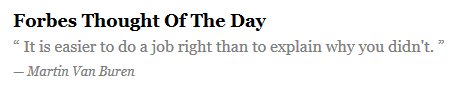
    I wish this were the mantra of all people, but certainly those in technology:

    job