Tag: career2

  • Questioning the Interviewer

    John Cleese
    Hopefully you never have an interview like this.

    When you are in a job interview, it’s almost inevitable that near the end the interviewer will ask you what questions you have. As noted in this post, a large number of people have no questions. It’s certainly possible that the interview covered all the questions you would want to have answered, but do you have a list of questions before the interview starts?

    You should. I think it’s important that you ask questions in an interview, especially questions that are important to you. Many times each of us wants a job, needs to get a job, and don’t want to do anything that might jeopardize our chances. However taking a job that’s a bad fit, or has some aspect that will bother you every day is a bad idea. You spend a lot of time at work and a poor work environment can make your life miserable.

    In the piece, the person makes a good point that your questions reflect your priorities and can result in an unfavorable impression. I think you can ask about topics like telecommuting, but do so in a way that shows you are interested and excited about the job. I’ve noted long commutes and the time they take in an interview, asking if I can better use that time to solve problems by working at home a day or two. The way you bring topics up can matter, so make sure that you word your questions in a way that shows you are interested in doing a good job.

    I do think that asking questions which show your enthusiasm or interest in the position are good questions to ask. However you should think about those questions before you go to the interview and determine if what impression they make. Write down your questions, and if they are answered during the interview, mark them off and ask any remaining questions at the end.

    The interview is your best chance to determine if the position is a good fit for you and the company, so take advantage of that.

    Steve Jones


    The Voice of the DBA Podcasts

    We publish three versions of the podcast each day for you to enjoy.

  • Innovation

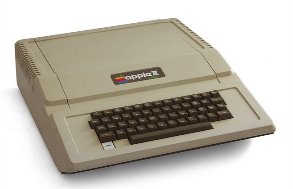
    apple II
    As a kid, I thought this was the coolest invention around.

    Computers are so cool. I remember thinking that as a kid, thinking about how I could tell a computer to do something for me with a little programming. Some of my programs weren’t that impressive, such as the ones that helped me perform chemistry lab calculations on an Apple II, but they were helpful. I remember having so many ideas about what I could make a computer do that I couldn’t even find time to work on a fraction of them.

    I think many of us have a similar excitement by computers, but the seemingly limitless number of things they can do. We love to be creative, and innovative, in how we get computers and applications to work together. Even administrators have some very creative ways they are using technology to manage or work with groups of computers.

    This Friday, as you have your morning coffee (or tea, as Brian Kelleyprefers), I’m wondering if that creativity is important in your company. When you think about the way management views Information Technology, the jobs of you and your peers, how would you answer this?

    Does innovation matter much at your organization?

    There’s a good management article that talks about the ways in which innovation and creativity can be fostered. Some of this is important in all companies, but not in all jobs. Sometimes management just wants a job to do a job well. Is that the case for you?  While I’d like to see more managers fostering innovation at all positions, do you think it matters for your job?

    Steve Jones


    The Voice of the DBA Podcasts

    We publish three versions of the podcast each day for you to enjoy.

  • Wasting Time

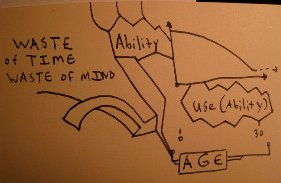
    Wasting time is wasting the talent you have.

    I ran across this infographic on wasting time at work. From the title I was thinking this would point out the ways in which people avoid work, and perhaps it does, but it’s really geared towards showing us the framework and structure that many people have for work. I agree with the first two sections of the page that show email and meetings waste a lot of time. I certainly think they have in many jobs for me, especially when they are used as “catch-all” techniques for including everyone that is remotely relevant to an issue.

    Interruptions at work are hard to quantify as a problem. They definitely can be, but stopping by someone’s office to ask a question or take a quick break can be a way to recharge yourself between long periods of concentration. The issues come into play when the other person is in the middle of focusing on a task and you force a context switch on them. Recovering from the interruption can take time, time that’s often wasted as a person tries to remember exactly what they were focusing on.

    Meetings certainly interrupt the day, but since they are often planned in advance, you can be mentally prepared for the break. It makes me wonder if there wouldn’t be some benefit to scheduling some “open time” in your day where you plan on taking a break. Others that needed a minute of your time would know to come find you at that time.

    Time is very valuable, one of the most valuable resources we have at work. Management should be aware of this and working to limit interruptions, whether through email, meetings or anything else that prevents work from getting done. The fewer meetings and emails you require of your developers, the more time they have to work on the tasks they are being paid to complete.

    Steve Jones

  • Potential

    I love sports, and every year I’m amazed to see how many highly touted athletes, those picked early by their teams, fail to perform at a high level. Many of them go on to average careers, but quite a few fail out of sports within a few years, becoming just another person that didn’t live up to their potential. I thought this was mostly a sports-type phenomenon, but that might not be true.

    Are employers and managers looking at potential as well? Do they see high scores in school, or glowing recommendations as reasons to hire a technologies? I think this was definitely the case a ten or fifteen years ago when there were few candidates and many open positions. Managers tended to view anyone with a certification as having the potential to solve any problem with their computing systems. That still might be the case in some areas today, but as business people become more technology savvy, they realize that there’s a substantial different between different platforms. We can’t assume someone talented in one area is an expert in others.

    I think we are drawn to potential, often because many of us are optimists. We see the best in new ideas and people and want to believe they will succeed. I think this is also one of our problems in security because we see the potential benefits and don’t bother to look deeply enough into possible flaws. However as we are burned, and employment decisions burn many managers, we learn to look deeper at candidates and consider their past experiences, successes and failures, with an eye towards choosing someone that has a record of achievement.

    Then there’s a cloud hype. That might turn all of these ideas upside down and bring potential back to the forefront. Maybe doing a little project on Azure or AWS will convince your next interviewer that you have the potential to build an application that scales like the Netflix video delivery systems.

    Steve Jones


    The Voice of the DBA Podcasts

    We publish three versions of the podcast each day for you to enjoy.