Tag: travel

  • Grounded

    Technology has brought some challenges to travel. There is the bomb threat, of which I have no way to gauge how much of a potential problem this is on a daily basis. Certainly security at airports has changed over the years, and there is better scanning technology, but would anyone really be able to detect a bomb in a bag? Do we check all bags? I doubt anyone does, but perhaps I’m wrong. Either way, I hope this isn’t anything I need to worry about in my travels.

    I do carry electronics, usually a laptop, though sometimes two, along with the various supporting plugs and wires for charging it and my mobile. There was a time when I thought about getting a BRIX for demos, but with the requirements that security might make me turn it on, I decided not to get one. These days, with all the cloud options, I’m less worried about carrying a large amount of hardware, but I still need a laptop. When I saw a story about laptops being banned from flights, I wondered what I’d do.

    In this case, Macbooks are supposedly being banned if they have a certain battery issue. This came about quickly, and it’s likely that there were some business people in the middle of a trip when the ban was announced. That might have prevented them from flying, which would be quite a hassle. I remember when the Note was banned from some flights. I never met anyone that was inconvenienced, and likely plenty of people flew with their devices hidden in bags, so perhaps it wasn’t a big deal.

    I wonder about two things here. One, are we building new devices and technology that aren’t designed well from a safety standpoint? Most of us don’t have large servers in our offices anymore, so we might not care, but our other devices, which we use to get work done, perhaps might not be robust. In that case, I hope that businesses might have programs to help employees quickly replace devices if there are issues. Being on call and not having a device would be a nightmare.

    The other item is one I wonder about both for software and hardware. Do we make it easy enough to know what version of a device we have? I’ve owned Macbooks, and trying to determine what model you have is a chore. I can’t imagine that TSA or other security agencies could actually a) determine if you had a banned device, and b) know if you’ve had it repaired.

    I’d hate to think that companies will just build devices without making it easy to understand which generation of a device you own. This can already be a problem in not only computers, but other products like autos, where changes might be implemented in the middle of a model year. With the move to cloud and other rented software, are we going to have issues here? Azure SQL Database hasn’t changed the version in some time, despite there being changes to the code.

    Maybe it doesn’t matter, especially if old features don’t disappear. It does seem like something that we ought to do a better job of tracking, especially as it can be easy for us to have a model, but tag on a version number to easily allow a user to discern one from the other.

    Steve Jones

    Listen to the podcast at Libsyn, Stitcher or iTunes.

  • Data Challenges and Travel

    I made a quick trip to Pensacola recently for SQL Saturday #884. I had a great time and consider myself honored to be picked to speak, as well as lucky that I can make the trip. I didn’t have a smooth trip, as I wrote on my blog, but things worked out. These were really first world problems and minor hassles for me.

    When I wrote my blog, I was thinking about all the data I received, and didn’t receive on the trip. Across the last few years, United (my primary airline) has enhanced their apps and services to share more data with travelers. I get text reminders two hours before flights, which is usually my drop dead time to leave the house for the airport. A good reminder for me. I get an announcement when boarding starts. I’m usually there, but if I’m late, or busy in an airport trying to find food, coffee, or a restroom, this is a great reminder.

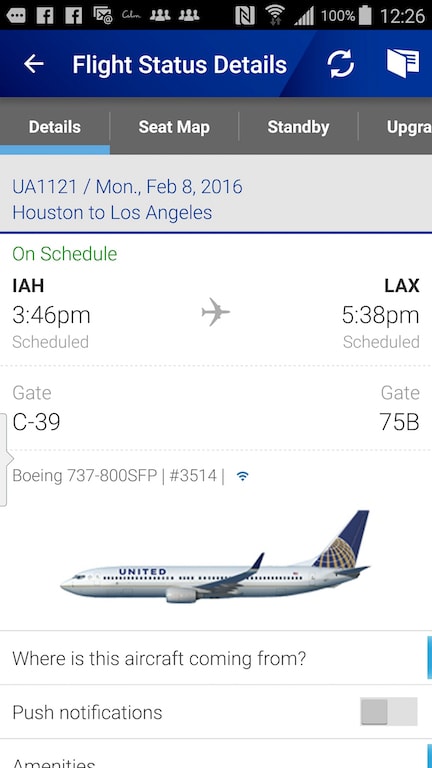
    Maybe the best part for me as a frequent traveler is the information about what’s happening with the plane before I get on it. There’s a “where is this plane coming from?” and a “where is this plane currently” view that I’ve used to make decisions on how to handle delays or other issues. While this might not matter to most people, though kids will love it, this has helped me to decide to rebook, alter plans at times, or even just keep working a bit longer during delays. Timing can be everything for frequent travelers.

    Perhaps one of the amazing things with the data from airlines is baggage. While I don’t know how things work, I have been amazed at times that my bags get from plane A to plane B in a short time. My frequent travels from Denver to London have had me running between planes at times. This means that baggage handlers have to know there are a few bags (I’m often not the only one) that are in a particular bin or bucket on plane A need to be separated out from other bags and routed to a plane, not the collection point. Add in the fact that many other bags might need to go to different planes in a short time, and it’s actually incredible that most bags get on the plane with their owners. Or maybe that’s a major source of “unexplained delays”. Who knows, but when you think about the challenges, it’s incredible.

    Certainly the data sharing isn’t perfect, and I’m sure the companies are careful about what they share. At the same time, I appreciate that other companies are doing a better job of using data and technology. While on my trip, I got a picture from Amazon of a package that was delivered to my house. I know it was my house because the package was next to a planter on my porch. Useful in case one of the kids moves it and denies doing so.

    Mistakes will continue to be made by companies all over the world, and certainly we should understand that. The more data they collect, and the more they share, the more we can better understand what went wrong and fix it in the future.

    Steve Jones

    Listen to the podcast at Libsyn, Stitcher or iTunes.

  • Taxing Travels

    It was a long weekend of travel for me not too long ago, starting at 4:30am on Friday and ending at 7:30pm Sunday night. This was for SQL Saturday #884 in Pensacola, an event I’ve attended 4 or 5 times, a few with my daughter. It’s always enjoyable, and this year was no different.

    However, the travel was surprisingly hard. I need to write a bit more about this, but I was surprised by both the issues that cropped up and how well the flights actually went. I’ll also mention that I had the 3 of nicest flight attendants I’ve ever interacted with on the three different flights. Thanks, @United staff.

    Flight 1

    This started when I hope at 430am Friday. I showered, and checked my phone, seeing a message that my flight was delayed. That’s pretty cool that two hours before flight time they can let me know of issues. I was thinking since this was such an early flight that the plane would be in Denver overnight, but I wasn’t thinking. There are early flights East of here and they can fly to arrive at Denver in time.

    Or not. In this case, weather in the Chicago region delayed the plane, which is why I try to avoid Chicago. In a big deal, but about an hour delay. With a 2 hour layover, I wasn’t too concerned, and headed to the airport. I arrived, got a cup of coffee and went through email/Slack at the gate. Travel doesn’t necessarily stop me from needing to deal with other work, so I made use of the time.

    Our plane arrived, people got off, I was ready to get on. Unfortunately, we were missing a flight attendant. One would think that scheduling staff is easy. It’s not, especially across time zones, locations, and potential limits on working hours. I don’t know if an employee had an issue in Denver or was on another flight or what. In any case, I know people that are in the airline industry and on call. They try to get  to the airport quickly when called, but things happened. In this case, we added about 15 minutes to our delay over just over an hour.

    Flight 2

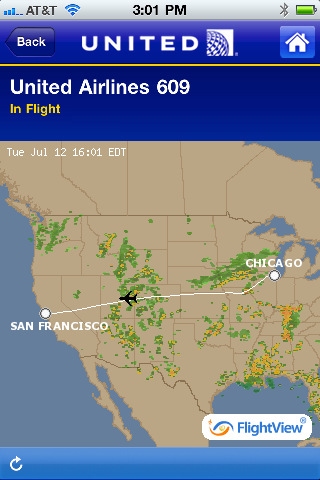
    One of the really neat things in the United mobile app is that I get information on gates and times, updated during the flight. Almost all United planes have wifi for entertainment, and you can purchase Internet access, but you get access to United data for free, like where your plane is flying.  You can look at a map that gives you an idea of how close you are.

    In this case, I was watching because we kept banking slightly. The generic flight map looks like this:

    den-ord

    Mine looked more like this (I should have taken a screenshot):

    p2-us-map

    To avoid weather, we kept turning. We actually came into Chicago from the North, after circling around the East. I got a side view out of the plane of the downtown area as we came in.

    20190628_101503

    We were late, and I had about 35 minutes before the other flight left, which means 25 minutes to get there. One thing I’ve learned is that the major airports have gate maps in the airline magazine. In this case I was going from one end of C concourse in O’Hare to the other end of F concourse. Not an easy journey. I jogged, and got there with about 10 minutes to spare. If I hadn’t been able to jog, life would have been rough.

    Normally I get a text on delays, but I think the stack of flights was delaying messaging because as I walked up to the gate, I could see the delay message. As I talked to an agent, my phone vibrated with the delay alert. This is one place I think United could do a better job of data sharing, but in any case, this was another scheduling issue.

    My plane was at the gate, workers were outside, so no lightning delays. However, our flight attendants and a pilot were in Milwaukee, which isn’t that far a drive from Chicago. They couldn’t take off because of weather, so we were delayed, even as other planes were coming and going.

    About 2 hours here, but again, a great flight attendant that was very pleasant when we did get going. I took the time to eat some lunch and do a little writing. I’d started some things on the plane that I finished on the ground.

    Flight 3

    After the event, I was at the airport a little early. I sat at a restaurant, writing up some notes from the weekend for changing a presentation as well as reporting for Redgate. The plane arrived on time and we started boarding. I fly enough to be part of the pre-boarding group, so after those with disabilities and families, I scanned my pass and started down the jetway. There I found a line of 6 or 7 people, with a few already on the plane. Since someone had gone with a wheelchair first, I assumed that this was the delay.

    Then I heard someone on the plane tell us to drop people from coming down the jetway. A few minutes later an agent came down and had us all walk back up the jetway and back into the terminal.

    Apparently there was a ground stop in Denver that the pilot had heard, so I can forgive the app not updating me. A 45 minute delay, under mostly sunny skies in Pensacola, though clouds in the distance. This was more concerning, and a little stressful. No work getting done now as I was worn out and annoyed.

    Almost an hour later, we start boarding and get on. The pilot will try to hurry and we take off. I have a couple drinks, thinking this is the end of a long weekend. It’s not.

    As we get close to Denver, we get good news and bad news.

    Good news: Denver is landing planes, albeit slowly.

    Bad news: we need to circle a bit and have an hour of fuel. If we don’t get landing clearance in an hour, we’ll go land somewhere else. Fortunately we have a little plane, so lots of choices.

    30 minutes later we get clearance and land. About two hours later than planned, but still, I’m home.

    Lots of Challenges

    I wrote this because I was thinking about all the challenges in flight operations and trying to coordinate many moving parts. It’s quite a logistical challenge, and while computers can help, I’m sure many humans need to be involved in some decisions along the way.

    These were really minor hassles in my life, and I’m not complaining. More, I’m in awe of the amount of data that must be managed and used to make decisions and direct humans. I didn’t check bags, but I have, and I’m always amazed how well my bags get from point A to point B, especially when I’m running to make connections.

    Nothing went as planned in my flights, but it all worked out well for me. Not for some others, but weather can be a big factor in traveling. I think the main thing I’ve learned is avoid Chicago and Chicago based planes whenever I can.

  • Come See the Future of Database DevOps at SQL Sat Austin

    I’ll be coming to SQL Saturday #890 – Austin in just over a week. Austin is a great technology town, and this should be one of the larger SQL Saturday events. I know traffic is tough, but the event is at St Edwards University, which isn’t downtown, so hopefully some of you can come.

    I’ve got two talks, and I’m excited about both. I’m doing a DevOps talk about the overview of how to incorporate the database into a DevOps flow. This has been a popular talk across the last few years, and I’ve given it at the Summit a couple of times.

    The other talk is one I’m more excited. The Future of Database Development with Containers is a look at how we might use SQL Server in software development in the future. It’s something Microsoft has shown some ideas with, but I’ve got some cool Redgate technology to show off as well, with a database-as-a-service from the Foundry.

    Register today and come see me and a few other fantastic sessions.

    If you want more training, there is a great pre-con on Friday as well. You can learn Data Science with Chris Hyde and add to your skillset. It’s good preparation if your company wants to perform more complex data analysis.