Author: way0utwest

  • Early Software

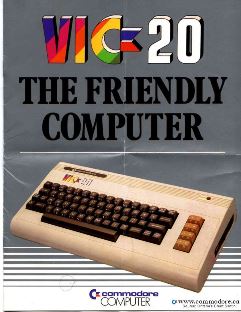
    My first computer as a kid.
    My first computer as a kid.

    I  have no idea what the first software I saw working on a computer system was. I’m sure it was some  basic demo program on a Vic-20, which I convinced my mother to buy for us. I remember learning to program on this machine for a year or so before saving up enough money to get an Apple II system. I purchased a few games, but most of the software that ran on my computer was written by me. Programs to solve chemistry and physics labs, early attempts at making our own Dungeons and Dragons programs and even a baseball statistics program to “replay” games from the past.

    The first real software I saw in a business setting was a construction estimation program that combined a spreadsheet with some basic CRUD application for managing projects. A neighbor had a business and hired me one summer to help him get it running in his office and train his staff to use it. I’m not sure how well it worked, but I remember being amazed at how much effort and paper it reduced for his company.

    Since that time computers have evolved and software has grown tremendously to incorporate many more graphical elements than I imagined as a kid. However those early programs still stick in my mind and I’m sure have influenced the way I view the world today. Dave Winer wrote about early software and how it’s influenced the applications we have today. I do think there are a lot of influential programs, and the wide variety of them, and the different ways people reacted to them, resulted in what we have today. This Friday, I wanted to ask you this:

    What software first inspired you to work with computers.

    What programs changed your career, or perhaps motivated you to work more closely with the data and less with the programs. Is there any software you really enjoy working with? Do you wish you could build something similar? Let us know today.

    Steve Jones


    The Voice of the DBA Podcasts

    We publish three versions of the podcast each day for you to enjoy. Today there are no podcasts due to various issues, but the podcasts will return on Monday.


  • Fix the Little Things

    2188

    I thought this was a great blog post and it got me to read, even though it’s a topic I know about, have written about, and didn’t think the post would reveal anything amazing: Finding Fragmentation Of An Index And Fixing It. It’s no-nonsense and it lets me know right away that this author intends to help me.

    But I’m somewhat amazed how many fragmentation questions, posts, articles, and more that I still see on a regular basis. Shouldn’t this be a low level feature of SQL Server that just works? In 2008, or I guess SQL 11 now, should there be any reason for a DBA to monitor this and write custom code to ensure that it’s fixed on a regular basis? Should this not be something built into the system?

    I dream about the day of right clicking a table and choosing “defragment.” This wonderful built in utility would then return my table to it’s initial fill factor and clean up all the allocations of extents to ensure that they were contiguous. It would have options I could pull up that would set the minimum and maximum levels of fragmentation I accept, based on server defaults of course, and it would ensure that my tables were kept within those limits. Sure it would be a background process, it would consume CPU cycles and require a good amount of disk space, but those things are relatively cheap.

    Especially when compared with the cost of time for a DBA to manage this process. Even a few hours a year is too much time wasted by DBAs on a task like this.

    It’s not sexy, but there are a lot of DBAs out there that would really appreciate it. As much as I know large sales dominate the market and this isn’t something that reps at Microsoft can point to, it’s the little guys, those DBAs in lots of 1 and 2 person shops, 10 and 20 instance companies, that make the recommendation to upgrade. And if Microsoft spent some time cleaning up little features, making things work better, I bet there would be a lot of recommendations to change versions.

    And, Microsoft, if you deliver small things that work well, along with the big, sexy features that flake or that we don’t understand, you might be surprised how many of us would be looking to upgrade before Service Pack 1.

  • Life is Like a Manure Spreader

    Life can be like a manure spreader.
    Life can be like a manure spreader.

    Not in the way you think, but in the hookup process. When I shovel enough horse presents to fill up the device, I get to the point where I need to connect it to one of our farm vehicles and go a-spreadin’.

    My wife complained at one point that I was unhooking the spreader and resting the tongue on the ground. When it got full she had trouble lifting it up and getting it on the hitch. I understood that and since I didn’t want to be the permanent manure-speader-hooker-upper, we found a block to rest it on so that the hookup was easier. However you still want to jockey the ATV or tractor close enough that you can easily get one to meet the other and minimize the lifting.

    As I was performing this process one morning, it got me thinking about work and some of the conflicts I’ve seen with other people. To be fair, I’ve had a few conflicts at one of my companies and was struggling to budge from my position. I try to work with people, but I’ll admit I can be a bit stubborn and pig-headed at times, especially when I think I’m right.

    But I think you must bring things together to be effective. Even the most adamant leaders, while they mostly get their way, they have to find a way to get the other side to bridge the gaps between them. Unless people can find a way to bridge those gaps, I really think that any enterprise is doomed to much less success than they might otherwise have. It doesn’t matter if you’re the CEO of a billion dollar company or a development team of 2, you need to find ways to work together.

    That means compromise, and that means that you have to make an effort to find some common ground, to really examine your position and see if there is a way you can make changes that are acceptable to the other side.

    I see my kids sometimes unable to do this, neither side willing to budge or consider any position other than their own. I’m amazed at how often this also occurs in business as well. There is always a way to work together and modify our position or argument. Often it comes down to just communicating with the other side. You might be amazed at how often you find out that that thing each of you cares about the most is not only different for each of you, but it’s something the other side doesn’t even worry about.

    The next time you find yourself locked in a battle at work, think about me out there jockeying the manure spreader. Even if you can’t find a way to work together, you’ll probably end up smiling.

    Steve Jones

    If you want to see the process, check out the video podcast.


    The Voice of the DBA Podcasts

    Everyday Jones

    The podcast feeds are now available at sqlservercentral.mevio.com to get better bandwidth and maybe a little more exposure :). Comments are definitely appreciated and wanted, and you can get feeds from there.

    Overall RSS Feed: or now on iTunes!

  • Off to Redmond

    Actually I’m off to Bellevue this week for the annual MVP Summit that Microsoft puts on each year. This is a conference, with over 1000 MVPs attending where we get the chance to hear presentations and interact with the developers in our particular areas. I’ll be in downtown Bellevue for a few days this week, hopefully learning more about how SQL Server works and getting an idea on the directions the product will take in the next year or two. With all the attention on Azure, and work continuing on the next boxed version of SQL Server, I’m looking forward to many of the sessions.]

    As with most of the MVP events I attend, I can’t talk about much that goes on. We are under strict NDAs and until Microsoft decides to release something publicly, I won’t be writing.

    However I will be getting prepared to talk about things when they come out, along with many other MVPs. Hopefully it won’t be too long before we can disclose information to you that will make your jobs easier.