Author: way0utwest

  • Database Maintenance Essentials – Oracle Training Days

    Presented at Oracle Training Days, 2013

    Abstract: SQL Server requires a minimal level of maintenance to ensure that the platform functions at an optimum level without any unnecessary outages or problems. This talk will look at the basics of the maintenance operations that should be performed on SQL Server on a regular basis. The topics covered include:

    • Managing MDF and LDF Files
    • Managing Indexes
    • Maintaining Statistics
    • Checking for Corruption
    • Creating Backups That Will Restore
    • Managing Maintenance Jobs

    I cover the reasons why maintenance is required and include a number of references to help you enable this maintenance in your environment.
    In some presentations I will also cover the Red Gate tools that make this maintenance easier to perform. This is optional.

    Slides: Download the PPTX

    Level: 100

    Length: 60 minutes
  • A Computer Goes to College

    The incoming freshman at RPI.
    The incoming freshman at RPI.

    A college education is something many parents desire for their children. It’s almost expected that all school children in the US will grow up aiming to attend some university. Not all kids will follow this path, and whether it’s the best choice for most of them is debatable. Apparently IBM thinks it’s little one is ready to go as well.

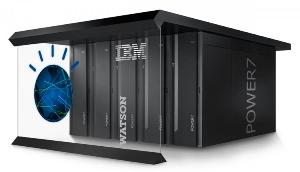
    A Watson supercomputer is being sent to Rensselaer Polytechnic Institute in New York to go to school. In it’s quest to defeat the Jeopardy champions, this type of computer was fed a tremendous amount of information from general sources. A clone of Watson received specialized medical data to help doctors diagnose patients better. This last incarnation of the computer system will be fed information from various researchers in different fields at RPI. What will come out of this, experiment nobody knows.

    The Watson system going to RPI seems modest in size, with 15TB of storage reported. That seems small. The specs posted for the Jeopardy system include 2880 cores and 16TB of RAM. That’s not the size of system many of us every get to work with. The software, called DeepQA, is the core of the system and allows it to process vast amounts of data and make connections between the data to answer questions.

    2880 cores is a lot, as is 16TB of RAM, but there are SQL Server installations that are getting close, with 2TB of RAM. Some Parallel Data Warehouse installations with hundreds of cores. I can foresee a day when Watson-sized systems are more common. Perhaps we’ll even get a Watson version that helps us better analyze the data we work with today, a version that works closely with the DBA-turned-data-analyst to extract information from the petabytes of storage we’ll have accumulated.

    Steve Jones


    The Voice of the DBA Podcasts

    We publish three versions of the podcast each day for you to enjoy.

  • Data Journalism

    Using data to tell a story is something that more database professionals should consider.
    Using data to tell a story is something that more database professionals should consider.

    The open data movement in goverment has produced some amazing data analysis from many sources. Many people are taking freely available data sets and producing a visualization, or an analysis of a problem, or even an application that is useful to the public. It’s one of the ways that technology and data analysis has really changed the world in a way that wouldn’t have been possible before powerful computers and mobile devices.

    I ran across a piece on data journalism that talks about a few projects around the world. This is the idea of adding a story, along with context and clarity, to facts. That is what many people are showing in the various projects in the O’Reilly piece, and it got me thinking. Perhaps this isn’t just something that can be done with open data and public services. Perhaps this is something we could be doing more of within all our organizations.

    Journalists learn to inform people in a compelling way. Data journalism is based more around large sets of data. Most of the people I know working with SQL Server often understand the data much better than the business analysts. These technologists, usually those performing some type of development tasks, learn how the data is structured and stored, and might notice the patterns and anomalies in ways that business users ignore.

    As the future of databases and database workers evolves, I suspect that those people who can learn to tell a compelling story about the data, that can present facts to clients and customers in a captivating manner will be in demand by many employers.

    Steve Jones


    The Voice of the DBA Podcasts

    We publish three versions of the podcast each day for you to enjoy.

  • I’m Speaking at ….

    Last week I noted that I was speaking at the new SQL Intersection event. Hopefully I’ll see some of you there and get the chance to shake some hands.

    As I was writing that post, I included a “I’ll be there” graphic, which I’ve included here as well. It was the first time I’d been sent a graphic from an event that specifically mentioned my as a speaker. It’s a neat idea, not only for promotions, but also as a way for me to include a small memory of my blog of the event. Somehow it seems slightly more personal than the event logo.

    A few days after I received that graphic, I got another email, this one from Karla Landrum of PASS. She noted that she was sending out “I’m speaking at” graphics for the SQL Saturday events. I got mine yesterday for the Albuqerque event this weekend.

    sqlsat183_speaking

    I think this is a great idea, and I’ve updated my speaking schedule with the graphic. I think it brightens up the page, and I’m looking forward to the other logos that will come from future events.

    Promoting events is hard, and every interesting thing you can do will help. Banner ads are often blocked or ignored by many people, but I do think the logos and pictures embedded into posts like this one can help raise awareness.

    And they’re a nice keepsake for your online blog, whether you’re a speaker or a trainer.

    Thanks to Jonathan Allen for suggesting this enhancement. If you’ve got an idea to help grow the SQL Saturdays or other events, please let the organizers know. Growing the SQL Server community and exciting others to join is something we all can do.