Author: way0utwest

  • Planning

    I made it to the UK on a very smooth, uneventful, on-time trip. That’s just what I like when traveling. After arriving at Heathrow and traveling to Cambridge, I arrived at the Red Gate office just in time for lunch. A fortuitous event as I was hungry after flying all night.

    Most of my afternoon was meeting with various product groups talking about planned enhancements and changes and how these items might benefit DBAs in the field. Grant and I are usually called on for sanity checks on thoughts, ideas, and plans.

    It’s interesting to discuss with product groups how and why they want to make changes. I can’t talk about specifics, but hearing from developers and project managers is always interesting to me. We see the world differently and it’s good to give feedback on products that can make a DBA’s job easier. I haven’t always had the chance to do that, but when I do, it’s a growing experience to hear how a vendor sees the world.

    I wrote about this recently, and a few disagreed, thinking that Microsoft doesn’t listen to them. I disagreed then, and I still do. I get an opinion at Red Gate, and with Microsoft. I don’t get to make a decision, or even much of a vote, but I do get to voice my opinion. Just because it isn’t followed doesn’t mean that someone didn’t listen.

    I don’t know to what extent my thoughts will influence the products, but I did see and discuss things with a variety of people in different departments, and the discussions evolved, so I know my opinion is heard. Whether it changes things remains to be seen.

  • Back Across the Water

    Another trip to the UK this week, with me leaving today for Cambridge and meetings at Red Gate Software. This will be my third trip this year, a record for me, and also the most travel I’ve done in a year.

    We are doing some planning for 2013, for the community and various events that Red Gate is a part of each year. We’ve supported user groups, SQL Saturdays, various conferences and our own SQL in the City events. Our goal is to interact with the community and learn things about how people use our software, as well as promote it, but also to educate data professionals. We want to turn a profit, but we also want to be a part of the community and support it where we can.

    I wish I could say that I’ll travel less next year, but I’m not sure that’s the case. We are looking to more effectively provide support, with more value for the money we spend, but I suspect that will mean more travel for Grant Fritchey and myself.

    We’ll see what happens, and we’ll likely start booking some events in 2013 soon. If you have ideas, suggestions, or requests, please feel free to post something here or send an email to communities@red-gate.com.

  • The Default DBA

    When we setup SQL Server, there are a few choices we need to make, some of which require a few items be prepared in advance. Service accounts are one of those preparation tasks that DBAs usually perform in advance of installing an instance. There are a few things, however, that aren’t configured when SQL Server is installed, like alerts and operators. I find that often these items can be missed by inexperienced DBAs, who forget to configure standard alerts. They might also not have a mail account ready, which is required for the instance to send mail.

    Perhaps there’s a better way for SQL Server to request this information when it is installed. If one part of the setup program asked for default mail information, it would be easy to pre-configure the instance to setup alerts and enable them for communication with a DBA. Personally I’d prefer that setup get a mail profile and a default DBA group email address that receives information about the operation of the instance that the DBA should be aware of.

    There can be a hesitation from experienced DBAs that don’t want setup to install mail for them, but it would be easy to make this an optional component, with a checkbox like the one for a blank sa password. You actively choose to install the server differently if necessary, but otherwise setup would push DBAs to ensure that notifications are configured. We could even see a pre-selected list of alerts that will be enabled, with the option to disable all or just selected items.

    I don’t know that Microsoft will build these types of defaults into SQL Server, but I wish they would. We’ve done that with SQL Monitor at Red Gate, and we have seen the advantages that come when you provide good practices and knowledge to less experienced DBAs: they gain some knowledge transfer and have software running at a high level from the very beginning.

    Steve Jones


    The Voice of the DBA Podcasts

    We publish three versions of the podcast each day for you to enjoy.

  • Grow Your Skills

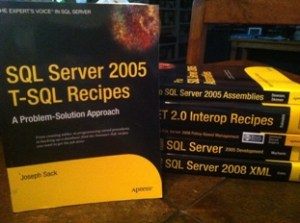
    SQL Server Books
    A large collection of books can help you improve your skills.

    The cloud is scary. Without a doubt the idea of outsourcing parts of your organization’s technology department should concern you if you manage systems. Anything outsourced, whether to another firm or automation, means there is less work for you to do. Even in the places where automation grows, we find that sometimes the growth of systems occurs so fast that there are still things for a worker to do, but that’s a losing battle in the long term. At some point the automation will catch up and less people will be needed to manage the systems.

    However the news isn’t all bad. There are some systems that will always be managed inside of a company. Whether because of regulatory requirements, performance needs, or even just the stubbornness of management, I am sure that some percentage of systems at most companies will remain in-house. Those will be the minority of systems in some places, and since many of us change jobs at some point in our careers, we should be concerned.

    I would argue that all of us working in technology should be looking to improve our skills in whatever field we work. However we should be growing the skills in the hard parts of our jobs, in the parts that we struggle to automate or describe. The easy parts of our jobs will become more automated, more likely to be managed by a tool or outsourced. The hard parts, the thoughtful parts, those are the skills we should concentrate on when improving our skills.

    Outsourcing isn’t all bad. As Toyota has outsourced some of their systems, they are not looking to shrink their IT department. Instead they are focusing on delivering new products and services for their customers. Make sure you are prepared to take advantage of new opportunities if your company follows a similar path.

    Steve Jones


    The Voice of the DBA Podcasts

    We publish three versions of the podcast each day for you to enjoy.