Author: way0utwest

  • I’m Not a Rock Star

    nickelback rockstar
    I’m not sure I would have enjoyed playing the same songs over and over, night after night.

    I used to play in a band in high school. I stood in front of crowds in bars and restaurants, dreaming of being a Rock Star. It never happened, and I’m not sure any of us had that much musical talent, but we had a lot of fun. As with most dreams, it was revived a few times in college, but eventually I let go of it, moving on to more practical, and less risky, career choices. However there are still times I’ve thought, “What if I’d tried harder….”

    I’ve had a great career and wonderful life and have no regrets. I’m lucky enough to work for a great company, and I get to spend my days at home, doing something I really enjoy. I get to travel as well, doing talks and meeting lots of data professionals all over. Both of those bring a smile to my face. Over the last couple weeks I participated in the SQL in the City tour, and while it was a tough schedule to follow, I really enjoyed the chance to meet so many DBAs and developers all around the country. We’ve still got one more event, on Monday, Nov 5, in Seattle, the week of the PASS Summit. Come by if you’ll be in town. It’s free, just register.

    Our tour covered five cities across eleven days, fortunately circling around Denver so I was able to go home a few times for a day or two. It’s much less grueling a schedule than many athletes or musicians follow, but it did teach me one thing: I wouldn’t have done well as a rock start. Delivering the same talks every two or three days was harder than I expected, and I didn’t love that part of the events. I would have preferred a little more variety of presentations, and it’s something I want to consider for future tour events.

    One very important thing I’ve learned across the last decade or so is that I need to understand who I am and what I like to do. I realized that often in my career I was willing to bend and flex to meet the demands of various employers. However when the bending and flexing was too far from my comfort zone, or occurred too regularly, I haven’t enjoyed the jobs.

    It’s important to know what you like, what you don’t, and what you are good at accomplishing and then finding the job that fits you. I might do another tour, but I won’t do them constantly. It’s not something I like or want to become a large part of my job.

    Steve Jones


    The Voice of the DBA Podcasts

    We publish three versions of the podcast each day for you to enjoy.

  • (Mis)Using DBCC Page

    In one of my presentations recently I was recommending DBCC CHECKDB on every database every day. I realize that isn’t always possible or practical, so I noted that if you don’t have resources on your production server, or enough spare hardware, you should at least run it on every database once a month. At least on the database you care about.

    Someone in the audience asked if they could just script DBCC PAGE on every page in the database instead. I wasn’t sure if that was accurate, but I didn’t think it was. So I asked THE MAN, and he confirmed this doesn’t equate to a DBCC CHECKDB.

    I won’t attempt to give a complete explanation, mostly because I’m sure I’d miss something or be incorrect, but I will tell you how I feel about this, based on what I know.

    CHECKDB performs an extensive evaluation of not only all objects (and hence their pages), but also their linkages. It performs a more complete check by default, but you can add the PHYSICAL_ONLY flag to speed things up and limit the checks to just the physical structures and allocations. PHYSICAL_ONLY also skips Filestream checks.

    The DBCC PAGE command, undocumented, works, but it doesn’t really examine if the links and relationships between pages are correct.

    I can’t say that DBCC PAGE couldn’t be use to detect corruption or find issues, but I wouldn’t depend on it. YMMV, but I wouldn’t use this as a substitute for CHECKDB.

  • Questioning the Interviewer

    John Cleese
    Hopefully you never have an interview like this.

    When you are in a job interview, it’s almost inevitable that near the end the interviewer will ask you what questions you have. As noted in this post, a large number of people have no questions. It’s certainly possible that the interview covered all the questions you would want to have answered, but do you have a list of questions before the interview starts?

    You should. I think it’s important that you ask questions in an interview, especially questions that are important to you. Many times each of us wants a job, needs to get a job, and don’t want to do anything that might jeopardize our chances. However taking a job that’s a bad fit, or has some aspect that will bother you every day is a bad idea. You spend a lot of time at work and a poor work environment can make your life miserable.

    In the piece, the person makes a good point that your questions reflect your priorities and can result in an unfavorable impression. I think you can ask about topics like telecommuting, but do so in a way that shows you are interested and excited about the job. I’ve noted long commutes and the time they take in an interview, asking if I can better use that time to solve problems by working at home a day or two. The way you bring topics up can matter, so make sure that you word your questions in a way that shows you are interested in doing a good job.

    I do think that asking questions which show your enthusiasm or interest in the position are good questions to ask. However you should think about those questions before you go to the interview and determine if what impression they make. Write down your questions, and if they are answered during the interview, mark them off and ask any remaining questions at the end.

    The interview is your best chance to determine if the position is a good fit for you and the company, so take advantage of that.

    Steve Jones


    The Voice of the DBA Podcasts

    We publish three versions of the podcast each day for you to enjoy.

  • Innovation

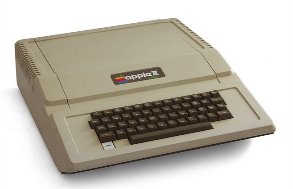
    apple II
    As a kid, I thought this was the coolest invention around.

    Computers are so cool. I remember thinking that as a kid, thinking about how I could tell a computer to do something for me with a little programming. Some of my programs weren’t that impressive, such as the ones that helped me perform chemistry lab calculations on an Apple II, but they were helpful. I remember having so many ideas about what I could make a computer do that I couldn’t even find time to work on a fraction of them.

    I think many of us have a similar excitement by computers, but the seemingly limitless number of things they can do. We love to be creative, and innovative, in how we get computers and applications to work together. Even administrators have some very creative ways they are using technology to manage or work with groups of computers.

    This Friday, as you have your morning coffee (or tea, as Brian Kelleyprefers), I’m wondering if that creativity is important in your company. When you think about the way management views Information Technology, the jobs of you and your peers, how would you answer this?

    Does innovation matter much at your organization?

    There’s a good management article that talks about the ways in which innovation and creativity can be fostered. Some of this is important in all companies, but not in all jobs. Sometimes management just wants a job to do a job well. Is that the case for you?  While I’d like to see more managers fostering innovation at all positions, do you think it matters for your job?

    Steve Jones


    The Voice of the DBA Podcasts

    We publish three versions of the podcast each day for you to enjoy.