Author: way0utwest

  • Making New Infrastructure Investments

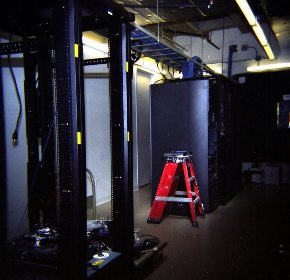
    server room build
    Will we do away with much of this data center build out with cloud services available?

    I was at a cloud conference recently, learning about the different ways in which people are starting to use cloud services. To be clear, I know that the cloud is nothing new, but it does have the potential to change the way we make decisions about infrastructure, and it absolutely will change the way we invest in IT if we choose to use cloud services.

    I had the chance to talk with three companies that were using the cloud. One was a startup that had foregone all investment in IT infrastructure. They had laptops for employees and one local server to keep copies of development code, but the rest of their “IT stuff” was in the cloud. As a new company, with no existing hardware, this makes sense. Their ability to offload all the sysadmin work meant that their developers didn’t have to worry about IT services; they just wrote code.

    The second company was a small company, one with some servers, but a growing company. They decided to move their email and document management to the cloud (in Office 365) rather than invest in bigger servers to handle the load. They maintained a local Sharepoint server, a development server, SQL databases, etc., but their decision to use cloud services was based on the desire to limit their future investment in computer hardware, and potentially additional staff.

    The last company surprised me. They were an established, medium sized company, and they used a few services in the cloud, like Salesforce, but they also moved some of their customer applications to the cloud. Why? They had a fairly unpredictable spike in traffic multiple times a month. They could have invested in hardware to handle the spikes, but they would have had that hardware idle quite often. Instead they maintain a small set of cloud server, growing them inside of a few hours when spikes occur, and trimming them down quickly when they are no longer needed.

    The cloud isn’t for every application. However there are probably more applications than you might expect that fit it well. As with any hyped technology, it pays to learn about the pros, cons, and potential resource costs to incorporate it and then making a case with your management for or against it’s inclusion in your IT tool belt.

    Steve Jones


    The Voice of the DBA Podcasts

    We publish three versions of the podcast each day for you to enjoy.

  • Always restore with NORECOVERY

    Always, always, ALWAYS restore a SQL Server database with the NORECOVERY option.

    It’s trivial to switch the database online.

    Not trivial to recover from an accidental restore with RECOVERY (the default)

    ‘nuff said.

  • Lifehacking – Not such a good idea?

    I read the confessions of a recovering Lifehacker and thought it was an interesting read. It seems that the author has started to realize that while you can make some differences in the small stuff in your life, it’s just small stuff. It’s also important not to let the organization, or hack, or change, overwhelm the benefit you get from it.

    I try to make some small changes here and there, and I do want to be more efficient, but not if the efficiency cost takes away too much of the rest of my life. It’s a balance, and one that can be hard to find.

    There’s also an interesting discussion on Hacker News about the post.

  • Use Tools

    Fortunately building tools for IT is easier than this.

    As someone that works with Information Technology, I usually work on applications designed to make work easier. For example, we have accounting systems that ease the handling of debits and credits, they detect mistakes in data entry, and in general require less people to handle the accounting needs of many firms. Do we have less accountants?

    I suppose we might have less, but it seems that the finance departments, handling AP and AR in many companies is as large as I remember from my younger days. Perhaps the department is smaller than it might otherwise be, but it’s usually not small.

    In IT, we have all kinds of tools available to us that can help with our jobs. What’s more, we can create new tools as needed to do our jobs. Powershell or Perl scripting, Codeplex projects, and more are available to most of us to help us better manage systems. In SQL Server, we even have a built in framework, Policy Based Management, that helps us prevent changes or problematic configurations. If you find a third party tool that can help, you can make a case for its purchase, using the time savings translated to actual costs. One of those tools might really make your job more enjoyable..

    In theory, we ought to be able to manage many more systems per person than we used to. Does that many that we need less people? Perhaps, but it seems we grow systems fast enough that we still need to hire more staff in many environments.

    I so often see people working in IT fail to take advantage of all the tools we have to automate much of their jobs. They often tell me if they automate too much of their jobs, they won’t be needed and may get let go. Personally I think that’s an excuse not to exercise your skills, challenge your mind, and get rid of tedious work There’s no shortage of work to be done in most companies. If that’s true, why not use your tools to get rid of the tedious work and spend your time on something more interesting?

    Steve Jones


    The Voice of the DBA Podcasts

    We publish three versions of the podcast each day for you to enjoy.