Author: way0utwest

  • The Connections Launch Event

    The SQLServerCentral track at SQL Server Connections

    The Spring SQL Server Connections conference will be one of the launch events for SQL Server 2012, the next version of the platform that we write about every day. This spring SQLServerCentral is sponsoring a track again, with Brad McGehee, Grant Fritchey, and myself speaking in one room. We’re all focusing on SQL Server 2012, trying to get ready to upgrade and use the new features.

    However we’re only a small part of the SQL Server track. SQLskills.com headlines the track, as they have for many years, with Kimberly L. Tripp, Paul Randal, and Jonathan Kehayias presenting some amazing information based on their years of experience (go to one of the SQLskills.com classes if you can). Paul and Kimberly have also invited a number of other great speakers, including Aaron Bertrand, Allen White, Brent Ozar, Glenn Berry, Mike Walsh, and more. These are the people that write many of books, blogs, and articles that you read to learn more about the SQL Server platform.

    The DevConnections conferences are a great place to not only learn about SQL Server, but also learn about all parts of the Microsoft technology stack. There are nine conferences in all taking place at the same time, covering Windows, Visual Studio, Sharepoint, Exchange, and more. There’s even a Cloud Connections, dealing with those issues that you’ll find when working with the Microsoft Azure products.

    It’s still winter in many parts of the US, so schedule your own “spring break” from work and come to Las Vegas this spring. The weather will be great, and you’ll have the chance to learn about all different type of Microsoft technologies and platforms in a fun environment. You can even take in an amazing show one of your nights in town and let your brain relax from all the tech talk during the day.

    Steve Jones


    The Voice of the DBA Podcasts

  • Be careful with your smartphone

    I love my iOS device and find it very handy.

    More and more tech professionals I know are carrying smartphones. There seems to be a split among technical people between iOS, Android, or WP7 platforms, but it seems that all the mobile OSes are extremely handy for system administrators. I know that I appreciate the ability to connect to email and other people when I’m away from my desk. If I were a production DBA, the ability to potentially fix something remotely, without the need to go to the office or back home, would be extremely valuable.

    However, carrying around a smartphone isn’t without a risk. The features and capabilities of the various mobile operating systems are a double edged sword. The power of the smartphone can easily be used for attacks against your network. This piece talks about hackers targeting the mobile platforms as another attack vector. That’s scary, especially as most of these mobile OSes were not designed to be secure.

    One of the very attractive parts of the Android platform is it’s openness. Anyone can build an app and sell it in the Android Marketplace. However that openness also means that the marketplace is a target for malware. While you might not like the Apple review process, it does offer some security. I’m not sure how the Windows Phone 7 platform is affected, but I would hope there is some security review. I also hope third party stores, like the Amazon Android store, will do some kind of security review to prevent malware.

    Ultimately if you are a privileged user on a corporate network, and you connect from your smartphone, you need to be extra careful. Set a password on your phone, don’t save passwords to trusted systems in your mobile browser, and be especially careful about scanning your system regularly.

    Steve Jones


    The Voice of the DBA Podcasts

  • How to change the SQL Server service account

    It’s easy. First you click here:

    serviceaccount1

    Then you find the SQL Server 2008 or 2008 R2 program group

    serviceaccount2

    Open those and then pick the SQL Server Configuration Manager.

    serviceaccount3

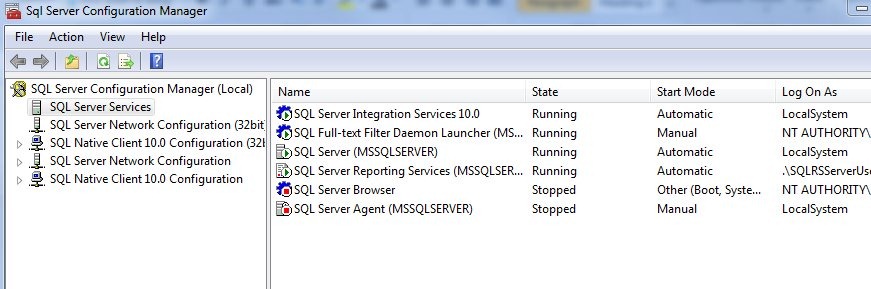
    You might get a UAC message asking if you want to make changes to the system, and say yes. This application can change service accounts, which is a sysadmin function. The screen basically looks like this:

    serviceaccount4

    If you right click the SQL Server entry, the database engine, you can select the properties, and you’ll get this screen:

    serviceaccount6

    On this screen, you can change the service account, and this is where you should change it. There are the three built in accounts in the top drop down (Local System, Local Service, and Network Service). I don’t recommend these. Instead, I recommend you create a new Active Directory Domain account (or local user account), assign it no rights, and then use the lower radio button to select the account.

    serviceaccount7

    Note that you do can search for it, and also you need to enter the user account. The password, while conforming to your domain policy, shouldn’t be one you use elsewhere. Make it a long, impossible to guess combination of stuff. You don’t need to recover this or log on as the user after you’ve assigned it to SQL Server. If you need to recover the password, just change it.

    A couple quick notes, on the Service Tab you can set the startup mode (Manual, automatic) for the database engine.

    serviceaccount8

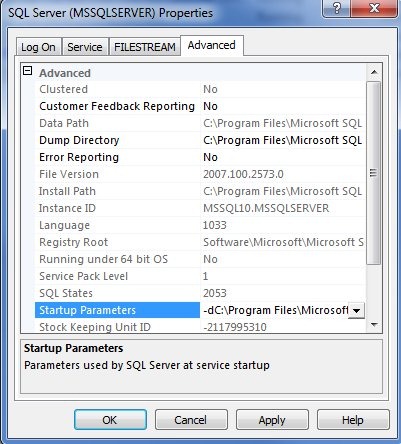
    You can also change startup parameters here, on the Advanced tab.

    serviceaccount9

    That’s it, it’s easy, and it’s how you should change the service account for SQL Server.

  • When in trouble, upgrade

    When in trouble, upgrade.

    That’s what I did the other day, when I found my Corel VideoStudio X2 (v12), wouldn’t play any videos. It was podcast edit day, and I was on a deadline. I know this is the worst advice, and not necessarily what you want to do, but X3 had come out late last year, and I’d even purchased an upgrade this past summer. I didn’t think I’d get any support on the old version, and the new version had proven very stable for many people.

    I hadn’t upgraded until now because the last upgrade I did, from v10 to X2 had taken me a few days to reset some of my clips, reload settings, etc. I was worried about the time involved, but after restarting my machine a couple times and trying different things with the software, I decided to try the upgrade. I searched through email to find my license key, discovered the X3 installation file in my \Downloads folder, and performed the upgrade.

    The installation was slow. Unpacking the installation files to get to the EULA took 10 minutes on my quad core desktop. From there, it was a simple matter to agree, input the serial number, and let the installation run. I have no idea how long it took because I left my desk to run an errand, and came back 20 minutes later to find it complete. Everything went smoothly, and apart from a couple of buttons I use being moved, everything seemed to function as before. It was even a little quicker when rendering video!

    Running an upgrade to fix an issue is not necessarily what I’d recommend for most people. It’s a sledgehammer fix for a potential screwdriver problem. Really you ought to work through issues with your vendor, and if you are really stuck, perform your upgrades on a test system, and actually test the process.

    In my case, I had a backup of the video files, and I also had a fallback to use my laptop to edit the video. It would have entailed a little setup and probably burned an hour, which is something I need to do, but I had a backup plan ready in case this didn’t work.