Author: way0utwest

  • SQL Inspire NYC – 2011

    The lineup for SQLInspire

    I spoke at the SQL Inspire event this last weekend and it was a greart experience. This event was sponsored by Linchpin people (founded by Andy Leonard, Brian Moran, and Matt Velic) and supported by Robert Pearl, Melissa Demsak, and others in the New York/New Jersey area.

    The event is modeled after the TED events, which was inspirational and informative talks that bring people together to discuss ideas and thoughts about various topics. In this case all the speakers were technologype focused people, but bringing different points of view or frames of reference to our SQL world.

    The event was held at the Microsoft office in Manhattan, the same place as the SQL Saturday event held there last year. I arrived just as the event was starting, and had breakfast. There was plenty to go around, which was good as I’d forgotten to pack the protein bars I normally eat in the morning.

    There was plenty of coffee as well, and I had a cup while watching the event start with Robert Pearl talking about telecommuting. He had some good ideas for people that want to work from home, including some data and arguments that you could give to your boss.

    The event was structured as a series of 20 minute talks, with a few breaks throughout the day. Tom LaRock had come down from Boston with his daughter. He had a great talk about “Someday”, which as he noted, “isn’t one of the seven days of the week.” Tom cautioned people against waiting too long to do things, or putting off the parts of their career that are important to them, or even the simple things that need to be done in every environment, like making sure you have good backups. He had one point in the talk where he was looking forward to things in the future, and he choked up while mentioning the chance to walk his daughter down the aisle at her wedding. It was a touching moment, and I was choked up as well thinking about my little girl.

    SQL Someday

    Michael Coles talked about the job market, Andrew Brust talked about Big Data, and Brian Moran talked about Linchpin people and how he is trying to change the way that people view their work and their business. Michael Corey had a great talk about how he had grown his career from DBA to CEO of a consulting company and how he runs a successful, moral, well balanced place to work. I grabbed a card from him and will keep NTirety, his company, in mind if I ever need a job. They seem to work the way I’d like to work.

    My talk was right after lunch and titled “Finding Balance”. My focus was on the ways in which we can all manage to improve our careers, get raises, promotions, etc., while still managing to have a life. I’ll blog about it more, but the main ideas were three things I think are important to balancing out your life.
    – Learn to say no
    – Play your own game
    – Balance

    The entire event was video taped and recorded, and I believe that the videos will be available in a few weeks for people to view. There were about 60 or so people there throughout the day, and they seemed to enjoy the talks. Quite a few people came up to me and other speakers at the end to thank us for the information we presented, and they seemed to be making notes or engaged with the speakers during the day.
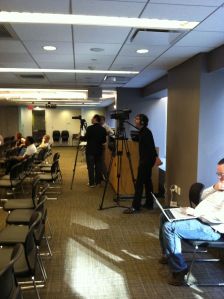
    Video by And Now Video

    There were a number of sponsors that helped bring this event to fruition, including my employer, Red Gate Software, along with Confio, Embarcadero, and Microsoft.

    This was a much different type of event than many SQL Saturdays. The talks focused on abstract, more soft-skill topics, that were designed to inspire you, and get you to re-think the way that your career is progressing. I hope there are more of these events, or even that they can be held alongside other SQL Saturday events as a change of pace from the strictly technical presentations.

    New York City was great, with mild weather on a November weekend. The sun shined as I went for a run out to Central Park on Saturday morning. I stayed at The Pod hotel, which is a hostel, and an ecclectic change of pace from many other places I’ve visited. We had a few people come out after the event to share a few beers and talk about the event, life, and a few other topics.

    My thanks to Andy, Brian, and Matt and I hope they are able to run a few of these events in other places in 2012.
  • The Industry Problem

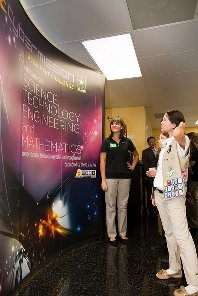
    STEM subjects for Girl Scouts
    Do we need more STEM subject majors?

    The majority of the people that I know working in technology do not seem to have college degrees in computer science. I know many people with degrees in many other subjects, and quite a few people that don’t have a degree. In most of those cases, the successful individuals have worked in the real world and gathered their knowledge about technology through hard work across time. It also seems that many of the people I’ve met with CS degrees are often those that make he most mistakes in real world software development or system administration.

    Colleges don’t teach you all the skills you need in the real technology world. The best workers I know in this business are the most adaptable, thinking laterally about problems, and bringing flexible approaches to solving problems. With many surveys showing a shortage of technical talent likely in the next few years, we ought to be encouraging more people to enter the technology field.

    When I saw this article about college graduates in STEM (science, technology, engineering, and math) subjects, I had mixed feelings. On one hand I think that people growing up today need to be smarter, and more educated than ever before.  Expecting to coast through some job, whether it’s in technology, marketing, medicine, or any other field, on the basis of what you learn in your 20s is not acceptable. I think that a larger and larger percentage of the population needs to constantly improve their understanding of how technology works, learn how to find patterns in data and apply new concepts to solving problems, and use computer tools to perform more complex analysis of data. That would seem to require a heavier grounding in the STEM subjects, and perhaps more major concentrations in those areas.

    On the other hand, lateral thinking doesn’t necessarily come from heavy concentrations of one subject. The broad education that can come from different types of learning are invaluable, especially in a global, complex world that is growing every closer together. The success of so many friends that didn’t study STEM subjects makes me think that people can study anything, as long as it requires them to work hard, and learn to think through a series of challenges.

    There are many pundits noting that we have a shortage of workers in the technology area. If that’s true, then I’m not sure the solution is pushing more STEM subjects on students. Instead I think we need to provide people with a better image of working with technology, and excite them by the challenges and opportunities that are available to those that have chosen this career field.

    Steve Jones


    The Voice of the DBA Podcasts

  • SQLInspire

    I’m off to New York City, center of the universe, and SQLInspire today. This is my last trip of the year, and I am very glad for that. This will be my 15th event of the year and that’s a lot. I’m looking forward to a run in Central Park, however, and seeing the bright lights and big city for a day.

    This is one event, however, that I’m very much looking forward to. The SQLPeople people, Andy Leonard (blog | @AndyLeonard)  and Brian Moran (Linchpin People | @briancmoran), put together this event based on the TED events that occur all over the world. I love TED talks, and find myself learning some amazing things from them. This event is more SQL focused, but designed in the same way. To bring new ideas to you, inspire you, and get you to think about the world around you.

    My session is Finding Your Balance, and I’m hoping to goes over well. I’ll post a transcript of the talk after the event. If you attend, please come by and shake my hand.

  • License by Core

    It had to change at some point in time. I’ve watched technology advance over the last few years, with dual core, quad core, and even up to twelve core processors appearing from Intel and AMD. With those advances, one of the huge advantages of choosing SQL Server over other RDBMS’s is that SQL Server has been licensed by physical socket rather than core licensing. For less cost, we have been getting more and more processing power for our CPU licenses. However with SQL Server 2012 being released next year sometime, that is due to change. Microsoft released initial licensing information and Denny Cherry (blog | @MrDenny) wrote a great post that helps explain how the licensing will be handled moving forward.

    SQL Server 2012 is coming next year

    Licensing is a strange topic for me. There are so many restrictions and decisions made by software companies as to how they will allow customers to use their products, it is not only confusing, it can be incredibly frustrating. For most DBAs, we don’t sign the checks to purchase the software, but we are charged with finding the best deals we can for our companies, and making the decisions about which editions are needed, how many licenses are appropriate and which type of license. We are also under pressure to minimize costs, which often results in lots of stress trying to make the best decision for our workload while ensuring compliance with vendor licensing.

    I’ve made my thoughts on licensing known before (I prefer licensing by scale only), but at least the new scheme for 2012 is fairly simple. We have fewer editions and we are licensing by cores, so sockets * cores = licenses needed. This is unlike Oracle, which has some strange math required for cores of different speeds. There are a few twists with virtualization, but it does appear that overall it’s a simpler scheme, although perhaps more expensive for some customers. There are some benefits for customers that upgrade licenses, so if you are considering moving servers to 2012, you might want to purchase SQL Server 2008 R2 licenses now. If you upgrade them later, it may be cheaper if you have larger servers, especially those with more than 4 cores per socket.

    With the ever increasing density of processing power in today’s CPUs, this changes seems fair to me. Microsoft can license SQL Server however they choose to do so, and I think the move to charging for cores makes sense. I would, however, like to see them just remove the feature restrictions and allow all features to exist in all editions of the product. We could build better applications and SQL Server would look to be a more polished product.

    Steve Jones


    The Voice of the DBA Podcasts