Author: way0utwest

  • Multiple Display Productivity

    It seems that when I travel to offices these days, it’s standard for most desk setups to have two monitors. I think all the desks at Redgate have a docking station and two monitors for people to use. They also convert to standing desks, which is handy. I have a standing desk that I use regularly, and it’s nice to have that option when I visit an office. At a number of customer sites, I’ve seen similar setups, sometimes with laptop/monitor lifts instead of desks that rise.

    Recently I saw a docking station announced that can support four monitors. I wonder how many of you want, need, or use more than two monitors. While there is often a standard in offices, since many of us work part or full-time at home, perhaps you have a different setup. Maybe you have one or two large monitors instead of 3 or 4 smaller ones. I’d certainly be interested to know if any of you have more than 4 monitors.

    I run three 24″ monitors on my desk. When I go to an office and use a docking station, I can use my laptop as a third, though the resolution gets a little funny. If I were there for any length of time, I might try to reconfigure the laptop to work with the lid closed. Maybe that’s a chore for the next trip. At home, however, I usually have SQL Server Central and writing tools on one monitor, Chrome with lots of tabs as my main workspace for research and general work, and Outlook/Spotify on a third monitor. That lets me focus on one monitor most of the time glancing at another one for reference or copy/paste work.

    I tried four monitors in a 2×2 configuration at one point, but I didn’t like looking up and down. Even now, I often really use two monitors, with side glances at a third one at times. I have been tempted to get 2 larger monitors (27-30″ range), but I’m not sure I would be more productive and not sure it’s worth spending the money for no real benefit I can perceive.

    I’ve seen some neat setups in people’s offices. I see some developers using vertical monitors, though I haven’t found that to be ergonomic for me. I seem to have too many long lines of code or text. I see some people using a laptop with one monitor, and I’ve seen some friends who are creative with videos/live streaming that use more than four monitors.

    I don’t know I have met anyone that has a gaming chair/monitor setup, but I’m sure someone out there has bought or built something like that. If you have, or you think you’ve got a cool setup, let me know.

    Steve Jones

    Listen to the podcast at Libsyn, Spotify, or iTunes.
  • A New Word: ioia

    ioia – n.the wish that you could see statistics overlaid on every person you encounter – checking the signal strength of their compatibility, a measure of their trustworthiness.

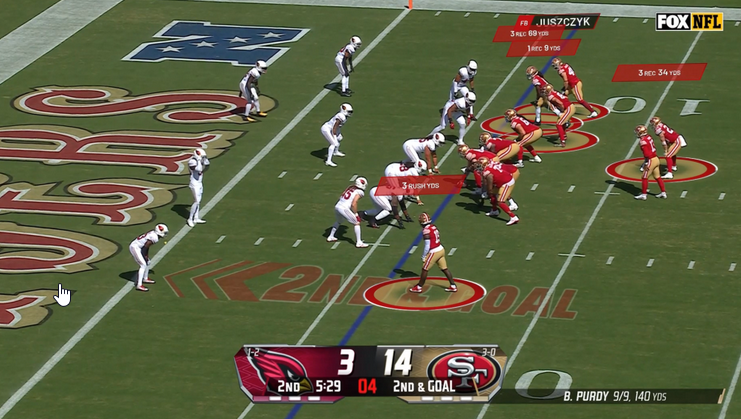
    I subscribe to the NFL Plus mobile package every year and watch various games on my phone/tablet as I have time. Often I watch some while working on the ranch, cutting grass, shopping in the grocery, etc. I bring this up as there are a few viewing options in the package. I can watch the normal game broadcast, but I can also see one with stats. This looks similar to the image below:

    2024-04-10 11_51_58-NFL  adding alternate game broadcasts — Mozilla Firefox

    I thought I would enjoy this, but I don’t. I don’t mind some stats at times, but I don’t like when there is an overlay while the players are in action.

    The idea of ioia being always overlaid on what I see, ala the Apple Vision or Google Glass views, would be annoying, and distracting. Already people checking mobiles is annoying.

    If I could control the display, and dismiss it, then maybe ioia is something I’d embrace. Of course, there’s still the concern with data quality as a lot of ratings for people are very subjective.

    From the Dictionary of Obscure Sorrows

  • Redgate Summit Comes to the Windy City

    I love Chicago. I went to visit three times in 2023: a Redgate event, a volleyball tournament, and a wedding. Each time was a lot of fun and I look forward to coming back at the end of this month.

    The Redgate Summit is coming to Chicago on May 29. Three weeks from today! Register today and save your spot. If you get on the wait list, reach out to your account executive as they have their own tickets to give away.

    We’ve had two amazing Summits in Atlanta and London and we’re bringing the show to the Windy City. We’ll be covering a wide variety of topics related to databases, across three tracks.

    • New and Future Tech – leveling up skills about database DevOps and teams
    • Deep Dive Solutions – technical talks on innovative strategies for delivering software
    • Leadership – focused on strategic initiatives

    We have something for everyone. Technical people, managers, senior leadership, and others. Tell your colleagues and come as a group, taking in different tracks and then discussing them alter.

    I hope to see you there and register for the Redgate Summit in Chicago today.

  • Are IT Certifications Still Relevant?

    I’ve got a few certifications and quite a few more that have expired or aren’t relevant. Does anyone think Windows NT 4.0 or SQL Server 6.5 matter? If you need help in those areas, ask someone else. Unless you have a crazy budget with a willingness to pay a ridiculous hourly rate.

    Kamil Nowinski had a recent video discussing why IT certifications are still relevant. He had ten reasons, and if you want to watch the entire show, you’ll hear his reasons and some rationale why he thinks they matter. It’s a good set of reasons: keeping up with tech, practicing learning, demonstrating a commitment to some technology, finding a community of certified colleagues, and more.

    In some sense, many of these are tightly coupled, but still worth pointing out. I think for smart, driven, ambitious people, certification is something that you can take advantage of to add to the learning you’re likely already doing: sharpening your saw. That’s an analogy to the craftsman that keeps his/her/their tools ready to go. For us in technology, this is usually our mental acuity with software (or perhaps typing).

    For those who aren’t motivated, getting a certification just to add letters after your name devalues the certification for sure. We saw a lot of paper-CNEs (Novell), paper-MCSEs (Microsoft), and paper-CNAs (Cisco) in the 90s. Poor interviewing techniques combined with a glut of certified-but-not capable staffers soured many people on certifications. For good reasons.

    However, when you interview someone with a certification, or if you want to get one, pursuing a certification using Kamil’s list means you are driving your knowledge forward in a focused, organized fashion. The certification isn’t the goal, but a step on the way to becoming a more capable technical professional.

    I got a couple of certifications in the last few years, and I felt they helped me grow and learn. I didn’t always use all the skills directly, but I learned things that have helped me in my job and I didn’t regret the time spent. I might work on another one in 2024, but time is always in short supply, and I’ve got other things to learn.

    Even if I’m not trying to get certified, I continue to learn for many of Kamil’s reasons, just without an examination during my journey.

    Steve Jones

    Listen to the podcast at Libsyn, Spotify, or iTunes.