I am in Seattle today attending the PASS Data Community Summit 2023, so you get Gigging for a Career as a republish.
Author: way0utwest
-
No Degree Needed
For most of my career, I’ve seen many companies that hire white-collar workers, including their IT staff, require a college degree or the equivalent experience in the military. Often this has been something the Human Resources department has made a requirement in their job descriptions and requests to recruiters. This was a filter that stopped many talented people from even getting an interview.
That hasn’t stopped a lot of people from pursuing careers as developers or IT staffers, and I’ve had many friends who have had successful careers without a degree.
The world has been changing, especially since the pandemic, and many companies are no longer requiring any sort of university degree for candidates. There are still a lot of job descriptions that “prefer” a degree, but even that is changing rapidly. I hope at some point that we stop looking at degrees as anything other than a bit of experience in working through a project and not as any sort of qualification for a particular job.
This week there was an article about seven ways to become a software engineer without a degree. The ways are: learn to program, earn a cert, contribute to an OSS codebase, write documentation, find employers who don’t care, be a freelance developer, and go to a bootcamp. Of these, a few seem redundant learning to code is probably needed to contribute to OSS or freelancing.
Of these, I overall like the advice. Being self-motivated or driven is a skill that many employers appreciate. Showing that you are producing something useful in the world is a good way to create opportunities. It’s also a sign that you’ll work to be productive and not expect to avoid work after getting hired. I know I prefer people who go figure things out rather than those who wait for someone else to tell them what to do. I don’t recommend bootcamps, however, unless you are very motivated to take whatever you learn and then expand on it with OSS contributions or other tasks that showcase and expand knowledge.
Finding a job is challenging at times, and certainly impressing someone enough to hire you is a task. A degree can help, especially with those who might be prejudiced towards university experience, but more and more people recognize that college doesn’t necessarily prepare you to be productive or a great employee. You can prove that to people yourself with some work, some documenting your efforts, and some good soft skills to explain what you know.
Steve Jones
-
Friday Flyway Tips – Adding the Type of Database Project
There was an update to Flyway Desktop which lets you see the type of database your project is associated with, and this post shows how to get this in your list of projects.
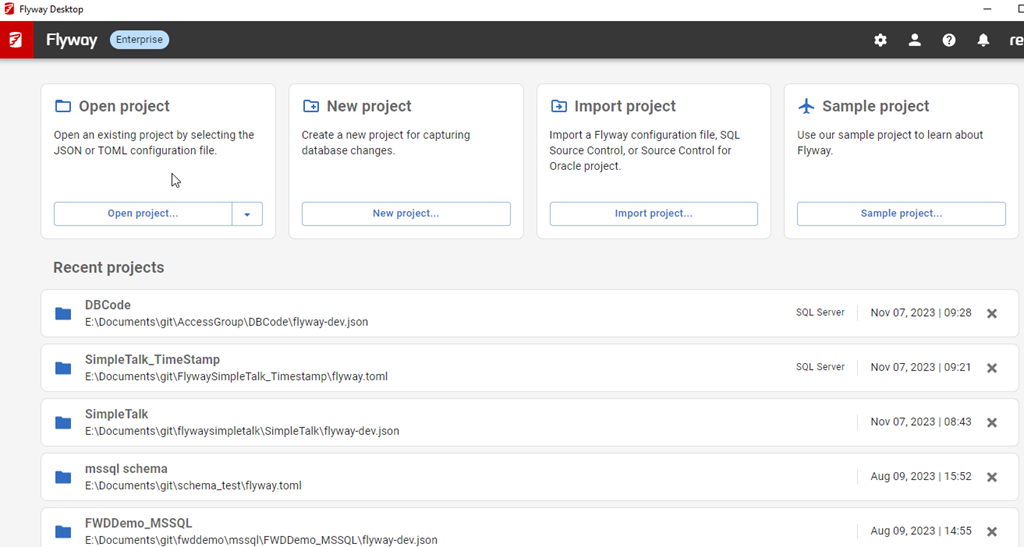
As an example, you can see below my first project is a “SQL Server” project.
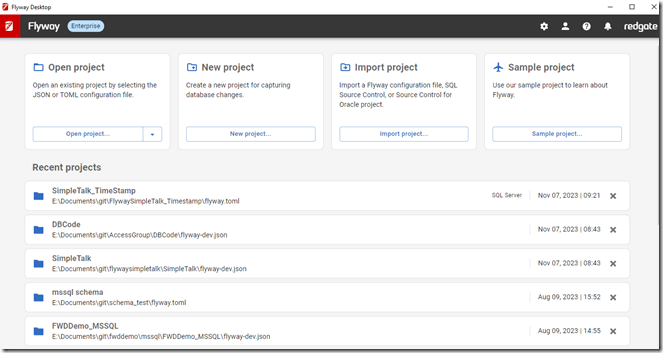
I’ve been working with Flyway Desktop for work more and more as we transition from older SSMS plugins to the standalone tool. This series looks at some tips I’ve gotten along the way.
Two Simple Steps
The first step to seeing the type of database project is to upgrade Flyway Desktop. The team is releasing basically every week. My version, upgraded before this post, is 6.9.3, so anything after this should have this capability.
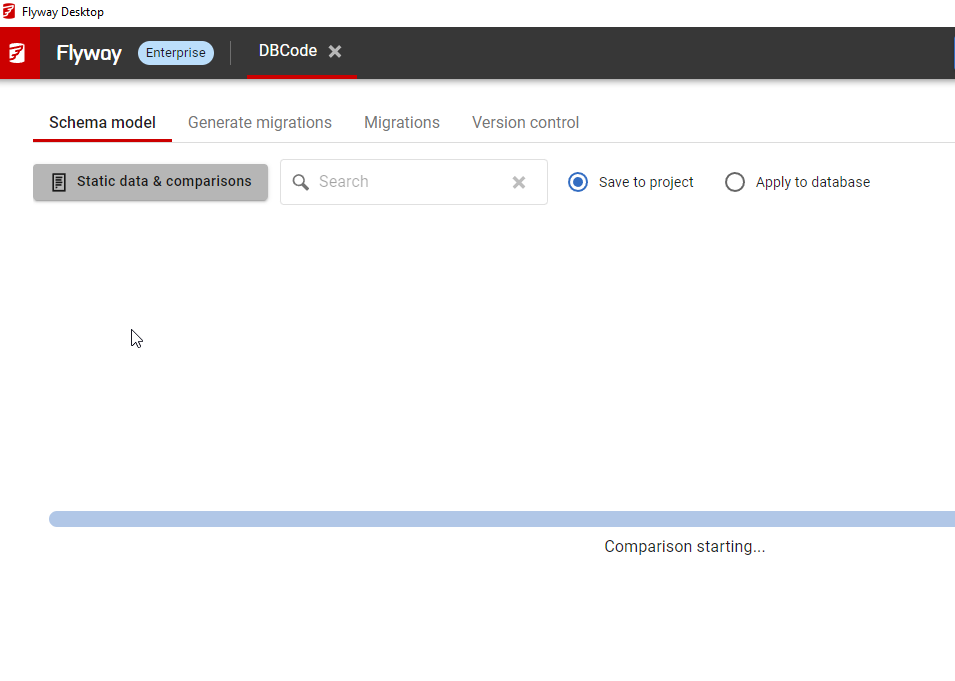
The second step is you need to open your project. If I open the “DBCode” project above, it starts the comparison.
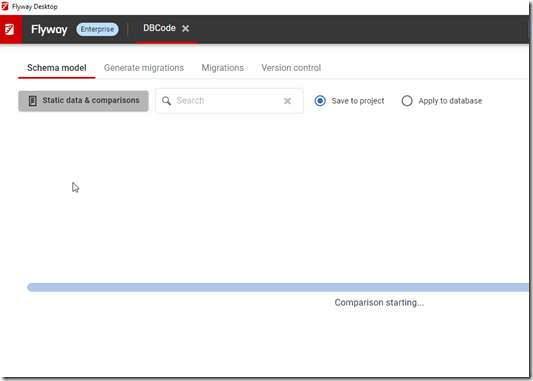
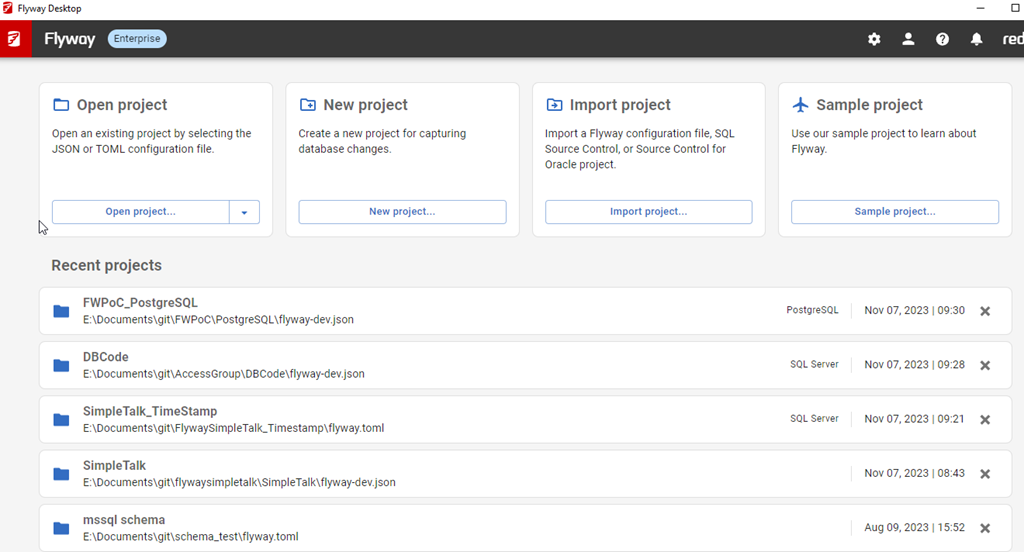
I don’t have to wait for the comparison, I can just close the project. Once I do, the type of project appears on the right side.
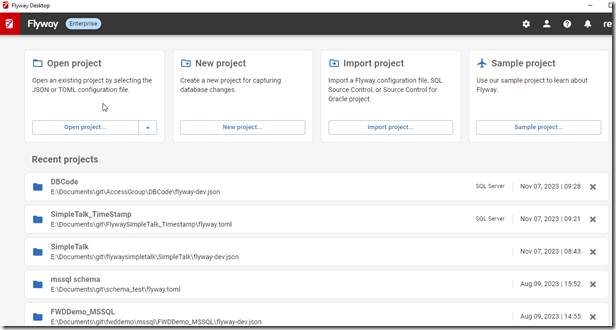
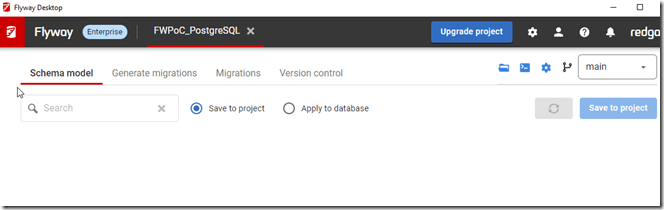
If you’ve been working with Flyway Desktop for awhile, you might have noticed an “Upgrade project” in the upper right. This is to upgrade the project from a JSON format to a TOML format, which doesn’t matter for you, but it does make the management of the internals of Flyway and Flyway Desktop easier for the developers.
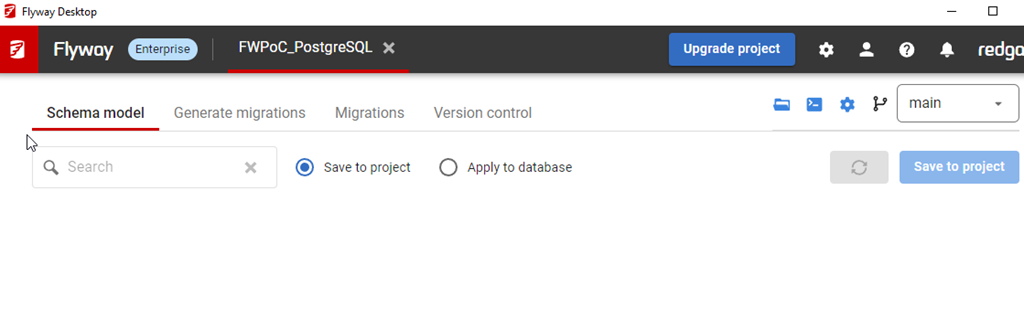
In any case, you don’t need to upgrade the project. If I open and close a PostgreSQL project, I see this:
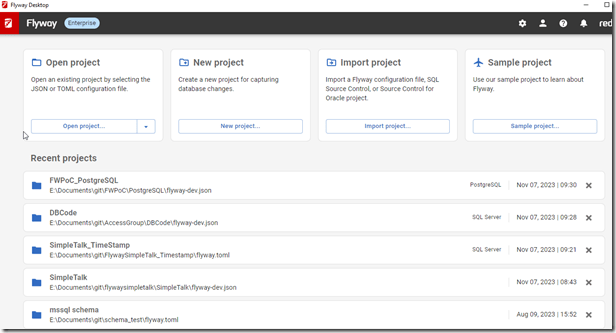
If I reopen the FWPoC_PostgreSQL project (named before this feature appeared), I see the upgrade is still there.
Try it out today. If you haven’t worked with Flyway Desktop, download it today. There is a free version that organizes migrations and paid versions with many more features.
Video Walkthrough
I made a quick video showing this as well. You can watch it below, or check out all the Flyway videos I’ve added:
-
30 Years of SQL Server on Windows
I’ve spent over 30 years working with SQL Server. I saw a post recently from Bob Ward who is celebrating 30 years at Microsoft, noting this is also the 30th anniversary of SQL Server on Windows. It’s been an honor for me to get to know Bob, learn from him, and spend time socially at various events around the world. He’s truly been a force in improving the SQL Server platform through the years.
While SQL Server has been on Windows for 30 years, I’ve got a bit more than 30 years working with the platform as I actually started managing a SQL Server instance on OS/2. With the addition of Linux, I’ve now run SQL Server on three different server OS hosts: OS/2, Windows, and Linux. That’s somewhat amazing to me, especially as one of my April Fools jokes came true. This was one of the most-read articles on SQL Server Central for a long time, and perhaps it influenced enough people at Microsoft to build and release a Linux version.
Over three decades, the growth of the platform has been amazing. We’ve had the core engine lose tables in memory and then get them back with In-Memory objects. We have seen the heavyweight trace evolve into Extended Events and SQL Audit. The language has grown with many new ANSI features that help us write better code. We’ve deprecated a number of objects and added the ability to create our own with the CLR. We’ve added new data types, not all of which are named well, but we still have the ability to process more types of data natively. We’ve even added new services, with SSIS, SSRS, and SSAS packaged into the platform.
Not a lot has been removed, but a few things are gone, like Notification Services. Replication doesn’t seem to have changed a lot in 30 years, which is a bit disappointing to me, but there have been a lot of improvements in HADR capabilities. We even have other companies (Amazon and Google) selling their own version of SQL Server as a platform, where you don’t have to manage the instance.
In many ways, I’ve found SQL Server to be easier to use, but also much harder to learn about because the breadth of what’s in the product is so wide now. I can’t imagine anyone actually knows the entire product at a very deep level. I’ve also found myself more disappointed with the experiments Microsoft makes when adding features and not continuing to invest and evolve them (or even fix all the bugs).
There certainly have been plenty of bugs, security issues, and maddening moments in working with SQL Server, but it’s been a great 30 years of a career working on the Windows version. I likely won’t do that for another 30 years, but I hope those of you making a living working with the platform enjoy it as much as I do.
Steve Jones
Listen to the podcast at Libsyn, Spotify, or iTunes.

 Voice of the DBA