Author: way0utwest

  • How Important is Zero Downtime?

    As I work with more and more customers at Redgate, I see some interesting trends. During the pandemic (and prior), we got a lot of questions on zero downtime and how to achieve database DevOps without causing problems. Those are always interesting discussions, and I find many people want magical solutions without having to change the way they work.

    The last year, however, has had more people looking to implement database DevOps and speed up their development, but not a lot of questions or demands for zero downtime during these deployments. I find that interesting as the world depends more and more on computer systems, and the customer base for many organizations may demand access to the systems at any hour of the day or night.

    However, it doesn’t seem that as many people are concerned about small moments of downtime. Does this mean that more organizations aren’t measuring uptime anymore? Perhaps the interruptions caused by software deployments aren’t being counted? Or maybe the application software has gotten better at hiding blips in database access. Perhaps feature flags are catching on as a standard practice, so database deployments are less troublesome.

    I’m not sure what has changed, but it has been noticeable by me that the importance of making changes without downtime has not been a requirement from many customers. Is that the case for many of you reading this? Are you less concerned about downtime? I think one nice thing about the move to the cloud is it’s a little less stable, and perhaps that has lowered some of the expectations of our management. Since it’s out of our control, maybe we shouldn’t be too concerned about the need for retries, either automatic or a customer pressing a button again.

    Let us know today if you feel pressure to get closer to zero downtime, either in your everyday management of databases or during deployments. Or maybe tell us if you’ve gotten so good at your job that no one every notices when you do make changes.

    Steve Jones

  • Daily Coping 24 Mar 2023–The Final Tip

    Today’s coping tip is to discover the joy in the simple things in life.

    This is the last coping tip for now. It’s been 3 years, and I hope you’ve enjoyed them.

    I have really tried to enjoy simple, little things in my life and travels. A text from one of my kids. A short chat with an athlete I coach. A conversation at a SQL Saturday or other event. The chance to share a picture, or see one, of a friend.

    Simple, little things make life interesting and wonderful.

    When I finish a book I enjoy. A small success in a game. Learning a new song or lick on guitar, or even having a single song play well. A tasty meal. A laugh from my wife.

    Looking at the world and enjoying little things helps me cope with the hard things, or the upsetting things. Remembering little joys, or noticing them, can reset my attitude or dampen other negative emotions.

    Try appreciating and enjoying something small. I bet you feel happier in the rest of your life.

    I started to add a daily coping tip to the SQL Server Central newsletter and to the Community Circle, which is helping me deal with the issues in the world. I’m adding my responses for each day here. All my coping tips are under this tag.

  • Experimenting with RedisGraph on Docker and Windows

    I have been experimenting a bit with graph databases, trying to learn more about them. One of the platforms I wanted to experiment with was RedisGraph. This post looks at getting this set up and running on a Windows machine.

    Things You Need

    A list of things:

    These are what I used.

    Getting Setup

    I won’t go into getting Docker running, but you should ensure you have Docker running and set to Linux containers on Windows. Once you’ve done that, then you can start up a container.

    You also need to run the Redis install to get the CLI to connect. I installed this and then set Redis to start manually and not start. You don’t need this running, nor do you want lots of extra services going. Plus, you’ll get a port conflict with instructions below.

    2023-03-23 22_30_20-Redis Properties (Local Computer)

    To start the container, run this code from a command prompt:

    docker run -p 6379:6379 -it --rm redislabs/redisgraph

    This does run the container with output to the command line, and you should see this when you run this:

    2023-03-23 22_32_21-cmd - docker  run -p 6379_6379 -it --rm redislabs_redisgraph

    To stop it, CTRL+C will stop the container.

    Connecting

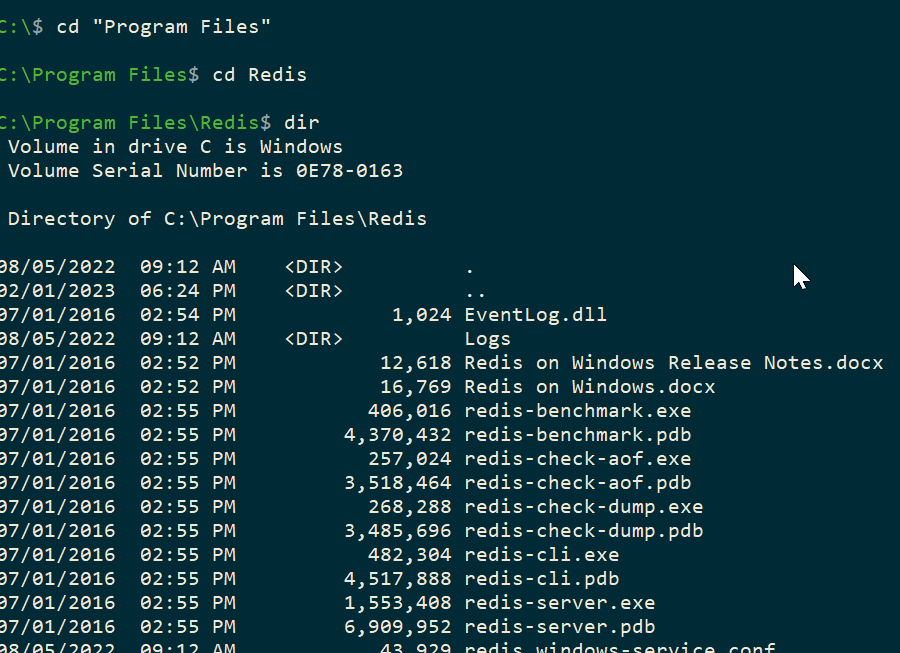
    To connect, we will run the Redis-cli.exe program. We can connect from programs, but for testing, let’s work at the command prompt. In a second command window, you will run this. My exe was in c:\program files\Redis, as you see below. Yours might be different, but once you find it, change to that directory.

    2023-03-23 22_34_01-cmd

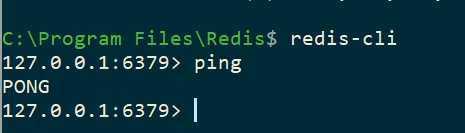
    If you run the redis-cli, you see this, a connection to the local host, with the port:

    2023-03-23 22_34_55-cmd - redis-cli

    In another post, I’ll create a graph, but to test this, if you type “ping”<enter>, you’ll get PONG back. That means your install is working fine.

    2023-03-23 22_36_49-cmd - redis-cli

  • Resources for Adding Graph Structures to Your Database at VS Live

    Thanks to everyone who attended my talk at VS Live Las Vegas 2023 on graph databases. I hope you enjoyed it, and if you have questions, please feel free to reach out.

    Resources

    Here are the resources: