Author: way0utwest

  • Setting Up Pi-Hole.Net

    I saw a tweet a short time ago from Drew Furgiuele about pi-hole.net. He noted this was a near use of a Raspberry Pi, and I wanted to give it a try. I got one awhile ago, and used it for a few things. We started with a media streaming device, but when I got a Fire Stick, this wasn’t needed or used. Then I tried a Bluetooth audio bridge to the stereo. It wasn’t as reliable as I’d like, and it added complexity to turning this on, letting it boot, etc.

    As a result, it’s been sitting a bit as I thought of some other project. The pi-hole seemed like something to try, so I decided to give it a go. It was pretty easy, and it blocks some ads. Not all of them, but

    First, I grabbed the latest release, Stretch, of Raspbian. I chose the lite version, since this will be headless. I downloaded that and also grabbed Etcher to flash the card. This took a bit, but I let it run in the background as I did other things.

    From there, I used Explorer to connect to the drive and create an empty “ssh” file. I read this tutorial, and ended up just creating a new text file in Windows, and removing the extension.

    Once this was done, I took the device up and plugged it into the router, both the Ethernet and the USB cables. This booted and connected the device. Back at my machine, I used Putty to connect. I did have to upgrade Putty to get the proper encryption level, but if you get a new copy, you’ll be fine.
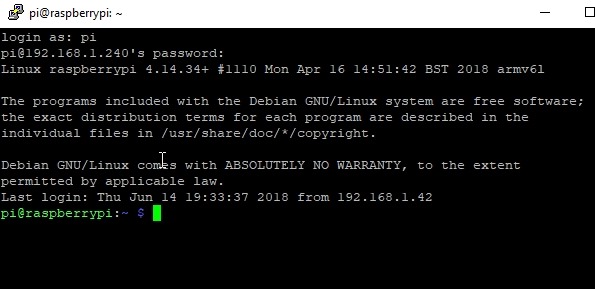
    2018-06-14 14_00_42-pi@raspberrypi_ ~

    A few people pointed out ssh is in Windows now. Great, that works, I like Putty.

    Once connected, I ran the curl command to get pi-hole installed. It was fairly simple, and once installed, walks you through some basic config and networking. I use the 192.168.1.0/24 network that most people do, but my DHCP is set to give out addresses from 2 to 199. 200 and above are statics for me, so I configured this to use one.

    After that, I got a password for the device and I went to my static IP/admin to see the Pi-hole dashboard. I logged in and I could see traffic. This is from the next day.
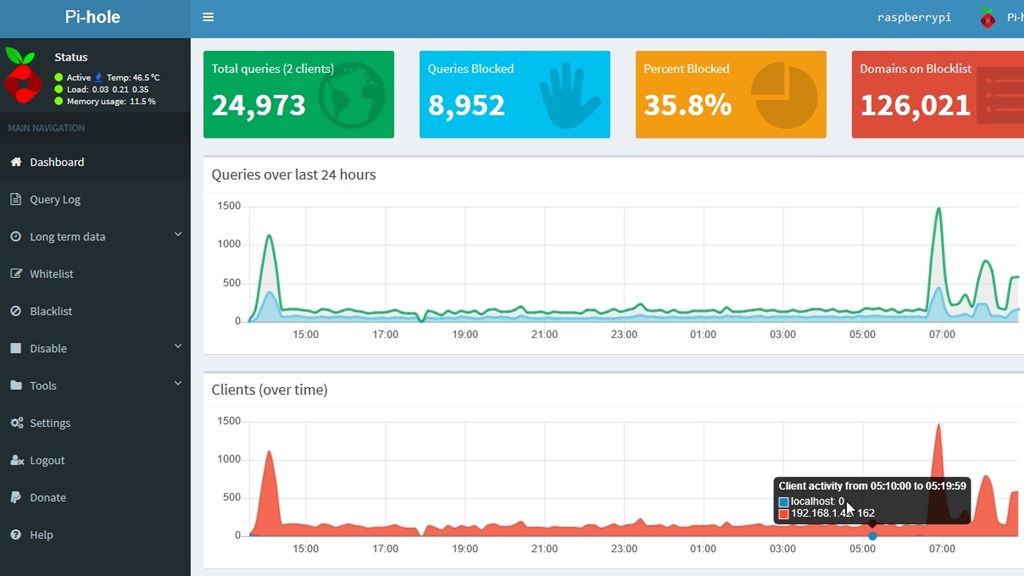
    2018-06-15 09_11_16-Pi-hole Admin Console

    It’s an interesting project and I’ll see how this goes. I could add a other software to this device, and I may. We’ll see.

    I’m not against advertising, but there are some shady sites and some data gathering. Right now, a lot of blocks are for some telemetry service, which is fine. I can’t get info on it, so I’m guessing it’s not legitimate.

    In case you are wondering, there are lots of queries to telemetry.servers.getgo.com that are being blocked.

    If you want to try it, this is a cheap experiment, and you can also play with Linux, some hardware, and SSH.

  • #SQLCareer

    Information Technology is a place that I think could be a very good career for many people. Our working conditions are good, the pay is above average, and we can continue to do this job for most of our lives. We have flexibility to work in many locations, and at different hours. There are downsides, as each of those advantages can work against us. We can be expected to work all hours, and in all places, including while on holidays. We don’t have the excuses of not being in an office, and with today’s small machines, we can be asked to carry our work with us wherever we go. How you handle those challenges and achieve balance in life is up to you, but I will say that it can be a burden to do so.

    When I first started to work in this business, I came from positions that required more physical labor and onsite work. I was pleasantly surprised at how much I preferred an office environment, especially as technology became more important and workplaces evolved into casual, even fun, places to spend my day. I’ve appreciated the growing flexibility as bandwidth has increased and remote work became first tolerated, and then accepted. In some cases, it’s even preferred. As my children have grown up, one of the great benefits for me has been the flexible schedule that allowed me to share many moments in their lives. The flipside is that I’ve also had to work many hours while they’re at home, at all hours of the day and night and many weekends.

    When I started working in this field, I had no idea what life would be like, and I bet that many people that are learning about computers are similarly naive. When I’ve spoken with students, or even adults seeking training for a new career, I find that the environment in education, not to mention the tools and techniques, are very different from that of most jobs. I’m regularly reminded of this while talking with my son, who is studying some computer science in university. He’s learning concepts and skills, but missing some of the very basic, practical items that I think academic training ignores.

    I think we can do better. I read Iris Classon’s post about her day, where she covers some of the tasks and flow of her workday. I’m looking forward to reading more about how her life as a developer goes, but I’d also like to put out a challenge to those in the SQL Server community. I think we can help others learn what it’s like to work in our field, either inspiring them to study harder and build more skills, or warn them of the dangers and downsides.

    If you have a blog, I’d like to ask you to write four posts. These could be four days in a row, or one day a week for a month. Once a month is probably too little, but if that’s the time you have, then do that. Let us know how your day goes, what tasks you undertake, the challenges, maybe even a little about the problems you solve. If you enjoy blogging, you’ll get ideas for even more posts. If you don’t, you’ll still build some communication skills. If you like your job, maybe you’ll get excited to share the things that are fun. If you don’t, then you might stop and think as you write about how you can make changes in life. You might even teach yourself something about your own career.

    Either way, you’ll learn something. I’ll ask that you tag these posts on your blog and any sharing you do as #SQLCareer. That way we help others get a sense of what it’s like to work in the Microsoft Data Platform space. If you want to write more, that’s fine, but set a reminder now, and schedule out a few posts about what your job is like.

    Steve Jones

    The Voice of the DBA Podcast

    Listen to the MP3 Audio ( 4.6MB) podcast or subscribe to the feed at iTunes and Libsyn.

  • Testing BackBlaze Restores

    The most important thing for a data guy is having a way to restore data. If security, performance, etc. are broken, those can be fixed is we have the data. If we don’t have data, does security matter? It’s important, but secondary.

    When Crashplan stopped providing a multi computer setup, I needed to get a new solution for home. I asked on Twitter and then wrote a bit about my evaluation and choices.  These were my particular requirements, and yours may be different. In any case, I decided to evaluate BackBlaze under their couple week evaluation and keep the system simple for both my wife and I. As a part of that evaluation, I tested restores.

    Missing a File

    I didn’t simulate a crash and restore all my files, but instead decided to test this while out of town. I was in the UK, at the Redgate Software office and wanted to check an expense report I’d submitted. I also wanted to get the latest expense report to add some items to it. I keep these on my desktop, but I haven’t setup a home VPN for access, nor would that have helped. My desktop was powered down for my 11 day trip.

    I decided to see how BackBlaze was working. My first step was to connect to my account on the BackBlaze.com site. I logged in and saw my machine listed in the Overview. (I reshot these images later, so the dates aren’t shown)

    2018-06-28 08_41_14-Window

    Note: I didn’t have Backblaze software installed on my laptop.

    I selected Restore and went to a new screen where I had a choice for the restore. I selected getting a ZIP file, but it’s nice to have other options for large files. If I were pulling back 2TB of images, I might just pay for a hard drive.

    2018-06-28 08_41_24-Window

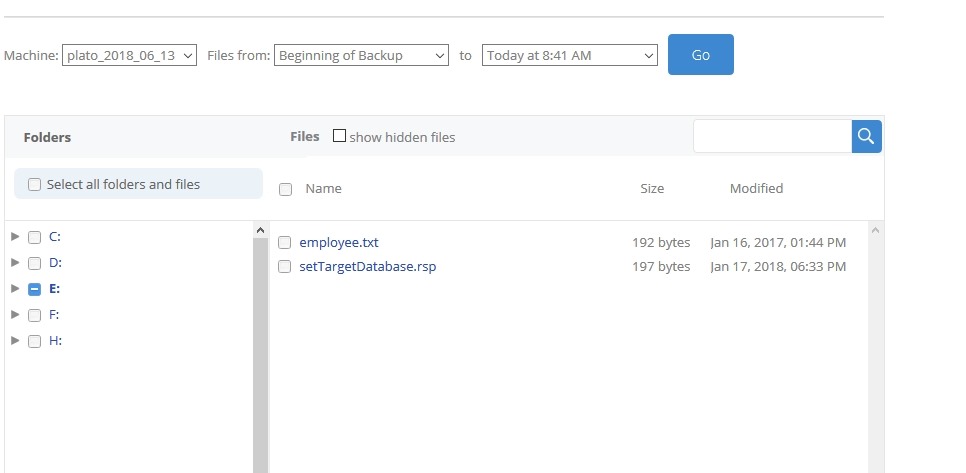
    Below this, I saw my drives and I could navigate to select select files.

    2018-06-28 08_44_21-Window

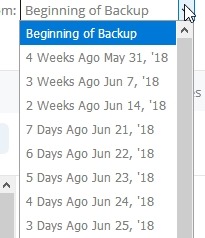
    I also had options to  see different versions of backups.

    2018-06-28 08_44_42-Window

    Once I found files, I picked the one I needed and started the restore. Just for a test, I picked a file on a different drive to see what would happen.

    2018-06-28 08_42_14-Window

    I went on with my day, and within an hour, I’d gotten an email. This let me know my restore was ready and I needed to securely sign in to get the download. I like that this was a sign in and now just a link to some random file.

    2018-06-28 08_47_19-Window

    I downloaded the zip file and inside were the files I’d selected. I unzipped them and filled out more of my expense report.

    This was a smooth process and validates my decision to use BackBlaze. It’s easy for my wife, which she’ll appreciate, and I can easily access things on the road.

    My trial goes until the end of June, but I’ll sign up for the service once I return home as this will work well for me.

  • Updating VSTS to SQL Change Automation

    We (Redgate) released SQL Change Automation a few weeks back. This is the first stage to implementing a combined toolset that works with both state/comparison development and migrations based development. The change updated both our migrations toolset (previously ReadyRoll) and our build/release cmdlets (DLM Automation) to SQL Change Automation (SCA).

    I have pipelines that are setup with Redgate DLM Automation tasks. This post shows how I updated the first of these to SCA.

    Finding the Build

    Here’s my current VSTS build pipeline for a project. Note that these are DLM Automation 2 tasks. There is a single task that you configure with the Operation (on the right) to build, test, or sync a database.

    2018-06-28 16_56_49-SQL Server Builds - SOC-CI - Visual Studio Team Services

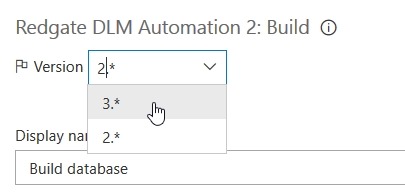
    Note that there is a version drop down at the top of the right side. Here I need to drop this down to find the SCA task, which is version 3.

    2018-06-28 16_58_05-SQL Server Builds - SOC-CI - Visual Studio Team Services

    Once I select this, you’ll see that my task changes to SCA, both on the left and right.

    2018-06-28 16_58_14-SQL Server Builds - SOC-CI - Visual Studio Team Services

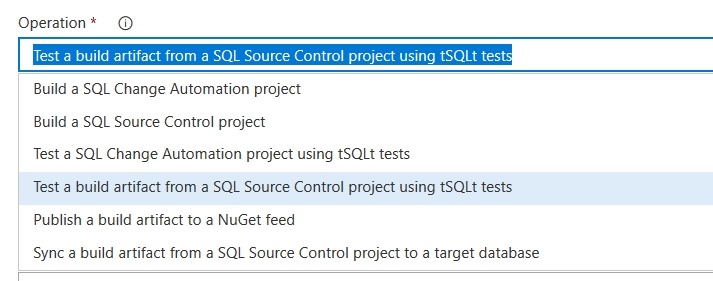
    I can change both tasks to v3 and I’m set. This is really the change that we’ve done, and we’ve combined operations. If you drop this down you will see there are SCA (migrations) projects here along with SQL Source Control state projects.

    2018-06-28 16_59_28-SQL Server Builds - SOC-CI - Visual Studio Team Services

    This means that if I convert from a SQL Source Control/state project, my pipeline stays intact. I’ll just change the operation from a build with SQL Source Control to one with SCA.

    This mostly works, but there are some path differences for release, so I’ll talk about those in another post.

    This is a simple change, but it’s important for future strategy. You can watch a bit of our strategy in this SQL in the City video on the database deployment pipeline. If you want to give this a try, download SQL Source Control and/or SQL Change Automation and start a test project.