Category: Blog

  • IT and Innovation

    This is a powerful quote:

    “This is the digital world IT must keep up with–one where Apple can view a $40,000 car as an accessory to the iPhone.” – From IT Is Too Darn Slow

    The IT world definitely needs to learn to move quicker, and that means that we need to be more solid in our infrastructure. The basic tasks of setting up a server, getting it configured, building indexes, setting up maintenance, etc. need to be smoother and easier that more time, and more importantly, more resources can go to building new systems.

  • Fun with SQLskills

    I’m in a fun mood today, so a few silly items for you.

    The last few weeks, Paul Randal (blog | @PaulRandal) of SQLskills has been doing a quiz on Twitter some days. He’s asked some rather difficult questions on Twitter, and people have had fun following along. I decided to get in on the fun today with a few questions of my own as a “pre-test” to his quiz.

    Question 1: Which of these glasses does Kimberly Tripp (blog | @KimberlyLTripp) prefer?

    fun3

    Question 2: What is this and is how does it relate to Paul Randal?

    fun2

    Question 3: Will it fit?

    fun1

    I’m having fun today, as you can see

    fun4

    In case you really want the answers:

    A1: none of them; they’re all empty!

    A2: It’s a kilt, which is a skirt for boys from Scotland. That’s where Paul was born.

    A3: I’ll let you know after this evening Winking smile

  • How To Make Your Laptop 100x Faster

    Simon Sabin had his own take on increasing laptop speed. He had some good ideas, but he inspired me to try to top his suggestions. Here’s what I came up with:

    speed

    Anyone needing help, let me know. I can swing by.

  • Checking Permissions

    Someone posted this query recently:

    select a.*,name, b.* from sys.database_principals a, sys.database_permissions b
    
    where permission_name = 'INSERT' and b.grantee_principal_id = a.principal_id

    That’s a little ugly, so let’s fix it:

    SELECT  a.name, a.principal_id, a.is_fixed_role
          , a.default_schema_name
          , b.permission_name, b.permission_name
          , b.state_desc
     FROM sys.database_principals a
      INNER JOIN sys.database_permissions b
      ON b.grantee_principal_id = a.principal_id
    WHERE permission_name = 'INSERT' 

    If you run this, you’ll get INSERT permissions in your database. In this case, the person had one row returned that had “public” in it, as shown.

    results1

    I normally don’t have permissions for public, but in this case I had run this first:

    GRANT INSERT ON Person.Address TO Public

    I don’t recommend permissions for public, and you really ought to run this on all your servers:

    SELECT a.name, a.principal_id, a.is_fixed_role
          , a.default_schema_name
          , b.permission_name, b.permission_name
          , b.state_desc
     FROM sys.database_principals a
      INNER JOIN sys.database_permissions b
      ON b.grantee_principal_id = a.principal_id
    WHERE a.name = 'public' AND major_id > 0

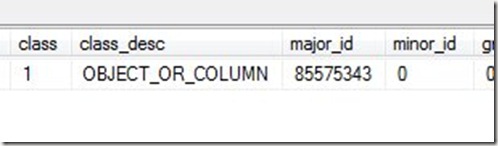
    How do you find out which objects have permissions? There’s a clue in the last query. If you scroll across in the results, there’s a major_id column. You can use that to find the object.
    results2

    The OBJECT_NAME function is handy here, and it takes an object_id, which is the major_id. If I run this:

    SELECT OBJECT_NAME(85575343)

    I get “Address” back, which is the object I altered.

    And, of course, we need to clean up

    REVOKE INSERT ON Person.Address TO Public