Tag: Business Intelligence

  • Data Journalism

    Using data to tell a story is something that more database professionals should consider.
    Using data to tell a story is something that more database professionals should consider.

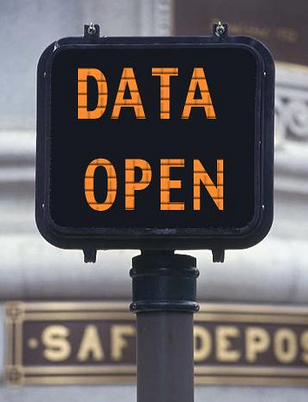
    The open data movement in goverment has produced some amazing data analysis from many sources. Many people are taking freely available data sets and producing a visualization, or an analysis of a problem, or even an application that is useful to the public. It’s one of the ways that technology and data analysis has really changed the world in a way that wouldn’t have been possible before powerful computers and mobile devices.

    I ran across a piece on data journalism that talks about a few projects around the world. This is the idea of adding a story, along with context and clarity, to facts. That is what many people are showing in the various projects in the O’Reilly piece, and it got me thinking. Perhaps this isn’t just something that can be done with open data and public services. Perhaps this is something we could be doing more of within all our organizations.

    Journalists learn to inform people in a compelling way. Data journalism is based more around large sets of data. Most of the people I know working with SQL Server often understand the data much better than the business analysts. These technologists, usually those performing some type of development tasks, learn how the data is structured and stored, and might notice the patterns and anomalies in ways that business users ignore.

    As the future of databases and database workers evolves, I suspect that those people who can learn to tell a compelling story about the data, that can present facts to clients and customers in a captivating manner will be in demand by many employers.

    Steve Jones


    The Voice of the DBA Podcasts

    We publish three versions of the podcast each day for you to enjoy.

  • Learning about Driving with Big Data

    This is nice, a year long safety pilot from the University of Michigan. Quite extensive, using 3,000 cars to gather data. I don’t know what they’ll get out of this, and if you read the comments, there’s all kinds of speculation, but it’s a good idea, in my opinion.

    Many of the commenters are trying to come up with results before the data in this case. Do we need better driver training? Better design? Driverless cars? Who knows? We should get the data and then decide how to proceed.

    This study is a good idea, because I think we realize there are some things about driving we don’t know enough about, but there are also a lot of things we don’t know we don’t know. The unknown unknowns are likely going to impact how we interpret this data later.

    I like to see more studies along these lines, but with really anonymous data. Do some work to try and disconnect people from the data, which will be hard and likely not work well. Perhaps we just need to map the coordinates of the cars and their interactions to a neutral space, maybe some coordinate system that doesn’t necessarily correspond to lat/longitudes.

    However there will be good data out of this that can help us understand how we might better change driving. I just wish this were with more than 3,000 cars. That seems like too few to me. I’d like to see more like 300,000 cars in a study.

  • Marketing Data is Exploding

    GM Customer Service Facebook Cnoversation
    It would be nice to have this be the norm rather than the exception with customer service.

    The last few years have seen the rise, and explosion, of social media. While fundamentally social media isn’t introducing much that’s different from actions in the real world, it is making the reach and speed at which we can communicate grow exponentially. Facebook will surpass a billion users soon and Twitter has exploded in the world. Even in the tiny SQL world, Twitter use has grown exponentially in the few years since I’ve used it. It you’re unsure of what’s happening there with regards to SQL Server, search the #sqlhelp hash tag and see what you find out.

    All kinds of companies are starting to try and integrate this data into their systems. If you haven’t yet, I suspect you might have to some time in the next few years. There’s a short piece in how this data is in use at GM, and it’s interesting to read. I don’t know how seriously other companies take this, but I do see so many people “following the herd” and as more managers read about other managers implementing projects like this one, we’ll see more adoption.

    What’s interesting here is that it gives us data professionals a number of new opportunities. From the sheer OLTP-type work of collecting and managing this data in real-time, or near real-time, to the need to add BI analysis to trends of data. I can see a lot of new projects, and new employment in this area. It wouldn’t hurt to beef up your skills in this area, and maybe get a better understanding of how social media can work, as well as how you can manage the data.

    Steve Jones


    The Voice of the DBA Podcasts

    We publish three versions of the podcast each day for you to enjoy.

  • One Single View

    This editorial was originally published on Oct 9, 2007. It is being re-run as Steve is traveling.

    When I worked at JD Edwards, one of the goals of our business intelligence system was to house a single view of the truth. I recently saw a blog post by Andrew Fryer that does a good job of explaining what this is. Basically it’s a way for us to view some particular slice of data and ensure that it is consistently accepted by everyone in the company as the “correct” data for whatever it represents.

    This sounds a little silly, but it’s actually a problem in many companies. At the recent PASS Summit, Bill Baker did a presentation where he actually showed a realistic example of this as a reason to implement Performance Point Server. If you have a contest at a company for the most sales, who wins?

    You’d think this is easy, but is it the person with the most dollar sales? Do returns count? Should we account for size of a store or hours worked? Obviously we could define this, but depending on how different people might run reports or calculate things in their own spreadsheet, there could be different results.

    It was the first time that I actually understood what Performance Point brings to a company and why you might implement it. Now I’m not plugging Performance Point here, because I think you could wind up with some tool that requires a couple full-time administrators and developers just to get things set up and maintained. And I’m not sure that you can completely control things with permissions and reports. My guess is that people will always want to pull their own data offline and create their own report (often for the purpose of supporting their own position), but it’s an interesting idea.

    The single view of the truth is something I think all DBAs and “data people” want. We want to know that a customer is a customer is a customer. We want to normalize data and have relations that ensure we aren’t duplicating data. We fight through the issues of meanings in one system being translated properly to the next system.

    A single view of the truth is hard to create, but it’s a goal that I think is worth pursuing. And implementing a data warehouse is a great way to get started on this. By talking with business people and forcing them to give you rules and mappings, and then implementing a source system everyone can use, it can really ensure that everyone in the company is on the “same page.”

    And who knows? Forcing business people to define what that single view is might just help them run the business better.


    Podcast Notes

    Joe Sibol - The Great MusicI appreciate any and all feedback from people

    Music from Joe Sibol. I like acoustic music and stumbled onto Joe recently. If you like it, send her a donation, buy a CD or something.

    And if you’re in a band, send me a sample of some music. I’d love to feature some SQLServerCentral.com community talent.

    Podcasts: