Tag: career

  • An Awesome Job

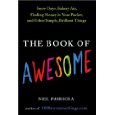
    Life is awesome and if you can't see it, read this book.

    I recently watched The 3 As of Awesome with my daughter and loved it. It’s a short talk (17 min) from Neil Pasricha, the author of the 1000 awesome things blog. The talk goes through a roller coaster of emotions, at least for me, with a pleasant start, a sad middle, and a positive end. There’s some humor in it, and I highly recommend you watch it.

    When we finished, my daughter and I talked about what awesome thing had happened to each of us that day. She said that me giving her 5 extra minutes to play with a friend before we left was great. I told her the crazy, illegal, solo, 5 hit volleyball return I made at her practice that made everyone laugh was the highlight of my day. We challenged the rest of the family to find an awesome thing from that day, and everyone enjoyed it. Since then we’ve made it a point to regular ask what awesome thing happened to each other.

    The philosophy espoused in the talk is one I try to follow. I stop and appreciate the cool, little things in my life. A refill of my drink when I’m flying economy class makes me smile. I get a good feeling when I can stop and hold the door for someone behind me. I appreciate the health I have, and the fact I can run regularly. A good cup of coffee, the cat wanting to snuggle up when I’m typing in bed, or the chance to step away from my desk and give my wife a kiss during the day are awesome and amazing things in my life.

    Work isn’t always awesome, but I’d like to think that you find little things you can appreciate on a regular basis. Maybe it’s code you write that works. Maybe it’s the knowledge that you saved someone else time because of something you did. Maybe it’s that second monitor that lets the work flow a little smoother. Maybe it’s that burst of bandwidth that made a download smoother. Maybe it’s the comment someone made on SQLServerCentral or on Twitter that grew a smile on your face.

    We spend a lot of time at work, and it’s often work. I hope you enjoy your job overall, but even when it’s not the job for you, hopefully you can find and appreciate some little thing that occurs every week that shows the universe likes you.

    Steve Jones


    The Voice of the DBA Podcasts

  • Networking for your career

    The more I learn about building a better career, and the more I talk to people that get new jobs or have success in business, the more I believe that networking is one of the most important things you can do for your career. It just seems to work better, be more reliable, and more effective than any other career improvement strategy. Even blogging, which I think really helps, isn’t as effective as having someone that’s willing to recommend you.

    I never really knew how to go about networking, but a few years ago I attended Don Gabor’s seminar at the PASS Summit and it was well worth my money. I learned a lot and have practiced some of his techniques since then. I’ve even purchased a few of his books, which contain even more information on how to better network and work with others.

    If you’re attending the 2011 PASS Summit, you can see Don’s Networking to Build Business Contacts seminar on Tuesday, Oct 11, from 3-5pm. It doesn’t interfere with the other pre-cons, and if you’re going to be in town, take this seminar. You will learn some practical tips and exercises you can use to build more contacts, grow your network, and hopefully use it to advance your career at some point. Even if you don’t need a job, at some point you will and the time to build a network is before you need it. If you’ve already registered, call PASS to add this seminar to your registration, or do it on site.

    Don has become a friend over the last few years, and was helpful in working on The Mentoring Experiment with me. I find him very insightful and experienced in the world of business and interpersonal interactions and a very interesting person. If you get the chance to sit and talk with Don, take it.

  • How do you learn the advanced stuff?

    Advanced Study is hard, but worth it when you want to get better at something

    I was talking with someone recently about features in SQL Server and they mentioned that partitioning was something DBAs should know. It’s only available in the Enterprise and Data Center editions for production use, but my friend noted that it works in Developer edition and felt there was no excuse for a DBA not being familiar with a feature that’s been out since SQL Server 2005, nearly four versions removed from its introduction.

    I can understand that, but if you don’t have the ability to actually tune large data sets and see the impact of partitioning in a larger, production environment, it’s easy to dismiss this as a feature that doesn’t provide many benefits in a smaller situation. The same could be said for clustering, SSIS imports, or any number of features that aren’t often used. So how do you actually learn to get some experience with these features?

    The first thing you need to do is get a copy of SQL Server Developer Edition and install it as a virtual machine on your primary computer. I use VMWare, but you could use Virtual PC, Hyper-V, or VirtualBox as well. The important thing to do is have a sandbox to play in and a machine you can easily copy, clone, or destroy as needed. I would recommend a base install of Windows and SQL Server DE, and then copy that for a machine you can experiment with.

    One way to learn is duplicate the work that someone else has done. Make a copy of your virtual machine and then implement partitioning as described in an article. See if you can duplicate the way the author used the feature and get the same results. If you can’t, find out why, and if you can, experiment with the feature and try to improve the author’s implementation. The SQLServerCentral Stairway Series is a great way to do this in SSIS, SSRS, or other features that you may never have seen. Set aside an hour or two a week to learn some feature. After a month or two, you might be surprised what you’ve learned.

    The most important is to understand how a feature works and gain some experience in using it. You might not become an expert, but being able to talk about the feature, and explain how you might use it in a situation comes from practice. That ability  might get you the project or job that allows you to become an expert over time.

    Steve Jones


    The Voice of the DBA Podcasts

  • Big Gaps

    Emacs was my favorite editor in college

    I saw this piece on Learning Unix from Miguel  de Icaza that brought back memories. Michael is a well known developer that is working an open source implementation of .NET called Mono. He worked at Microsoft and continues to bring .NET to other platforms, but he primarily works on Unix based systems. The post laments the lack of basic Unix knowledge and tricks from many of the developers he meets. His recommendation is a few books and tutorials to learn shell commands, emacs, and more.

    Those bring back memories for me since I learned to use emacs early in college. I went through tutorial and enjoyed the editor much more than vi and learned to take advantage of shell commands for quick scripts or tools that would make my programming tasks easier. Those skills helped me when I moved to the DOS/Windows world and scripted many tasks, and even helped in SQL Server with the scripting tasks is SSIS and SQLCMD. As I look over PowerShell scripts these days, I find myself seeing the same constructs as I saw in Korn shell, but with different syntax.

    As I read the piece, I asked myself a question over and over, which I couldn’t answer completely. I did, however think it would make a good Friday poll and decided to ask the rest of you for your opinion:

    What basics do you find many data professionals lacking and what do you recommend to help them?

    I know people need to learn how to back up a database, and they should learn T-SQL to some extent, but what basic skills would you point people towards? What books or resources would you recommend?

    I know we have some great basic articles here at SQLServerCentral that everyone should read, like Managing Transaction Logs. I think we’ve tried to address the basics with the Stairway series on various topics. However I’m sure there are holes in our catalog as well as some very common things that many of you would like to recommend to every DBA or developer. You have your chance today to help compile a list.

    Steve Jones


    The Voice of the DBA Podcasts