I might send this to a VP or CIO: Global CIO: A Framework For Developing Technical Leaders. It’s an article that talks about building senior technical leaders in your company, which I think is important if you view your Information Technology department as strategic.
That also means thinking about retention, and building an atmosphere where people want to work. That doesn’t mean you can’t have layoffs or need to keep every person, but management does have to show competent and hard working technical people that they are valuable. It should also involve some way to balance the disparate needs of ambitious people that you want to retain and those average employees that want a secure job and are willing to do the average jobs.
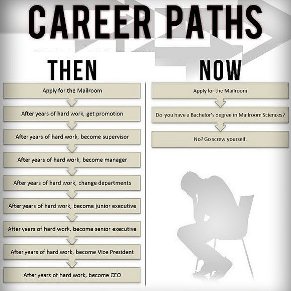
It also involves keeping a career path for technical people that doesn’t lead to management. Plenty of smart technical people want to keep growing, so give them a way to do so.
I’ve written a number of pieces about telecommuting over the years, and while some people have had success in getting permission to work from home, many of you tell me that your current manager, and likely every manager you’ve ever had wouldn’t allow it. There are a huge group of people that are convinced telecommuting is not in their future. I think you’re wrong, and let me tell you a story.
Years ago I went to work for a small (50 people), old company. The CEO had worked their his whole life, his father had worked there most of his life, and they had very conservative values and ideals. They both wore suits to the office every day and I was expected to do the same, even as an IT guy. I went out and bought 4 or 5 suits the first year I worked there, along with slacks, shirts, and (shudder) ties.
I argued, politely and regularly, with the CEO that the clothes didn’t really influence the quality of work. We rarely had clients in the office. My boss, the VP, agreed, and we found numerous studies and surveys that proved our point. Others felt the same way, but we two were the only one that regularly tried to debate the issue. I’d often return from a run or swim at lunch and “forget” to tighten up my tie. Usually by 2pm, however, my boss would come by to “remind” me.
After a year, we managed to get “casual” Friday, where we could wear (non-logo) polo shirts and khakis. No faded jeans, no sneakers, and it’s almost what many companies would see as business casual today. Another year or two went by, with regular chastising of my afternoon dress, often followed by a short debate on the subject. Eventually my boss allowed us to pilot “casual” dress on all non-client days, and jeans on Friday. No faded jeans, but more comfortable wear. Work didn’t suffer, and while my boss still wore suits, he accepted that we didn’t need to. I think I even saw him wear a shirt without a tie one day before I left.
You can do the same thing with telecommuting. Offer a pilot, show articles, blogs, and studies that talk about telecommuting, set up metrics to measure work, and get employees to agree that the privilege can be suspended. I am sure with some regular debates and discussions, perseverance and persistence, you can find a way to implement telecommuting if your job can be done remotely.
A computer deals with interrupts all the time. They are the mechanism by which it can simulate multi-tasking among many different programs in a modern operating system. However those interruptions have a price, and too many of them can affect performance. As hardware grows larger, we have other issues from interruptions that we try to mitigate with techniques like soft-NUMA affinity or multiple pipelines built into hardware. All of these are designed to prevent a computer from spending any significant time on non-productive tasks because of interruptions.
In the real world, many of us deal with regular interruptions from work. They might be emails, instant messages, phone calls on a cell phone, or the old fashioned someone-stopping-by-your cube-to-chat. All of these things add up to less productivity, especially for developers. One study finds a 10 point IQ drop from regular email and phone interruptions. I don’t know about you, but I’m not sure I can afford a 10 pt drop in IQ when I’m working.
Even if you don’t gain any productivity, or have fewer bugs, or ship more often, I think that your developers will appreciate it. It could be an easy way to increase happiness, improve retention, and even sell your company as a good place to work. And it’s easy to implement: just leave people alone a few hours a day.
The markte prices aren't always set as smoothly as we'd like.
I’ve been involved in quite a few debates about job hunting and job interviews recently with a number of people that are considering looking for other work. I’ve also seen some intense debates on the subject of how to look for a job, market yourself, present yourself in an interview and more. It’s on area that seems to always strike a chord with many people out there.
This Friday I wanted to step back, and do a little market research of my own. Perhaps also helping some of you at the same time that might be considering changing jobs, or maybe even preparing for an annual review later this year.
Having information is important to not only making a good decision, but also a good negotiation in this area. With that in mind, I wanted to ask this question:
Do you know the market price for your skills?
You can disclose your location and market price if you want, but I’m really wondering if you have a good idea of what your job should pay, and how you know that. Have you looked at other jobs or talked to colleagues doing the same work? Is a salary survey available for your area and industry? The market price for our skills may or may not be the same as our salary. Ideally it would be, but we might make more or less for various reasons.
If you have any information to share, I’m sure others would be interested, especially if there are links or data you can share.