Tag: career

  • Declining Work for Mental Health

    This year has been a busy one for me. I had 30 trips on airplanes away from home and around 100 nights not in my own bed. It’s been quite a year, and a little overloaded. There have been a few months were I traveled little, but more than a few where I was gone more than I was home. I spent 19 nights away from home in September.

    A few weeks back, I realized that I had another long trip coming up in October (9 days) and the PASS Data Community Summit in November. My body is a little worn out, but my mind is also distracted and struggling to focus. I recognized the beginnings of burnout when I realized that I was slightly dreading the Summit trip. While I want to see friends and catch up, I wasn’t looking for a long trip.

    On the spur of the moment, actually while sitting in an airport and waiting for a flight, I sent a note to the SQL Saturday Oregon organizers asking them to withdraw my speaking submission and not select me. I felt bad for doing so as I try not to create work for others or submit to events without the intention to go, but the extra 2 days in Seattle would make lift hard, and I thought this was the best choice for my mental health. I also chatted with my boss a bit about some work opportunities that were coming up and decided to decline a few other things, as well as skip conference submissions in Q1 2024.

    I’m not burned out, but I do recognize that I’m overloading my body a bit. Physically it’s a bit worn out and I can see that in my frequency and effort at the gym. Mentally I’m slightly dropping the ball on a few things, working slower than I often do because I find myself slightly distracted and looking for more breaks.

    One of the big learnings for me over the pandemic was that I need to ensure I take care of myself and treat myself as I’d treat someone else in similar circumstances. I’ve had coworkers and friends struggle at times in life, where I’ve made an effort to work more and help them work less. I need to remember that for myself and ensure I can lean on others where needed. Redgate is an amazing employer and everyone is willing to flex with each other to ensure work gets re-distributed or we move deadlines. My manager and I have discussed this, and we are monitoring my workload moving forward in our regular meetings.

    One of the best things I’ve learned over the years is to say no. I say no a lot to various queries on my time. Often when I feel I can’t deliver on time. This year I was looking forward to these opportunities, perhaps a bit too much, and ran myself down a bit with over-excitement. I recognized that and made an effort to take steps to help myself before I burned out or started missing commitments.

    The last month (and half of the next one) has been a bit rough, but I’ve mentally prepared myself for the work, and seeing relief coming in a couple of weeks is helpful. I’ve learned a bit more about myself this year, especially in relation to my slightly changing job and hopefully, I’ll do a better job managing myself next year (or my boss will).

    Learning to balance work and life is important. Remembering that life, family, friends, hobbies, faith, etc. are more valuable than work, and we need to ensure we don’t overwork ourselves makes us better employees and better people. Any of us can get overloaded in the short term, but don’t let that become an accepted part of your life. Your employer may push, but learn to push back and protect your physical and mental health.

    Steve Jones

    Listen to the podcast at Libsyn, Spotify, or iTunes.
  • SQL Saturday Boston 2023 Slide Decks

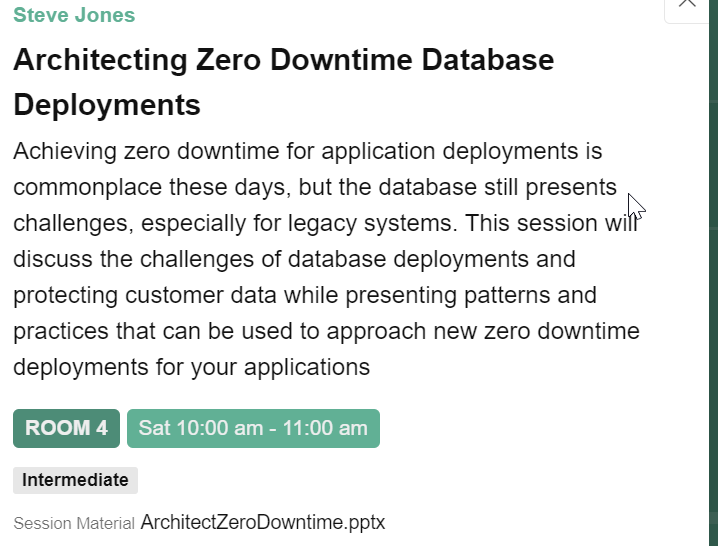
    Thanks to everyone who came to my sessions at SQL Saturday Boston 2023. I’ve added the decks to the schedule, so you can click my session and will see the download there. You can see this below, and all speakers can edit their sessions and upload the deck. See the download below:

    2023-10-14 13_43_08-SQL Saturday Boston 2023 (#1046)

    I’ve also copied the links here for slides:

    For the first session, Architecting Zero Downtime Database Deployments, there is also a GitHub repo here. Clone the repo down (or fork) and you can follow the sessions along. The repo is at: https://github.com/way0utwest/ZeroDowntime

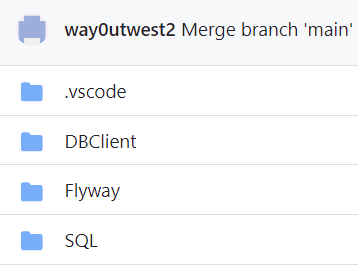
    In here, there are a few folders, as shown here:

    2023-10-14 13_45_44-way0utwest_ZeroDowntime_ Code for my zero downtime presentation

    The two items from the session are the DBClient, which is a Visual Studio 2019 project, and the SQL folder, which has all the setup (and teardown code). Each script is numbered, and you can run them in order. There are also some comments in each for when to flip feature flags.

    If you find issues, please submit an issue in the repo.

  • Running a Service

    Many of us work for some organization and we’re responsible for managing a database or coding some application or some other data related position. Perhaps we ensure reports work for our users or move data around. In many cases, we have customers, whether they are internal to our organization or perhaps external from another business or even the wider public.

    However, many of us see our jobs as a part of the org/business and not that we are actually providing some service to others that we are responsible for. While I’ve certainly felt that way, I learned at some point that if I were an app dev, I ought to treat people using my app as customers, even though they don’t pay me in currency. They often pay me in praise, or better yet, with praise to my boss. As a DBA, I treated both app devs and users as customers. That helped me take pride in my work and learn to view my position from other points of view.

    There was a post on learnings from running a SaaS service for a year. While few of us maintain a SaaS service, we could think of the app we build as Software-as-a-service, albeit without any revenue. We could see databases we manage as DBaaS (databases as a service) or PaaS (platform as a service) items.

    I think that the way we view the world, or view our situations, can be helpful to us in managing our workloads. We can better triage what is critical, what’s important, and what’s nice to have. We can decide when an issue deserves some to cause some stress and we might give an extra effort, and when something can wait until tomorrow. We can decide when we push back on demands and when we accommodate them.

    This approach has also helped me to think about ways to improve the service/software/platform I provide to others in ways that helps my customers, or makes my job easier. This way of thinking leads me to make the situation better when I can. It also helps me to discuss the decisions with others, especially management, in terms that can matter to them. Are we finding ways to improve the overall system?

    It doesn’t always work, but it often has for me.

    And if you’re interested in your own side project, the journey continues in part two. Perhaps you can spend an hour or two a day and build something that becomes your own business. That’s what happened to me with SQL Server Central.

    Steve Jones

    Listen to the podcast at Libsyn, Spotify, or iTunes.
  • Are You Worried About AI?

    The AI revolution is happening. I don’t know how successful it will be, but regardless, people are trying to get AI into everything. That might be good or bad in various situations, but it has people worried about AI. This piece looks at a survey from the American Staffing Association that says 47% of people somewhat or strongly agree that their job is replaceable by automation with an AI. There is more data to dig into, but that’s a lot of people who worry about their jobs.

    Most people do think that tech is generally a good thing. I do find that many of us in tech, and some other industries, are buried in work. There’s never a shortage and we could easily work 60, 70, or more hours a week and not complete everything. The flip side of that is a lot of work doesn’t necessarily need to be done now and could be delayed, so I think it’s hard to decide whether we need more help or more patience.

    The various places I’ve seen AI used are often helping people get started or unblock their creativity struggles. Recently someone posted this link on some prompts a person had used to get moving. I found a few of these possibly helpful. Not writing, but maybe having an AI proof something, or even get me started in some new area. I worry about book summaries, or even text summaries, as I’m not always confident the AI understands which pieces I might find important. However, that’s also a danger with humans. I’ve seen no shortage of people asked to summarize something for others. When I understand the subject well, I sometimes disagree with another’s summary (or think it’s just plain wrong).

    I don’t think AIs are a big danger to many people’s employment. I do think that as people learn to use AIs are assistants we might find that we grow or enhance staff less. We might also find that the 10x engineer knows how to engage 10 AIs to help them get things done, especially simple, busy work. The low performers will likely be those working in the same way in the future as they do today. That might not threaten your job, but it might mean lower bonuses and less opportunities in the future if you can’t adapt your skills to this new world.

    Steve Jones

    Listen to the podcast at Libsyn, Spotify, or iTunes.