Tag: career2

  • Productivity and Accountability

    I think Yahoo's blanket policy was a mistake, but I can't say it was wrong.
    I think Yahoo’s blanket policy was a mistake, but I can’t say it was wrong.

    Recently Yahoo decided that remote work was no longer an option, requiring all workers to either begin coming into an office, or terminating their employment. As expected, it seems many tech workers were outraged, though more than a few noted while working at home is great, it isn’t the best thing ever. There is no shortage of articles that support the decision, and ultimately I think, as with most things in the database world, what you think about this “depends” on your situation.

    I’ve worked at home for over a decade; my wife for over two decades. In that time we’ve learned a few things. One of them is that telecommuting isn’t for everyone. It’s hard. We alternately struggle trying to stay motivated with understanding we need to stop working. We realize that the ability of telecommuting to work is job dependent. The more your job involves just you, the more likely it is that you can do it remotely. The more it involves collaboration, the more you’ll struggle to get things done. We have also learned that periodic face-time is important in almost all situations.

    There are numerous challenges that others have elicited with telecommuting, but the success or failure of remote work is measured no differently than it is in an office. If you are accountable for your productivity and complete all your work, you’re a success. If you don’t, you’re not. It’s that simple. It doesn’t matter if you work in an office or never leave your house. It’s about getting work done.

    The people that do well as telecommuters typically do well in an office. They’re just happier at home where they can juggle tasks. The people that slack off in offices, won’t do well at home. We might blame slacking off on being away from supervision, but my experience is that people that don’t want to work hard, don’t.

    I don’t think the Yahoo decision was a good one for everyone, but it probably was for some. I think telecommuting is a great way to build a small team, and get work done in an efficient fashion when jobs are discrete and easily defined, but ultimately employee success comes down to each person being held accountable for their work.

    Steve Jones


    The Voice of the DBA Podcasts

    We publish three versions of the podcast each day for you to enjoy.

  • Two Plugs Away

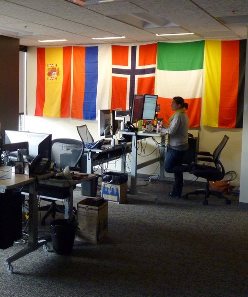
    The office at Valve. Notice the wheeled desks.
    The office at Valve. Notice the wheeled desks.

    I’ve always enjoyed smaller environments, where people are more free to work in the way they want to, when they want to, as long as they are productive. I applaud the efforts of small companies to design offices or spaces where employees feel comfortable working and enjoy spending time. Some large companies do this as well and maybe this is necessary to offset the grind of long hours, but I believe the owners and founders of smaller companies often cultivate a friendly, close atmosphere and they hope their people to want to come to work. After all there are plenty of places one can work that will exact and demand long hours, often without any recognition of the hardships or without any additional benefits for your efforts..

    I ran across this piece on the culture and hiring at Valve, a gaming company that makes Steam and Half Life. They have a very free flowing culture, depending on the individuals to make good decisions for the company and their own teams. I’m not sure how scalable this is, or even how easily this can be replicated to other companies. As I’ve watched Red Gate grow over the years, it’s been an amazing place to work, but it’s not without some pain points. We’ve done well, though I don’t know that the ideas from Valve would work there.

    At the bottom of the article, however, I was struck buy this quote:  Everyone’s desk is on wheels. “There are only two plugs that need to be unplugged in order to shift from one team to another.” That’s an interesting way to design an office setup. Your desk is your desk, and you can customize it for you, but since it’s on wheels, you can move it if the need to change arises. That doesn’t happen too often in larger companies, but I do think the idea of virtual teams that come together for projects and then disband would work well in this environment.

    Even in the operational world, the option of periodically moving my desk and changing neighbors without the hassles of packing up lots of stuff, would be interesting. It would also make weekend practical jokes much more interesting. Imagine coming in Monday morning and having no idea where you desk, with all your stuff, might have moved.

    Steve Jones


    The Voice of the DBA Podcasts

    We publish three versions of the podcast each day for you to enjoy.

  • Why SQL Server?

    I love this logo, and I love working with SQL Server.
    I love this logo, and I love working with SQL Server.

    Over the last few months I’ve met quite a few people that were just starting to work with SQL Server. For many of them, they’ve attended talks or presentations of mine or others, trying to learn enough to become more competent at their jobs. As is the case for many people starting out with a technology, they were thrown into it at their job and are struggling to understand the technology.

    That’s how I started, but I’m wondering if that’s how most of you started. I would guess most of us didn’t necessarily choose to work with this platform, but since that time, many of us have had other choices. This Friday, I wanted to ask about your work in the SQL Server world and participation at SQLServerCentral.

    Why do you work with SQL Server?

    It’s a simple question, but one that many of you might not think about. Are you stuck with SQL Server? Did you fall into this role and enjoy it? Or have you never considered moving on? A lot of people get stuck in ruts, especially ones that work well for them, without ever considering other options.

    For me, I fell into SQL Server when an instance was installed on my Novell network. I enjoyed working with sets of data and was amazed at how much easier it was to work with SQL Server than Oracle, and how much better performance was over dBase. It didn’t hurt that the pay for database work was great, but I have enjoyed working with SQL Server, and with short forays into the DB2, Oracle, and MySQL worlds, I’ve learned that I enjoy SQL Server more.

    Steve Jones


    The Voice of the DBA Podcasts

    We publish three versions of the podcast each day for you to enjoy.

  • Early Software

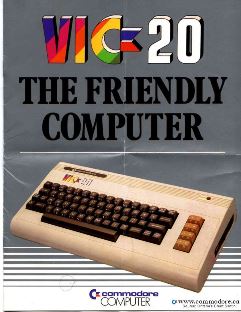
    My first computer as a kid.
    My first computer as a kid.

    I  have no idea what the first software I saw working on a computer system was. I’m sure it was some  basic demo program on a Vic-20, which I convinced my mother to buy for us. I remember learning to program on this machine for a year or so before saving up enough money to get an Apple II system. I purchased a few games, but most of the software that ran on my computer was written by me. Programs to solve chemistry and physics labs, early attempts at making our own Dungeons and Dragons programs and even a baseball statistics program to “replay” games from the past.

    The first real software I saw in a business setting was a construction estimation program that combined a spreadsheet with some basic CRUD application for managing projects. A neighbor had a business and hired me one summer to help him get it running in his office and train his staff to use it. I’m not sure how well it worked, but I remember being amazed at how much effort and paper it reduced for his company.

    Since that time computers have evolved and software has grown tremendously to incorporate many more graphical elements than I imagined as a kid. However those early programs still stick in my mind and I’m sure have influenced the way I view the world today. Dave Winer wrote about early software and how it’s influenced the applications we have today. I do think there are a lot of influential programs, and the wide variety of them, and the different ways people reacted to them, resulted in what we have today. This Friday, I wanted to ask you this:

    What software first inspired you to work with computers.

    What programs changed your career, or perhaps motivated you to work more closely with the data and less with the programs. Is there any software you really enjoy working with? Do you wish you could build something similar? Let us know today.

    Steve Jones


    The Voice of the DBA Podcasts

    We publish three versions of the podcast each day for you to enjoy. Today there are no podcasts due to various issues, but the podcasts will return on Monday.