Tag: career2

  • A Cool Job

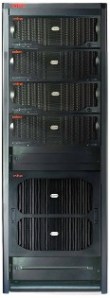
    Unisys ES7000
    How would you like to play with this server every day?

    I saw recently that the newly approved TPC-E Benchmark, a test of OLTP systems, is having a test system submitted by Unisys. They’ll be the first ones to send a system, in this case the ES7000, through it’s paces with this benchmark.

    It’s got to be a cool process and I’ve got feelers out to Unisys to try and dig further into what goes on when you try to build a system to test the benchmark. I have the feeling this will be an interesting story, so be on the lookout for that.

    However I’ll speculate a little that this has to be a very interesting exercise. The application is static, after all, it’s a standard set of routines (I’m assuming) that you’ll run against your server. So the challenge is in sizing and tuning your system. Tweak a knob, hit the turbo switch, get advice from the MS guys, it’s got to be an interesting day’s work.

    And I’m sure it’s incredibly enlightening. What does file placement mean? How far can you push a system? At the very least you’d think that they’d build some sort of real-time, F1-like dashboard so they can watch the system go.

    Heck, that would be a cool job just to build some application to receive the telemetry of the system in real time and display it on some sort of dashboard. Maybe I’ll see if Unisys wants someone to work on that aspect of the test system.

    Now if we could just have some real-time knobs and sliders on the server to actually adjust various parameters…

  • The DBA Tax

    Are you an asset or a tax?

    When I started working with a small company in Denver over a decade ago, SQL Server 7 had just been released. One of the marketing messages for the product was that it was self-tuning and didn’t need a DBA. More than a few of my friends asked if I was worried about my job. If we upgraded from SQL Server 6.5, would I lose my job? Was I worried? I wasn’t and we’ve seen in the decade since that there’s no shortage of a need for DBAs to manage database systems.

    That hasn’t stopped many companies from trying to build products and solutions that don’t have a DBA tax. They want a tool that doesn’t need a DBA, or a developer to tune queries. Some get closer than others, but most still require someone with technical skills to work on the platform, and help ensure it runs smoothly.

    When PowerPivot was released a few years ago, I heard no shortage of fears from data professionals that this tool would eliminate much of their work. Since then I’ve heard no shortage of consultants and BI developers say that this tool has spurred even more work for them. It simplifies prototyping, and allows for a better front end experience, but it also requires better data, cleaner data, and better models of data for users to work with. They are drowning in work.

    It’s easy to let fear drive you. It’s easy to let your concerns over technology replacing you limit your willingness to experiment and improve the systems you work on. However if you improve yourself, and your skills, I don’t think you’ll ever be seen as a “tax” on your company’s computer systems, but rather an asset that is worth paying the ongoing cost to keep.

    Steve Jones


    The Voice of the DBA Podcasts

    We publish three versions of the podcast each day for you to enjoy.

  • Starting to Program

    Hopefully you have more recent resources for programming.

    As DBAs, I think we need to learn to program better for the future. It doesn’t matter whether you are looking to manage clusters with Powershell or add your own SQL CLR routines to your instance, it pays to learn a bit about programming. At some point. I think every DBA will be exposed to some type of code that isn’t written in T-SQL. Whether they’ll be able to do anything with the code, or understand it, is entirely up to the individual.

    As the SQL Server platform has expanded, there have been enhancements and additions to the product. In addition to the core T-SQL, there is now VB.NET and C# in Integration Services, Reporting Services uses RDL and various programming expressions. Analysis Services has XMLA, MDX, maybe more. Powerpivot introduces DAX, and the .NET language runs through all of these subsystems. PowerShell is being pushed as the future administrative language for all Microsoft technologies.

    With so much of the data professional’s job starting to require programming skills, how does one get started? We are working on some stairways to help in some areas, but this Friday I wanted to ask you this question:

    For the DBA or system administrator that wants to learn programming, what do you recommend?

    I’m looking for some links or tutorials, similar to this list for a Python programmer. Do you have a list of programming resources that might help someone learn basic concepts, get started with a particular language, or improve their skills? I’m looking for links that you’ve used, or a friend has used. I’ll look to compile these into a few lists that people can reference to get started on learning more about programming.

    Steve Jones


    The Voice of the DBA Podcasts

    We publish three versions of the podcast each day for you to enjoy.

  • The Next Generation

    Star Trek: The Next Generation
    Will the next generation of IT be as successful as this next generation?

    There have been more and more Women in Technology panels and discussions at SQL Saturdays and other events in the past few years. I think these are a great way to talk about interesting more women in technological careers and helping women deal with the issues if they already work in Information Technology. There are definitely issues here, and it’s good to discuss them, not to the exclusion of other groups, but just to focus on this one area. I think we potentially have issues with other groups in technology as well, and would welcome them to form their own group for discussing the challenges they face.

    However I also think we need more people working in technology of all sizes, shapes, colors, genders, and ages. We hear about a shortage of qualified people in many areas, including databases, and we need to attract more people to this field if they have an interest. But how do we know if they have an interest? Perhaps a more important question comes from this MS Education Blogger: “How do they know they’re not interested?”

    It seems that a lot of the focus from the WIT panels I’ve listened to is ensuring that more women get the chance to experience technology and decide for themselves if it’s an interesting career. It’s about creating an atmosphere where everyone has the chance to experience technology, mathematics, engineering, and other hard sciences without feeling that these careers are not appropriate for them.

    Whether you like your career in technology or not, I’d hope that you’d encourage others to give it a try and experiment. They might find that it’s something they enjoy, and would like to follow as a career. Save the complaints, the downsides to this field for another day, after they’ve had a chance to determine if they even like working with computers.

    Steve Jones


    The Voice of the DBA Podcasts

    We publish three versions of the podcast each day for you to enjoy.