Tag: career2

  • Thinking Time

    My Thinking Time

    I have a friend that is responsible for working with clients, helping them to design solutions for their businesses, write statements of work, and develop proof of concepts. This friend also finds 4-5 meetings a day on their calendar, usually lasting from thirty to sixty minutes. That’s not an uncommon workday for many people in technology, which always amazes me.

    There was a time when I managed multiple DBAs and worked to remove them from meetings whenever possible. It was hard, with the workers always feeling like they wanted to know what was going on, and managers always wanting staff available for detailed updates if needed. Too often I felt that staff time in meetings, and performing updates, was wasted. Managers should take quick updates to meetings, and handle the coordination as much as possible.

    Andy Warren (LinkedIn | Blog | @sqlandy) always talks about how important thinking time is, and over the years I’ve learned that’s important. The work that we do is knowledge based. By definition that requires thought, creativity, and most importantly, time. We need to have concentrated time to think, and to work out how we want to attack the problems we face, without the pressure of producing some specific solution.

    I know it’s easy to view thinking time as an opportunity to waste time, and some people surely will waste the time. However for those of you that work hard, and that are trying to solve issues, it’s important to get some thinking time, time when you’re not actually writing code and step back to view the problem from another angle. I’d encourage you to take some time to just think over the holiday season, when there usually is less work going on, and see if it can help you produce higher quality results.

    Steve Jones


    The Voice of the DBA Podcasts

  • What’s Your Title?

    What's your title?

    I was reading a very interesting post from L. Z. Granderson recently that is more of a political observation than anything, but in the piece he brought up a point that struck my interest. He finds that many people use a simple question when they are getting to know each other, and that the question might color the impressions of us that others hold. The question is

    “What do you do?”

    It’s fairly innocent, and it’s a nice icebreaker, and in fact I’ve used it at many conferences to try and get to know other people. I know that most people I meet at SQL Server events are technical, or work with SQL Server, but this allows me to better understand who they use the question. When people ask me who I am at conferences, I usually reply that I am the editor of SQLServerCentral, and explain the site if I need to. On my resume, I emphasize the “DBA” title, along with the “writer” label for me work with SQL Server.

    However when I’m away from work, I answer the question differently. People in Denver ask me what I do and I’m a “computer guy”, and if they query more because they’re technical, I say I’m a “database guy.” Pretty vanilla, pretty plain, but I find myself more often interested in talking about things other than work.

    The label you use matters when you’re looking for a job, or when you are presenting your professional brand to a potential employer, client, recruiter, or even your boss during a review. With that in mind, I wanted to ask you what title you use this Friday:

    What’s your job title?

    Let us know what it is, or what you think it should be. I’ve often joked at many companies that I was the “data janitor” since I was always cleaning up accidents and messes, but I typically have only worried about being classified as a “DBA” or maybe a “Senior DBA.” However with the proliferation of titles these days, and the buckets that many companies use to classify people, I usually go for a DBA job, but I’m willing to take the title that best fits for that company.

    Steve Jones


    The Voice of the DBA Podcasts

  • Shutting down for a week

    I try to speak and write about career things on a regular basis because I think they’re important topics for those of you working with SQL Server. Arguably they are as important as the technical stuff. One of the things I try to preach is “balance” and making sure that you remember that we work to live, not live to work.

    With that in mind, I’m searching for a bit more balance in my life. This year has involved more speaking and traveling for me, and it was too much. I have been unbalanced the last 60-90 days, but I’ve had commitments to keep and I’ve made them. It’s been hard and now I need to get back in balance.

    One way I’ve wanted to do that is to ensure that I take my vacation each year. I have had a few breaks this year, but not enough, and I’m trying to rectify that. I’m on vacation from Friday, Nov 18, and won’t be back at work until Mon, Nov 28. My family and I are taking a week to ski in the mountains, and I’ll be enjoying a half day at The Woodworking Show Friday before we leave.

    Enjoy your own holiday, stay away from email and work if you don’t have an emergency, and remember to have a good break next week if you get time off for the Thanksgiving holiday.

  • The Industry Problem

    STEM subjects for Girl Scouts
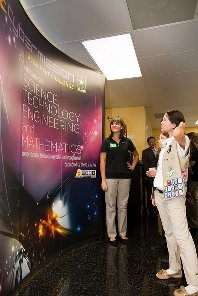
    Do we need more STEM subject majors?

    The majority of the people that I know working in technology do not seem to have college degrees in computer science. I know many people with degrees in many other subjects, and quite a few people that don’t have a degree. In most of those cases, the successful individuals have worked in the real world and gathered their knowledge about technology through hard work across time. It also seems that many of the people I’ve met with CS degrees are often those that make he most mistakes in real world software development or system administration.

    Colleges don’t teach you all the skills you need in the real technology world. The best workers I know in this business are the most adaptable, thinking laterally about problems, and bringing flexible approaches to solving problems. With many surveys showing a shortage of technical talent likely in the next few years, we ought to be encouraging more people to enter the technology field.

    When I saw this article about college graduates in STEM (science, technology, engineering, and math) subjects, I had mixed feelings. On one hand I think that people growing up today need to be smarter, and more educated than ever before.  Expecting to coast through some job, whether it’s in technology, marketing, medicine, or any other field, on the basis of what you learn in your 20s is not acceptable. I think that a larger and larger percentage of the population needs to constantly improve their understanding of how technology works, learn how to find patterns in data and apply new concepts to solving problems, and use computer tools to perform more complex analysis of data. That would seem to require a heavier grounding in the STEM subjects, and perhaps more major concentrations in those areas.

    On the other hand, lateral thinking doesn’t necessarily come from heavy concentrations of one subject. The broad education that can come from different types of learning are invaluable, especially in a global, complex world that is growing every closer together. The success of so many friends that didn’t study STEM subjects makes me think that people can study anything, as long as it requires them to work hard, and learn to think through a series of challenges.

    There are many pundits noting that we have a shortage of workers in the technology area. If that’s true, then I’m not sure the solution is pushing more STEM subjects on students. Instead I think we need to provide people with a better image of working with technology, and excite them by the challenges and opportunities that are available to those that have chosen this career field.

    Steve Jones


    The Voice of the DBA Podcasts