Tag: career2

  • The Good Job

    I have the best job in the world.

    These days it also seems that many people are disenchanted with their jobs. They work for the paycheck with little loyalty or concern for their company’s business, and I think that’s fair. When I hear about companies that are not very loyal or concerned with their employees, asking for more work every year without more compensation, with less people and the threat of layoffs hanging over the employee’s head, I think employees have to start treating themselves as self-employed. They should consider their employment as a “contract” with their employer, one that is temporary.

    However I don’t know that this is how the majority of people feel. It seems that I regularly meet people that like their jobs, and feel their employers treat them fairly. I feel that way, and think my employer does an excellent job of partnering with employees, rather than exploiting them. People are treated fairly, trusted, and in return, they do a professional job, to the best of their abilities.

    In the last few months, I’ve attended quite a few events and spoken with hundred of people. While the people that often attend events are a self-selective group, but most of the people I’ve had conversations with like their jobs. For the most part they think their jobs are fairly secure. That’s comforting, especially at a time when much of the news in the world relating to the economy and job outlooks is bleak.

    If you don’t have a good job, it’s up to you to look to make a change. It can be a slow, drawn out process, but it doesn’t get done through delay. Make a plan, build up your skills, improve your brand, and set a goal to make a change to find a better job across the next year or two. Life’s too short to live with a crappy job for a long time, no matter how much they pay you.

    Steve Jones


    The Voice of the DBA Podcasts

  • The HR Scorecard

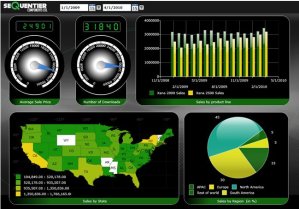
    Dundas controls make building interesting dashboards easy

    Are you looking for a BI project in your company to get some experience with? I’ve got an idea that you might try tackling as a side project, or even an informal project within the business.

    One of the problems that many corporations face today is a regular turnover of employees. That causes a loss of productivity, moral suffers, and projects may run late. This might be because of poor working conditions, poor management, or some other factor. While you might not be able to change that, perhaps you can help bring some visibility to potential problems.

    Human Resource departments are similar to IT departments in that both of them are a cost to the organization without generating revenue. These are overhead departments, and often receive limited budgets and assistance to accomplish anything beyond the bare minimum. These departments can add value, and the good ones help companies in many ways, reducing the costs that might otherwise occur.

    I have rarely seen HR departments with deep analysis tools available to them that might help them function more efficiently. If you want to tackle a BI project, think about building a detailed scorecard or set of KPIs for the HR department that might help them better understand what is happening in the company. Watching for the impact of vacations, turnover, etc. and aggregating exit interview data might help HR improve the conditions at the company, perhaps even for you.

    I’d consider working on an HR BI project, even during some off hours if you have an interest in this area. I’m sure the HR people will appreciate it, and they might be the ones that are in the best position to help you with your career down the road.

    Steve Jones


    The Voice of the DBA Podcasts

  • The Khan Academy

    It’s completely unrelated to work, though there is a computer science section at The Kahn Academy.

    I can’t take credit for this, that goes to Andy Warren (LinkedIn | Blog | @sqlandy) for turning me onto the Khan Academy. It’s similar to what we built at SQL Share, but much broader in scope, and much more successful. Hopefully we’ll rectify that at some point.

    It’s almost an online learning site with a series of videos on a variety of topics. It was built with the idea that we can provide a free, high quality education to anyone that can view the videos. Students can sign up and pace themselves through the classes. Parents, coaches, teachers, can watch students and build a course with a series of steps.

    Or you can do what I did, just watch a few videos. I saw some algebra ones that I might show my kids when they need math help, and I started going through the calculus ones, as a brush up on my skills. I loved math in school and thought I’d play around with some of the topics and exercises.

    Check it out and see what you think.

  • Etiquette

    There is no book for modern etiquette

    The world has changed a lot in my lifetime in the way we communicate with others. I am sure that when the telephone was first invented, or live news broadcasts were available, people felt a similar shift, but the way that technology has allowed us to keep in touch with each other, instantaneously, almost anywhere on the globe, is amazing. I grew up with one phone in the house, with an extra long cord, and now have a Smartphone that gives me not only voice communication, but incredible amounts of data on a regular basis. I find myself communicating with text (Twitter), voice (phone), and even with myself (Evernote) almost every day.

    The shifts have also occurred very rapidly, which has brought with it challenges, and occasionally problems. This Intel survey highlights a few issues, and this PSA shows one that many of us are probably affected by at different times.

    In technology we have to deal with interruptions, and sometimes urgent situations that require immediate attention. We have to respond like a doctor on call for emergency room situations, but the reality is that most of our “alerts” aren’t that critical and no one, or no business, will die if we are a few minutes late. There are exceptions but for in most cases these events aren’t extremely time sensitive.

    As you build monitoring and alerting systems, include a little etiquette . Don’t unnecessarily page people, or alert them for situations that don’t need immediate attention. Bring visibility to problems, but don’t overwhelm someone with a large amount of data, and please, don’t alert people that things are working correctly. At this point in computing, automated systems ought to triage out most of the minor issues without involving humans.

    Our world has changed rapidly, with the speed and accessibility of communications growing quicker than our ability to deal with it. In some sense, I think that the deluge of data that we now have will bring new problems to our world, especially as more and more businesses look to analyze data in real time. We will face challenges that would have seemed like science fiction a decade ago.

    Steve Jones


    The Voice of the DBA Podcasts