Tag: Cloud Computing

  • Clouds, Costs, and Data Analytics

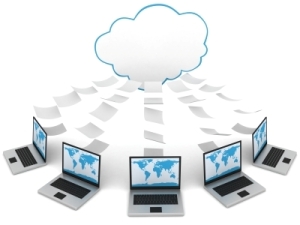
    cloud computing costs
    The costs of cloud computing should be lower than on-premises computing, if you pay attention.

    There are more and more companies using, or seriously considering, cloud based services. It’s a way to reduce some of the infrastructure costs, especially the initial investment costs, for many applications that have highly variable workloads. There’s also the tremendous amount of media attention being given to the subject of cloud services, which exerts pressure on all decision makers to consider moving to a cloud service.

    However are you really saving money with the cloud? The cost of the hardware and software usually ends up being a small part of the total cost of an application. Renting either hardware or software is an ongoing expense. It can have tax implications, and the calculations can be complex. It is important to analyze the costs and track what is being spent over time, as well as analyzing the amount of resources you use to determine if this is a good business decision.

    Apparently quite a few people realize this as there are a whole slew of companies that are willing to help you track, monitor and even analyze your costs. This article lists a number of them, some that even look to save you money where possible. That’s good because the calculators from some of the cloud vendors are extremely confusing. Not only that, but they’re relatively static calculators, whose values may change over time.

    Getting at your cloud data, and building a calculator of sorts is something most of us could do, but would we want to maintain it? Do you want to enhance it over time to work with the changing nature of the cloud? I’d think these services are worth using if you plan to use the cloud, especially those that analyze usage and suggest places to cut costs. There are lots of good and bad things about the cloud, but one thing is certain: you need to make sure someone is tracking your usage and eliminating unused systems. Otherwise you might not find yourself with any cost savings at all.

    Steve Jones


    The Voice of the DBA Podcasts

    We publish three versions of the podcast each day for you to enjoy.

  • The Cloud

    cloud
    Has cloud computing changed at all in the last few years?

    This editorial was originally published on Sept 11, 2007. It is being re-run as Steve is on holiday.

    I was interested to hear about Microsoft providing some services and storage in the “Cloud.” I remember hearing about Amazon making disk space and computing services available to users.

    So is this the next big thing for us? Microsoft’s push of cloud services including software, storage, and more?

    I’m not sure if it is, and I’m not completely sure what to make of it. Amazon’s storage service might make some sense as a backup of your photos since it’s not likely that you’d lose your hard drive and Amazon would lose theirs at the same time, but it could happen.

    The worrisome thing is that while Amazon or Microsoft might tout their service as reliable, fault tolerant, etc., but the reality is that your 2GB or 4GB of stuff isn’t valuable to them. They’re not going to go through too many hoops to get that data back.

    And if it’s gone, it’s gone.

    Things always fail. Just think about the recent WGA problems, a service that you’d think that Microsoft would make sure is always working.

    I think that the cloud computing makes some sense for a Windows Live type of service. If I could have the latest version of Word or Excel in the cloud, with local (automatic, hint, hint) backups made to my local device, that’s pretty cool. Installing new versions of Office are a pain, especially when I almost never use Access, Powerpoint, or anything really beyond Word or Excel.

    It would probably install some crazy ActiveX type DLLs and make my system just as flaky as it is now. But since I reboot about once a month when I get patches (or lose power ), maybe that isn’t so bad.

    Steve Jones

  • Making New Infrastructure Investments

    server room build
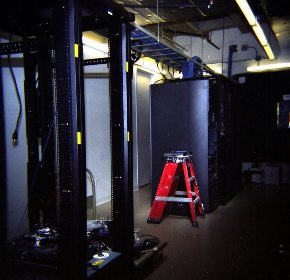
    Will we do away with much of this data center build out with cloud services available?

    I was at a cloud conference recently, learning about the different ways in which people are starting to use cloud services. To be clear, I know that the cloud is nothing new, but it does have the potential to change the way we make decisions about infrastructure, and it absolutely will change the way we invest in IT if we choose to use cloud services.

    I had the chance to talk with three companies that were using the cloud. One was a startup that had foregone all investment in IT infrastructure. They had laptops for employees and one local server to keep copies of development code, but the rest of their “IT stuff” was in the cloud. As a new company, with no existing hardware, this makes sense. Their ability to offload all the sysadmin work meant that their developers didn’t have to worry about IT services; they just wrote code.

    The second company was a small company, one with some servers, but a growing company. They decided to move their email and document management to the cloud (in Office 365) rather than invest in bigger servers to handle the load. They maintained a local Sharepoint server, a development server, SQL databases, etc., but their decision to use cloud services was based on the desire to limit their future investment in computer hardware, and potentially additional staff.

    The last company surprised me. They were an established, medium sized company, and they used a few services in the cloud, like Salesforce, but they also moved some of their customer applications to the cloud. Why? They had a fairly unpredictable spike in traffic multiple times a month. They could have invested in hardware to handle the spikes, but they would have had that hardware idle quite often. Instead they maintain a small set of cloud server, growing them inside of a few hours when spikes occur, and trimming them down quickly when they are no longer needed.

    The cloud isn’t for every application. However there are probably more applications than you might expect that fit it well. As with any hyped technology, it pays to learn about the pros, cons, and potential resource costs to incorporate it and then making a case with your management for or against it’s inclusion in your IT tool belt.

    Steve Jones


    The Voice of the DBA Podcasts

    We publish three versions of the podcast each day for you to enjoy.

  • The TCO of the Cloud

    Cloud computing is growing, and it makes sense for some applications.

    I know that many of you don’t want to put your databases in the cloud. There are definitely concerns for many applications that might have identity, financial, medical, or other data. However there are many other types of applications that might make sense for cloud computing, and I am sure that many of you will encounter pressure to move to the cloud at some point in the future.

    When you do, how do you determine if the cloud makes sense? Amazon has a nice whitepaper for NoSQL databases, which examines a scenario of varying traffic for a system whose usage peaks and then declines. I don’t know how many of us have applications that follow this pattern of traffic, but I think there are plenty of our systems that are over-provisioned and have hardware sitting idle over time. Virtualization helps recover some efficiency from hardware, but the study was interesting to me in showing that the majority of the costs were in administration, redundancy, and support costs (power, space, cooling).

    Whether or not you feel the assumptions made in the whitepaper are valid, there are some interesting ideas here that show where scale can be a huge benefit. Redundancy is very expensive for single systems, but when it is spread out over the large number of systems a cloud provider maintains, it’s a minor cost. The reduction in administration costs can also be a significant savings, especially when you consider how hard it can be for a company to scale up, or down, it’s staff to meet its needs.

    I still prefer the idea of a private cloud inside a company where database services are provided, not database instances. I hope that SQL Server moves in this direction, giving us the chance to choose to manage data and consume a database service, leaving the management of the underlying instances to a specialized group that prefers managing the hardware and platform.

    Steve Jones


    The Voice of the DBA Podcasts

    We publish three versions of the podcast each day for you to enjoy.