Tag: database design

  • Multi-tenant Architecture

    When you design a database, or at least when I do, I think it’s important to build a database schema that is flexible, and anticipates change. You can’t foresee every change required, but you can consider the types of changes that might be required, the places where data can grow, and plan for some evolution in your design.

    Recently I saw a note asking what people thought a multi-tenant architecture implied. To me this has always been a series of data slices, often separate clients’ data, co-mingled in a single database. It might be separate schemas (not usually), but often was separated by the data itself, with each row having something like a clientid (or businessID, regionID, etc.) in each row.

    However the SQL Azure documentation (Connection constaints, first sentence) apparently implies this means a separate database on the same instance. I wasn’t sure this was correct, but apparently this is an interpretation of the term. According to this MSDN Whitepaper, multi-tenant architecture can be a shared server (separate dbs), shared database (separate schema), or shared schema architecture.

    As a note, Wikipedia’s definition could be one or multiple databases. A Joel-on-Software discussion seems to indicate the definition I was used to, and various blogs I’ve read seem to interpret things differently.

    In any case, however you define it, a multi-tenant architecture seems to imply that multiple groups of users or applications are sharing some resource. This might be the database, the SQL Server instance, or possibly, the Windows host server (mult-instant configuration.

    Mutli-tenant architectures are good in many cases, overall. They more efficiently use resources, and allow you to handle a potential larger group of users with limited resources. They can be overwhelmed, but there are ways to mitigate these issues. I will talk about some pros and cons in another post.
  • Are There That Many GUIDs?

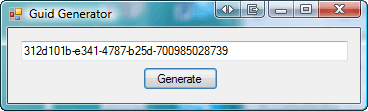
    Do a lot of people actually use GUIDs as Primary Keys? I haven’t used them much, and I would have thought that more people chose identity keys. It seems that most of the demos and examples I see from bloggers and speakers are constantly using identities.

    However an informal survey from Peter Bromberg showed that four times as many people actually had GUIDs as their primary keys. The blog actually says that GUIDs are not a good choice, but I’m not sure I agree with that. You can use sequential GUIDs, and you can avoid making them the clustered key, so I think they can work as well as anything.

    There’s nothing inherently wrong with GUIDs, and they should be unique across all of your rows. There have been some reported cases of duplicates, but for most practical purposes, especially in database work, you ought to be able to count on a GUID as unique. They even have the nice capability of being generated by clients, removing the need for an extra round trip when a client needs to insert multiple rows.

    I typically don’t use them because they’re long, hard to remember and type, and hard to view on the screen. I can’t easily compare rows in multiple tables, and it’s easier for me to work with integers.  I don’t recommend them, but if you are going to use them, be sure you understand the pros and cons, and use them appropriately.

    Steve Jones

  • Are there that many GUIDs?

    Do a lot of people actually use GUIDs as Primary Keys? I haven’t used them much, and I would have thought that more people chose identity keys. It seems that most of the demos and examples I see from bloggers and speakers are constantly using identities.

    However an informal survey from Peter Bromberg showed that four times as many people actually had GUIDs as their primary keys. The blog actually says that GUIDs are not a good choice, but I’m not sure I agree with that. You can use sequential GUIDs, and you can avoid making them the clustered key, so I think they can work as well as anything.

    There’s nothing inherently wrong with GUIDs, and they should be unique across all of your rows. There have been some reported cases of duplicates, but for most practical purposes, especially in database work, you ought to be able to count on a GUID as unique. They even have the nice capability of being generated by clients, removing the need for an extra round trip when a client needs to insert multiple rows.

    I typically don’t use them because they’re long, hard to remember and type, and hard to view on the screen. I can’t easily compare rows in multiple tables, and it’s easier for me to work with integers.  I don’t recommend them, but if you are going to use them, be sure you understand the pros and cons, and use them appropriately.

    Steve Jones

  • NetFlix and Null

    There are some progressive companies out there, and I think they are doing some very interesting things with how they treat employees and work with them. One thing that Netflix does, and I’ve seen others do, is eliminate the tracking of vacation time. They hold people responsible for getting work done, and if you don’t do the work, you get to move on to another place of employment.

    That got me thinking after following the debate about logic, mathematics and NULL in the SQLServerCentral forums. It’s a fascinating view in how some people look at NULL in databases, and worth reading.

    I started to wonder what the proper value would be for these fields?

    • Netflix.VacationHoursAccrued
    • Netflix.VacationHoursUsed

    Would you set them to 0? Or inifinity, maybe marked by something like 99999?

    Or would you use NULL? With the idea that you don’t know, and more importantly to me, you don’t care? I think that the proper design would depend on what you plan to do with the data. It’s not being used, so my opinion is that NULL works fine, and the NULL bitmap could potentially use less space.