Tag: networking

  • Branding Yourself for a Dream Job Slides

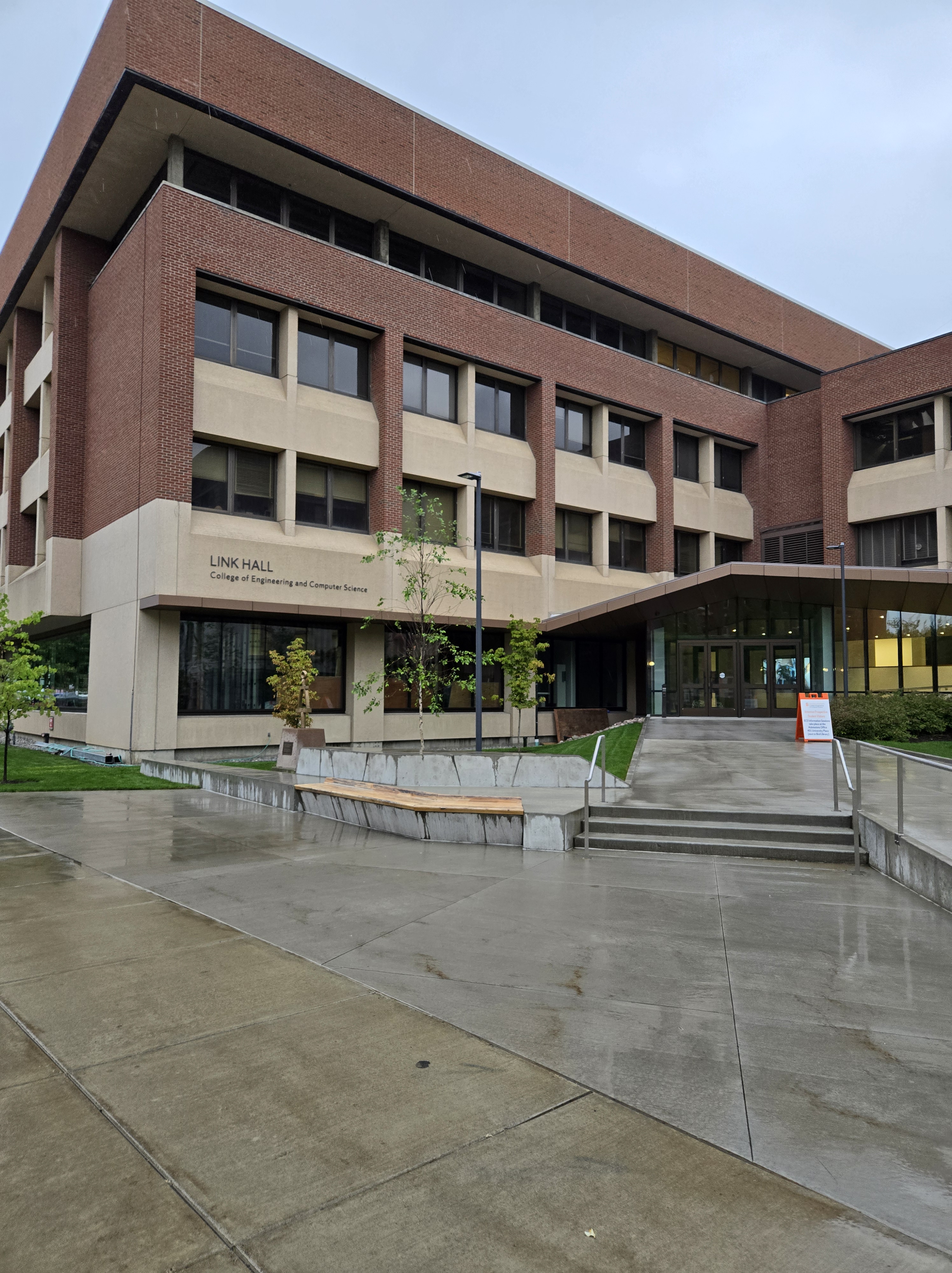
    It was very cool to come back to Syracuse for the first SQL Saturday. It was neat for me, since I used to live here, Shaw Residence Hall at Syracuse University:

    Shaw Hall at Syracuse

    In any case, the slides for my talk are here: Branding Yourself for a Dream Job.pptx

    If you have questions, please reach out to me or leave a comment below.

  • Building a Better Profile

    I give talks on branding and managing your career at various events. Often I am helping people to better market and sell themselves if find new opportunities. One area that I talk about for data professionals is the online profile. I think having one is important, especially as many of our contacts with potential employers are made digitally.

    I ran across an article that focuses on LinkedIn, specifically the profile you create there. It has some thoughts on recommendations, accomplishments, certifications, and more. I like the thoughts, and I do think they help showcase who you are as a professional working in some field. It is worth reading through the article and adjusting your profile to include these items.

    I’d guess that most people don’t have these things to add. They might have friends who will write a recommendation, but what about classes, certifications, projects, etc? Getting those is real work, and it’s an investment of time and effort to grow your abilities.

    Having a full (or fuller) profile helps you stand out. It helps give hiring managers confidence that you are a person who can do the job they need. Getting this full profile, however, is something you need to do over time. Invest in your skills and showcase this in your profile.

    One easy way to do this is to take the work you do and document it. Write blogs, share posts, create an ongoing commentary of what you do at work. When you feel proud of something you’ve done, find a way to add it to your profile. This will create the impression that you are getting things done and solving problems at work.

    I’m sure all of you do this. Take a little time and ensure the next person that might consider hiring you, or the person you want to hire you, knows this as well. It can be easy to talk about these things in an interview, but you need to get the interview first. Your resume/CV and profile are how you get the interview, so be sure you are taking care of them across time.

    Steve Jones

    Listen to the podcast at Libsyn, Stitcher, Spotify, or iTunes.
  • Office FOMO

    There are plenty of companies that are starting to consider bringing people to the office. A few are tentatively making plans, Microsoft has opened campus with the option of 50% time at home. Google is aiming for Sept 1 and requires you to request remote work for more than 14 days a year. A few other friends are starting to go back 1-2 days a week at their companies, with the idea that this may increase over time.

    Redgate has still extended full time remote to the end of 2021, and I have no idea what things will look like after that. I’m curious, and anxious, as I want to go back to the office. Like mentioned in this piece, I am missing others, along with the interactions and the chance meetings. Grant wrote about things we miss recently, and that was my response. Not necessarily the office, but just missing the chance to interact with adults and talk tech.

    The bigger issue that I see, is that many of us may feel forced back into the office to take advantage of opportunities. The chance to get visibility with people outside our team, especially those that might be in management positions and can impact our careers. The face time, especially casual encounters outside of meetings, are a chance to impress others and give us an advantage over others.

    To me, this is the challenge of remote work when not everyone is remote. Out of sight, out of mind is an apt expression. While you might constantly contact those that you work with, who are the people that may give you a raise, a promotion, or a spot on a project that everyone wants to work on? Or the people that might decide who gets let go? If these are people you contact often, great. If not, that’s a problem, and in my experience, I don’t often get the chance to sell myself to them unless I’m in the office.

    These days I’m not as ambitious in my career, so I worry less about impressing others. I do want to see people, and that is what I miss the most during this pandemic. I do hope I can go back to the Redgate office and see people this fall, and I am hoping some events start to take place in person, perhaps with limited audiences, but in some way that allows us to have those chance, serendipitous interactions.

    Steve Jones

    Listen to the podcast at Libsyn, Stitcher, Spotify, or iTunes.
  • The Growth of Terabytes

    Years ago, fresh out of university, I joined the IEEE. As one of the benefits, I got their magazine, with various articles that might expand my knowledge. In one issue, I remember reading about the challenges of video on demand. At the time, calculating what it would take to store digital movies and broadcast them to each TV seemed like an impossible task. This was in the days if hardwired 10Mbps Ethernet and dial-up Internet.

    Not too long ago I had some Internet bandwidth issues, and got some stuttering during video meetings. I run Rainmeter as a skin on my PC, and once I got things working, I was curious what sort of bandwidth I was using. These days, if I’m not doing any streaming of audio/video, my PC seems to need about 1-3kbps to keep Tweetdeck, Outlook, Slack, etc. going. Youtube seems to get bursts to 1.5Mbps every few seconds, but plenty of low < 100kbps times in between. Netflix seems to be a steady 2Mbps to get video.

    All of that doesn’t seem to add up to much for my household. Even when 5 of us lived here, with lots of streaming from the kids, our symmetrical 15MBps connection worked fine. I don’t know what our total usage was for the month, but I doubt we used 1TB a month. Actually, if I calculate it out, full use of 15Mbps for a month is about 4TB, so maybe the kids got there?

    Apparently, more and more people are getting there. A report shows that 14% of some weighted set of subscribers use over 1TB a month. This is over their broadband connection, and likely leaves out mobile usage. While lots of this usage and bandwidth is transient data, like streaming movies, this also means that some data professionals, and network professionals, need to manage the data that flows.

    For many data professionals, this isn’t necessarily a problem, and in some sense, this is good for us. Heavy usage pushes the network staff to increase the speed and capacity of links. That means those of us transferring data (CSVs, backups, etc.), can get our jobs done faster.

    So watch more movies, stream more music, and root for the carriers to increase speeds and capacities.

    Steve Jones

    Listen to the podcast at Libsyn, Stitcher, Spotify, or iTunes.