Tag: Redgate

  • The Book of Redgate: SQL Server Central

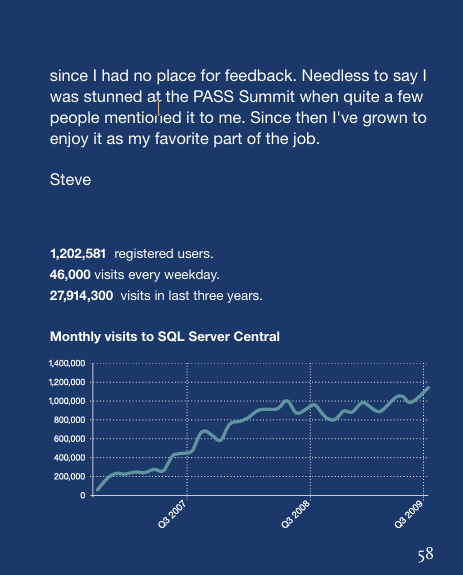
    It was neat to stumble on this in the book, a piece by me, just a few years after Redgate acquired SQL Server Central. I’ll let the words speak for themselves.

    2026-01_0142

    2026-01_0143

    I have a copy of the Book of Redgate from 2010. This was a book we produced internally about the company after 10 years in existence. At that time, I’d been there for about 3 years, and it was interesting to learn a some things about the company. This series of posts looks back at the Book of Redgate 15 years later.

  • Setting FK Constraints in Data Modeler

    One of the things a customer asked recently about Redgate Data Modeler was how to set a FK constraint between two tables. The tool seemed to make it easy, but they encountered a few errors. Here is how this worked for me.

    This is part of a series on Redgate Data Modeler.

    Adding a Constraint

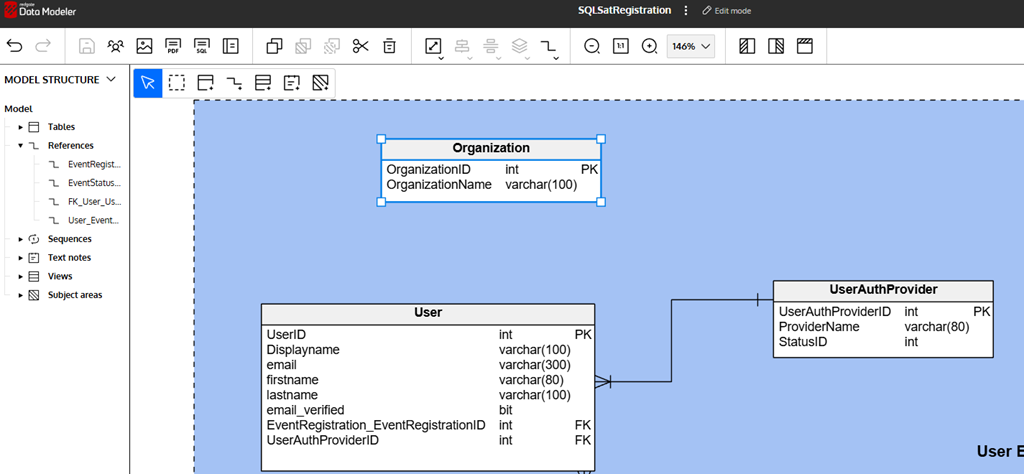
    This might make more sense in the video walkthrough, but here’s the text version. I want to add a constraint to my model that links the Organization and User tables shown below. This is a 1 (Organization) to many (User) FK.
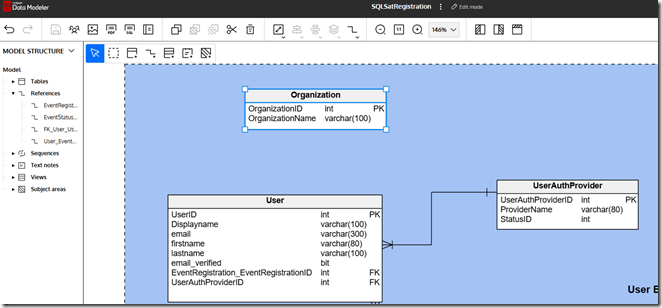
    2026-02_0104

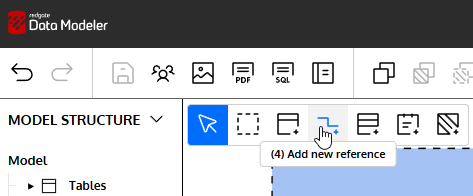
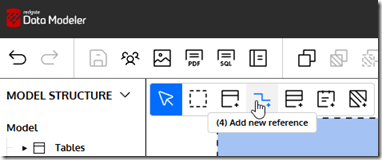
    I don’t have a good FK yet in the child table (User), but that’s OK. I’ll click the Add new reference icon in the upper left of the design surface.
    2026-02_0105

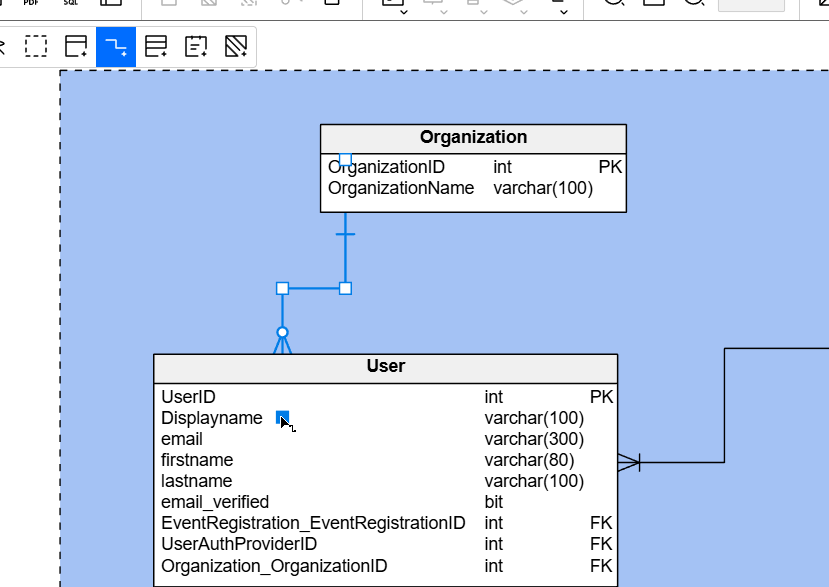
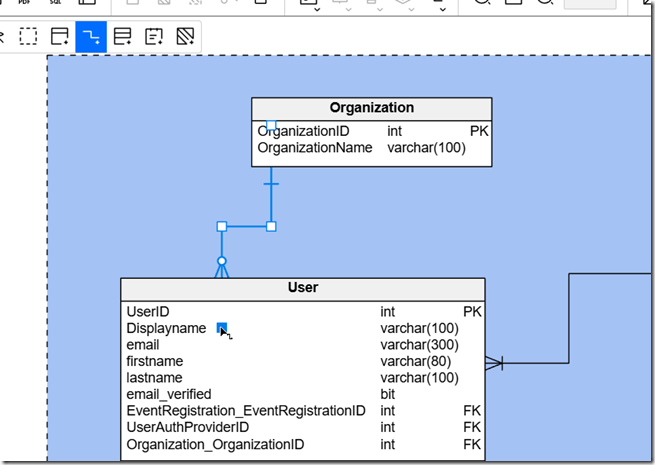
    Once I do this, I can click on the Organization table and drag to the User table. That will give me this view. Note that this defaults as a 1:n relationship, so you want to start with the parent. There also is a new “Organization_OrganizationID” column added as a FK.
    2026-02_0106

    That’s not a bad pattern, especially with modern Intellisense, where I don’t need to type everything out. This lets me know where the join should be. However, for many of us, we prefer having something simpler, like OrganizationID as the column in the child.

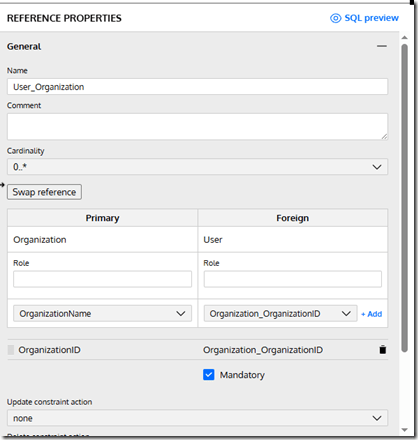
    If I want to change this, I can look to the right for the Reference Properties. Note the default name below is User_Organization, which I definitely don’t like.
    2026-02_0107

    I can adjust the name to meet my standard, which I’ll do. I can also adjust the FK column, but I’ll need to go to the child table, User, to do this. If I rename that column there, I see this.
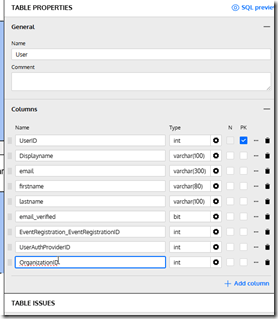
    2026-02_0108

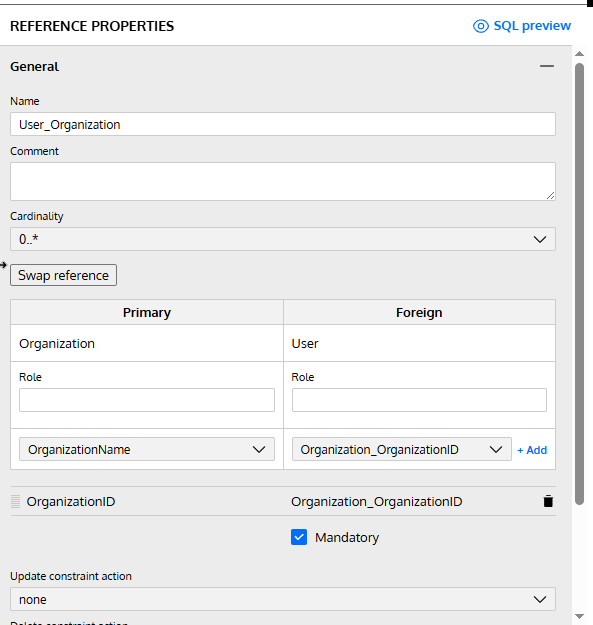
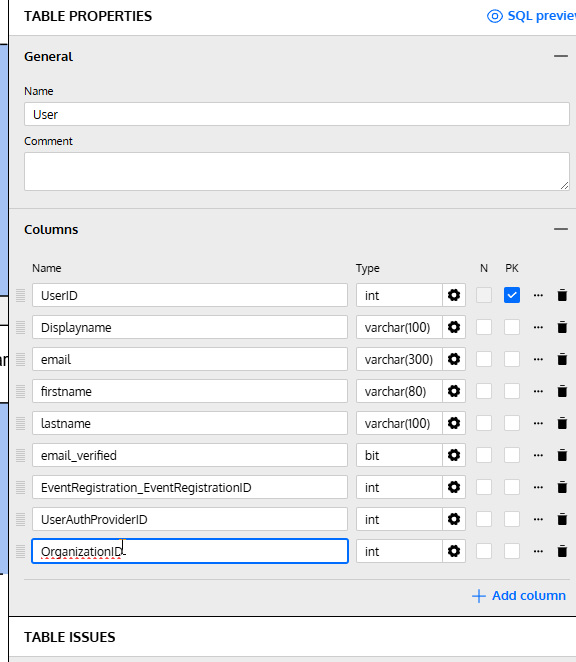
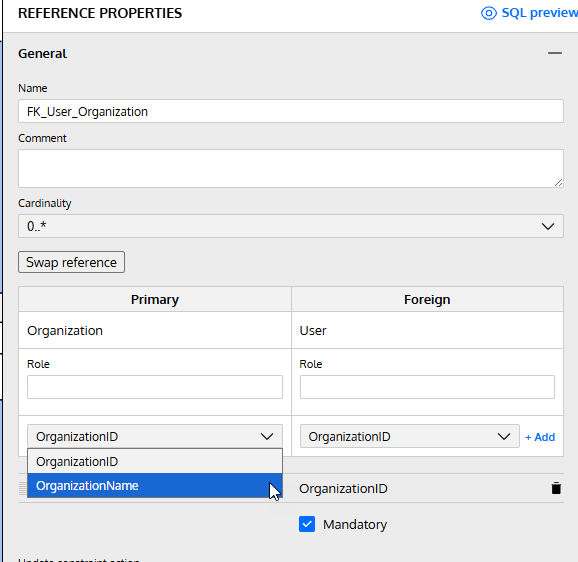
    When I click back on the reference, I see this. My change for the FK table is there, but the Primary has defaulted to OrganizationName. Fortunately, there’s a drop down where I can change this.
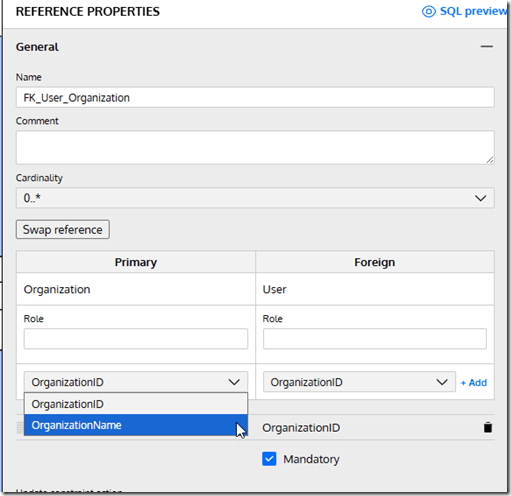
    2026-02_0109

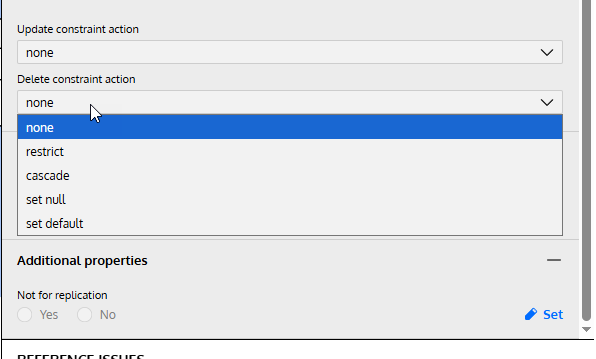
    Below this, I have other properties. There’s a color (if you care), but also I can set cascading actions. See the drop down below and the options. These can be set for update or delete. There is also the additional property to set this as not for replication.
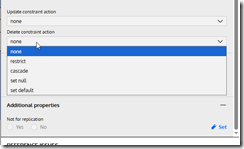
    2026-02_0112

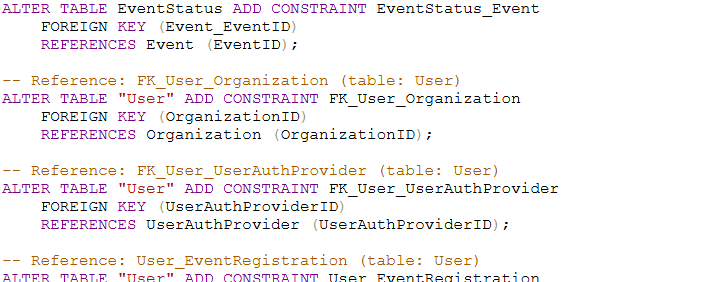
    Once I do this, the changes are saved. If I generate the SQL script, I can see my FK exists inside the script. You can see the relevant portion below.
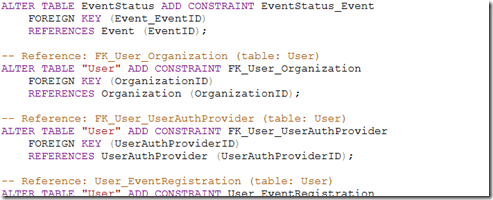
    2026-02_0113

    Summary

    Setting accurate FK constraints is an important part of data modeling. I certainly see the reasons why some people don’t like FKs, but if you set them, you want them to be accurate. Redgate Data Modeler supports this, but it’s not as straightforward as I like. Hopefully that changes over time.

    I don’t know that the names matter that much, but in case you are concerned about naming, you can customize this.

    Give Redgate Data Modeler a try and see if it helps you and your team get a handle on your database.
  • Webinar: Navigating the Database Landscape in 2026

    For a number of years, we’ve produced the State of the Database Landscape report, based on surveys and research we do every year. I have found it very interesting to see how people respond and what we learn from the report each year.

    This year is no different, with one change; we’re doing a webinar. Register to hear the advocates talk about navigating the database landscape in 2026. Grant, Kellyn, Pat, and myself are set to sit down and discuss the findings on Feb 18 at 1200pm EST.

    We reviewed the report and now each of us is digging in to those areas we are most interested, and we’ll express our thoughts in the webinar. With over 100 years of database experience between us, we hope you’ll enjoy it.

    And we are ready to take your questions and discuss and debate the future of our industry.

    Register today and I’ll see you on Feb 18.

  • The 2026 Redgate Summit Series

    The last few years, Redgate has run a few Redgate Summits in different places. We’ve done one every year in London and added a few other cities along the way.

    This year, we have 4 scheduled (so far). The schedule is listed here, and I’d love to meet some of you at the events. I always enjoy hearing about people’s challenges as well as their complements and criticisms of our software. I find it invaluable hearing both.

    There may be another one or two coming, with plans up in the air, but we’ll see. Personally I like these events and I’d like to see us add one more in the late summer or fall.

    We run these Summits for customers to better get to know us and become closer partners. We want to meet our customers’ needs and ensure we are approaching our development in a way that helps customers get more value from our tools.

    A few of our tracks are generic, not necessarily related to Redgate, but they are full of topics that we think are important, and we present them based on our knowledge, research, and success. The advocates often run these tracks to bring our expertise to the presentations. We also have a Redgate track, where you can see specific solutions or ask detailed questions of our engineers.

    Hopefully you can join us at one of these events this year (or next year).