Tag: software development

  • Strike Force

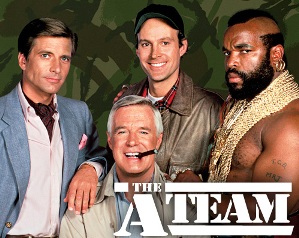
    Would you want to be part of an elite strike force inside your company? An IT team that can solve complex problems and save the day when there’s a crisis? Or even a large challenge facing your department?

    It sounds cool, and there’s a neat description of an “A-Team for IT” in this article, talking about the types of people that are needed. Overall I think this is a more a list of the ideal types of people that are important for almost any project, especially one that might involve significant investment from a company.

    This started me thinking about the type of person I have been in the technology world. I haven’t provided air support, or been the Über hacker or Fearless Leader that does something amazing. For the most part, I think I’ve been the infrastructure sherpa. Quietly working along, providing support where it’s needed, and just making sure things get done.

    That’s what I think most of us do on a daily basis. We grind away at work, building and fixing things that many people appreciate, but don’t stand out. We don’t get the spotlight, most people in the company aren’t aware of what we do, and that’s fine. Being part of a crisis or strike team sounds cool and exciting, but I think most of us would rather do a solid day’s work for an honest days pay and then go home and get on with out lives.

    Steve Jones

  • Hyper-V Guests

    Virtualization has really changed the way that we deal with software. It seems that more and more often I find people using virtualization for all sorts of systems, both production and non-production servers. The ability to run multiple operating systems on a single physical host means that systems are used more efficiently. It also means that more people have the ability to experiment with alternatives to the standard Windows OS that so many of us use.

    Hyper-V has gained a lot of attention over the last few years as Microsoft has tried to get people to run this hypervisor.  It seems that quite a few people have had success running Hyper-V, and it becomes more popular all the time. However, not everyone is happy, and I found a  post about Linux support in Hyper-V, or the lack thereof.

    Whether Microsoft is mis-representing their support is one thing, but this did have me thinking about a wider issue. As we build more and more systems that are virtualized, or even composed of services offered by other vendors, to what extent should the vendor provide support? Is it reasonable to say that your platform works with software x, y, and z, even if you don’t have engineers trained to support the software?

    This could become a large pain point in the future for other types of platforms, as I am sure it will continue to be an issue with hypervisors.  I’m not sure I would expect a hypervisor vendor to offer full  support for various guest operating systems, but I certainly would expect that they would work with engineers at other companies to solve issues, especially if I have a support contract.

    Steve Jones

  • The Low End

    Are products like Access and VB bad? A long time ago it seemed that if you could spell VB, you could get a job. That was good in some ways as it helped the explosion of growth in technology employment. It was bad because we had many people building applications without understanding software development and we ended up with many buggy, crash-prone applications.

    Someone posted recently  that these “low-end” products had helped them get a job and get started in this business. This person thought my comment was a complaint against these software products, but that’s not the case. I know quite a few people have built or supported applications on Access, VB, or Excel and then gone on to a career with SQL Server. In fact, the first business application I built was on Lotus 1-2-3, using a large combination of macros to help someone with estimating.

    Are “easy-to-use” products like Access or Excel good for business? Should they be used to build applications? Like most things in technology, the answer is “it depends.” Often these are not the basis for a robust system on which you run your business, but they can be. Often there is a need  or desire for something to be built quickly, and cheaply, in order to accommodate some aspect of business. These tools are a way for some type of automation to be assembled quickly and used by business people.

    However you can outgrow these applications and find that something stronger is needed. That’s the time when an IT project makes sense, and arguably, that’s the appropriate time to spend the money.

    I like prototyping useful tools, and Microsoft provides ways to easily accomplish this.  To me, software like Powerpivot seems likely to spur on more projects, not fewer.

    Steve Jones

  • Costing Cool Projects

    I ran across this article on how accounting can kill innovation, basically talking about the issues of applying our standard accounting rules and ROI calculations to innovative ideas. When an idea is too new, or too different, applying estimates of returns and value are often wildly incorrect.

    A study showed that when strict financial controls were not applied at the beginning, but rather decisions were made along the way to continue investing in projects, there were more likely to be positive  returns from the project.

    This approach seems to be one that could be useful in many BI type projects, and to a large extent, seems to be a good use of Powerpivot as a way to prototype projects. Assemble some data by hand, making a limited investment, and then determine if further investment is warranted.

    Companies often follow similar paths, with similar software and the differentiators between can turn out to be the innovation of the people inside the company. Making a case for innovation, with limited investment and small prototypes can be a great way to work on something interesting while potentially making yourself a very valuable employee to keep around.

    Steve Jones