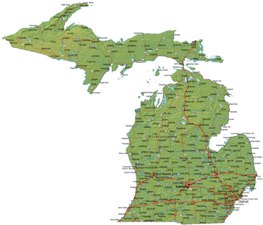
 Is this a big deal? Michigan is the wrong shape, reported on Connect as a problem with the Report Builder 3.0. I guess is depends on whether or not you are showing Michigan in one of your reports. If you are, it’s probably a big deal, and no matter what data is on the report, plenty of people will never get beyond the incorrect shape.
Is this a critical bug? Is it a must fix for SP1? Does it deserve a high level of priority?
Triaging bugs like this and assigning a priority has to be extremely hard. On one hand this should be a simple fix, but after the maintenance plan fiasco in SQL Server 2005 SP2, I’ve heard a few SQL Server developers say there are no “simple fixes.” However this bug is not critical to most people; it won’t cause downtime or data loss. For those people that need it, however, it could be extremely critical. It also a little embarrassing for any report that has the wrong shape visible in a map control.
Should this be fixed before bugs that cause downtime? What if this takes 2 days and those bugs take 2 weeks? Or two months? You could easily get into the situation where a low priority bug keeps getting pushed back because there are more important issues to deal with. I’m not specifically talking about this bug, but rather using it as an example of an annoying, but otherwise non-critical issue.
As companies work on software, I’m sure there’s some developer on every team that finds items like this one to be very annoying bugs, and would probably just fix it if they had time. Or permission. To me, this is a great reason why you ought to give developers some free time to work on things that they find interesting. My guess is many little bugs like this that can be fixed quickly, would get worked into the schedule.
Developers like fixing things, and they like easy wins. Give them a chance to work on them.
Steve Jones


