Author: way0utwest

  • Laptop Cattle

    I traveled to Cambridge recently for some meetings at Redgate Software and to attend SQL Bits. I arrived on Tuesday, worked a bit, and then came back to the office Wednesday for the SQL Clone launch (a success, by the way. Watch it. Now. Well, not now, but after this post).

    After the first two SQL Clone broadcasts, I walked back to my desk and tried to get some work done. I was updating the release pipeline for a demo and kept getting an error during the restore from production step. It was strange as I hadn’t changed anything, and had actually demo’d this step the previous week. I tried a few things before I read the error message and then realized I had a corrupt .dll. Not great, but sometimes a restart will clear things if this is some bad bits in memory.

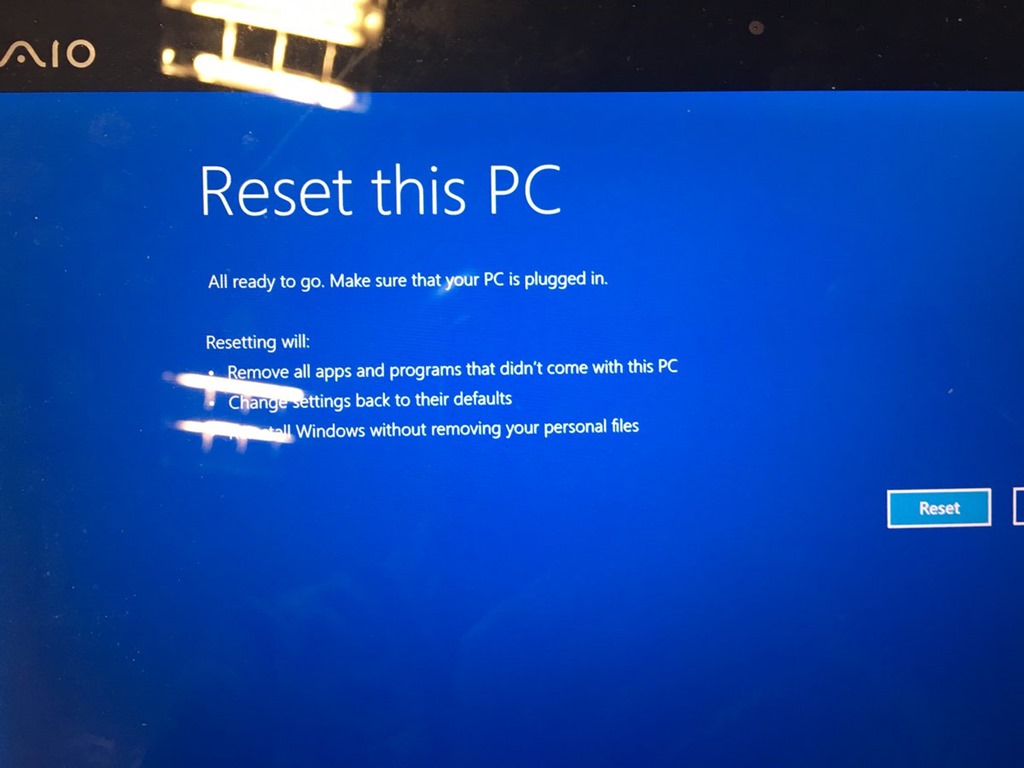
    I closed Windows and then clicked “restart” and got this.

    IMG_1385

    Not the end of the world, and I assumed this was some transient. I let this go and went to get coffee. I returned to see this screen, but I could swear the percentage was different.

    It was. The machine was rebooting, crashing, and getting back here. I powered down, waited the customary 5 seconds and 5 more, and booted back up. I got to the Windows recovery screen. There were a few options, System Restore Point, System Image, etc., but nothing was working. After about 20-30 minutes, and another 10 considering whether I should walk down the road and buy a new machine, I decided to reset and reinstall Windows. Not my favorite option, but I didn’t think I had another one.
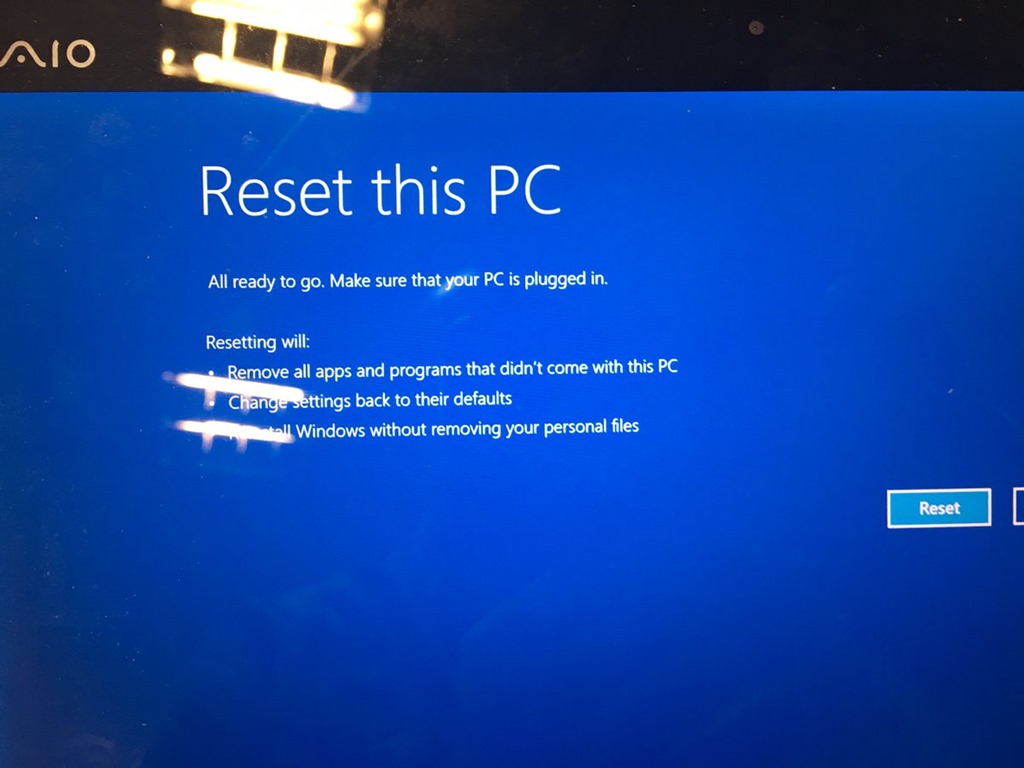
    C8F5sILXwAAHil6

    I clicked the button and started watching Windows reset itself.

    IMG_1390

    And watching, but fortunately I had another broadcast to do for SQL Clone, and I had my phone.

    IMG_1392

    Eventually the install finished, and Windows configured itself. I’d done this a few times for other machines (desktop and laptop) in the last year, but by choice, after I’d made backups. This time I was forced, and was hoping that I didn’t lose too much stuff.

    IMG_1393

    When I was able to log in, I saw there were still a few things, including some configuration that Windows restored as a side effect of using a Live login, or whatever Microsoft calls it now. When I first logged in, I was greeted by my new install.

    IMG_1394

    From there, I needed to get going. I had some Windows config, and more of the stuff in the Documents, Pictures, etc, libraries were there (Actually all of it), but anything in\ Program Files, \Windows, etc. was gone. Not fun.

    Fortunately I have rebuilt some machines recently and have found Chocolatey to be invaluable. I first got Chrome going, then added Dropbox and kept other installs going in the background as I got ready for broadcast 3.

    IMG_1395

    Throughout the evening, I manually added back my O365, SSMS, and SQL installs, and kept thinking of the stuff I needed for demos. git, Github and VSTS got my code back down, and I had to re-authorize some apps with new passwords, but I was 90% running before I went to the hotel that night.

    Reinstall Windows to running SSMS demos with SQL Server in about 4 hours, minus about an hour in the SQL Clone launch.

    The next day I had pretty much everything running again by noon, minus a few sample database backups. I’ve learned that the default SQL backup path is no bueno on a laptop. I’ll have to rebuild some sample data sets and I’ve already moved things to a new path that will exist if this happens again.

    I was productive and working, writing some code and testing demos the next morning. It really was about a 4-5 hour process to have a laptop back working, with code, that I could use on an airplane with the data I expect.

    My laptops are (mostly) cattle now. I’ve got a few things to square up (like SQL backups), but overall, I think I’ve improved my DR process.

    And I’ve learned to git push before I power down this machine.

  • What’s Next for SQL Clone?

    I think SQL Clone is a useful, handy product. It’s what I’ve needed in a number of organizations, or it’s what would have saved us (literally), $100,000s of dollars by avoiding larger SANs with snapshot technology. At one company, we actually bought a second six-figure SAN when our customer service people wanted a copy of our SQL Server database from a point in time overnight that they could use to respond to customer requests and test issues on the next day.

    Now that v1 is out, and many of you were impressed by the demos and details from our Livestream launch, what should we do to the product?

    Let us know: sqlclonefeedback@red-gate.com.

    We are getting feedback from some customers, we are getting a few questions here and there in presentations, at conferences, and on Twitter. However, it helps to give feedback directly in a way that we can tally things up.

    Do you need more than 2TB clones? Send us a quick email.

    Do you need better permissions and security? Send a quick email.

    Is there something else?

    As much as I like getting feedback, and Grant does, it’s good to vote with your voice and send a note to the company. If you want a louder voice, send a few emails to the salespeople. They can really put some emphasis on feature requests.

  • DevOps at VSLive–Austin

    You can see me in May at VS Live in Austin, where I and many others will be talking DevOps. There are lots of sessions to choose from, including some all day pre-cons. If you work in multiple areas (data, development, ops), or want to get ideas about how to better build and manage software, come to VS Live in  Austin.

    auspk14


    Use my code, AUSPK14, to register and save $400. We can talk about DevOps and enjoy some Austin TexMex.

  • The Foundry–Data Masking Research

    For most of the time I’ve been working for Redgate, we’ve had some sort of R&D group that tries out new ideas. Over the years we’ve done this in a few ways, evolving things over time. I had the chance recently to meet with The Foundry, which is formally investigating ideas for feasibility, interest, and general knowledge. Not all their ideas will move forward to actual pieces (or parts) of software, but it was interesting to meet with them.

    One of the areas they’re investigating is data masking, which is a much larger topic than you might think. I got the chance to review some of their research areas and thought a few of you might be interested in helping research and giving your thoughts.

    Data Masking Demos

    In looking at data masking, the group spent some time getting feedback from individuals, trying to understand the challenges and possible solutions, and then build some interactive demos. These aren’t really software, but they are a bit more than wireframes. you can see all the demos in the Data Masking Demo section of their site.

    Each of the items deals with a different aspect of data masking. The demos aren’t completely intuitive, which is both interesting and frustrating. It’s good that there is some open-ended-ness that gets me to think. Hard that I don’t always quite get the intention. I had the luxury of getting some time where someone would sit down and explain a scenario, but I’d be curious what some of you think.

    If you have a few minutes and want to play with potential areas of data masking research, try a demo and give some feedback. I particularly think the Manage Test Cases and Realistic Generation demos are things I’d like to see engineered, particularly together. I would really like the idea of some production-like data and some real test cases being moved into good, not-production, data sets that I can use for development and testing. I’ve given some feedback, but I’ll play more and leave notes here, and at foundry@red-gate.com .

    If you have a few minutes, maybe you want to do the same.