Author: way0utwest

  • Getting a VHD into Azure with PoSh

    Another post for me that is simple and hopefully serves as an example for people trying to get blogging as #SQLNewBloggers.

    I thought this would make a nice SQLNewBlogger post, an easy get started one. I used the docs from Microsoft as a guide, so here’s how it went.

    Login to my account. I used Add-AzureRMAccount here to get the login dialog. I’m not repeating this for now, so this is just an interactive test.

    2017-03-23 14_09_25-Sign in to your Microsoft account

    Now I tried to create a storage account, but I hadn’t assigned a subscription. I didn’t think I needed to  since I only have one,but hey, I guess I do.
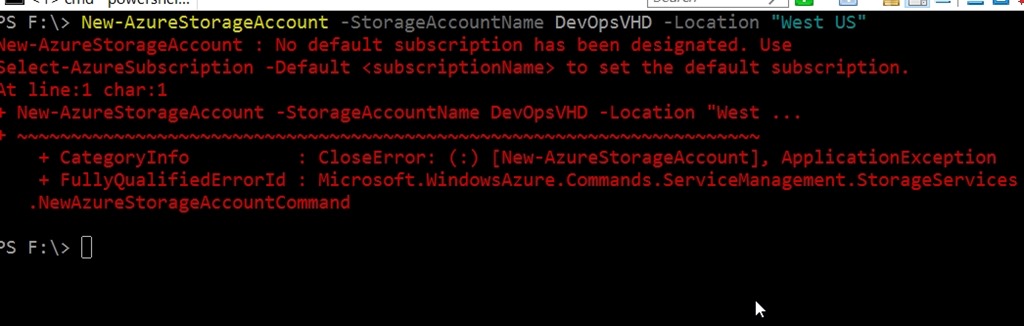
    2017-03-23 14_11_36-cmd - powershell

    I started typing Select-AzureSubscription, but realized I didn’t know what it was. I can’t remember naming this and under my name in the portal, I didn’t see a place to find it.

    2017-03-23 14_13_22-Getting a VHD into Azure - Open Live Writer

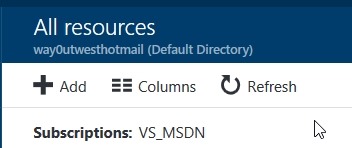
    Ah, under All Resources I see something, so I’ll try this.
    2017-03-23 14_12_26-All resources - Microsoft Azure

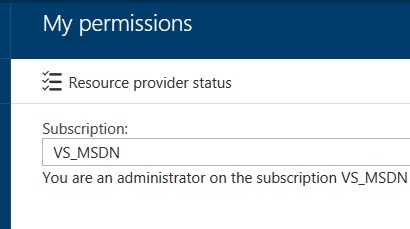
    On second thought, under My Permissions, I see it there.
    2017-03-23 14_14_17-My permissions - Microsoft Azure

    Or not

    2017-03-23 14_14_41-cmd - powershell

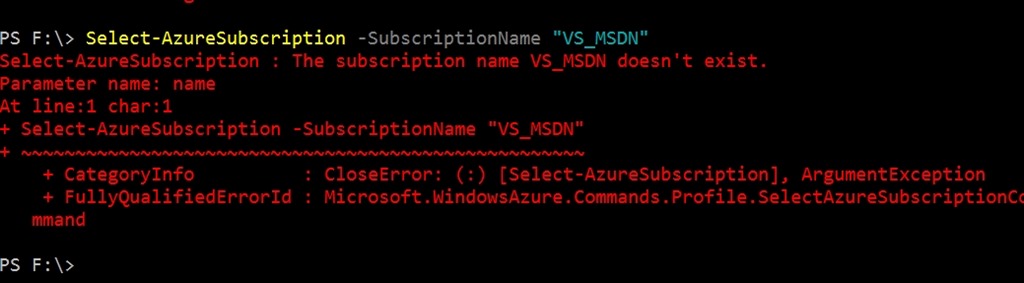
    Get-AzureSubscription doesn’t quite work.

    2017-03-23 14_17_54-cmd - powershell

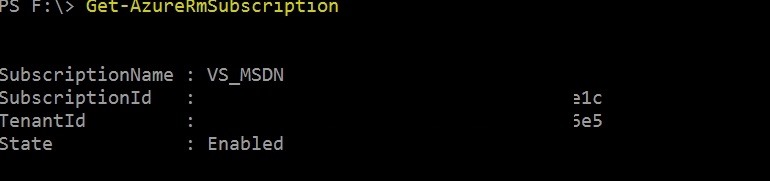
    It’s Get-AzureRMSubscription

    2017-03-23 14_19_02-cmd - powershell

    So, why doesn’t my creation of the storage account work? I should really read error messages. The issue is Select-AzureSubscription fails because I need Select-AzureRMSubscription.

    Sometimes the rev’ing of the cloud is hard.

    Actually, maybe neither work.

    2017-03-23 14_22_02-cmd - powershell

    I retreat.

    2017-03-23 14_23_59-cmd - powershell

    I’m still annoyed. “US West” isn’t valid. FFS, Microsoft. Whether I type any of these, just ask me or process them.

    • “US West”
    • “West US”
    • “USWest”
    • “US_West”

    OK, I decided to go exercise for a bit.

    I’m back (30 minutes later), and I try Get-AzureLocation. I can guess some cmdlets. I get a lot of stuff back and see “West US” is valid. I try a few other valid names of regions, but get errors. It’s not that parameter.

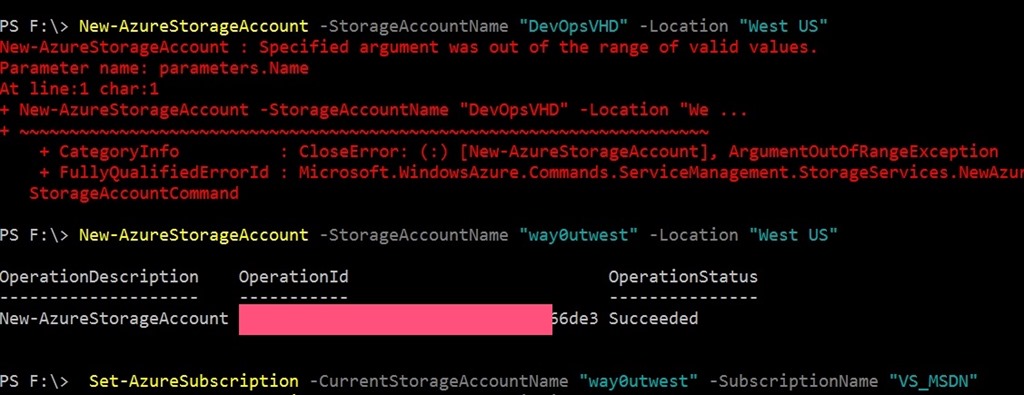
    Let’s try a new name.
    2017-03-23 14_30_22-cmd - powershell

    #$%#@#@# engineers and developers. That’s a valid error message? Not, this is a duplicate or something that makes sense. Glad I left.

    Maybe not. At least this is an error that makes sense.

    2017-03-23 14_31_27-cmd - powershell

    Finally. Let’s upload the VHD.

    2017-03-23 14_33_25-{0%} cmd - powershell

    And it’s off.

    2017-03-23 14_33_41-{0%} cmd - powershell

    Hopefully this will work. I haven’t tried this with PoSh before, and it was somewhat frustrating, though it really didn’t take that long.

    SQLNewBlogger

    This was a bit of a live blog. Do something, take a screenshot, write some text. It was a bit of a learning experience.

  • TSQLTuesday.com – Quick WordPress Setup in Azure

    When I agreed to host the T-SQL Tuesday site, I wasn’t sure what to do. I thought about just putting up a static page, one I’d edit, but in some conversations with Adam Machanic, he wanted to have a few people able to manage the site. That makes sense and means I have less to do.

    My first thought had been to build a SQL database, set up a web page, maybe add some logins for people, etc. Sounds great, but that can be a lot of work, and while I don’t mind some projects, I don’t want a big project that’s just a small service. Especially for data that’s really just historical logging.

    When I woke up one morning and found a domain transfer request, I felt some pressure to get something up quickly. One of the great things about using domains on the web is that I could build something quick, point the domain to it, and build something else in the background, moving the domain later. There might be redirect issues, but in this case I expect most people just hit the domain, tsqltuesday.com, so I decided to focus there.

    Azure Websites

    I had experimented a bit with Azure websites, setting a few up, and thought this might be easy. In fact, it was really easy, so I decided to write a bit about the experience. Note, this is what the experience is like in Mar 2017. It could change quarter to quarter, so use the process and images as a rough guide.

    To get started, log into your portal. If you don’t have an Azure account, google how to create one, set it up, and then come back.

    Once you have an account, click New and choose .

    2017-03-11 21_01_53-Web   Mobile - Microsoft Azure

    From here, pick “See All” and then find WordPress.

    2017-03-11 21_02_15-Untitled

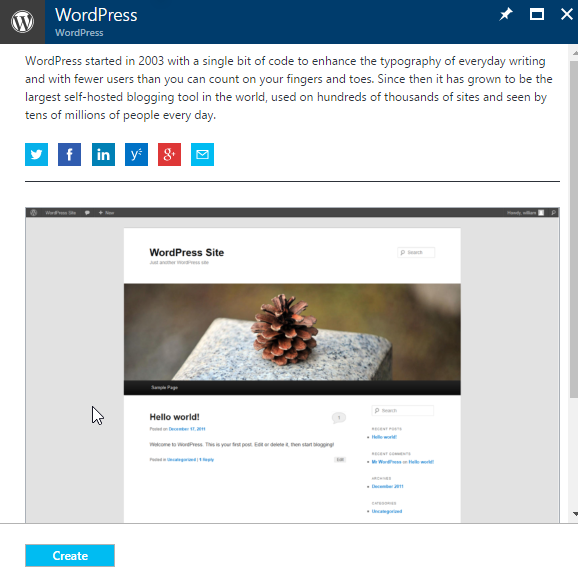
    Once you select WordPress, you just click Create.

    2017-03-11 21_02_56-WordPress - Microsoft Azure

    I tried to keep this simple, and picked these options.

    2017-03-11 21_03_47-WordPress - Microsoft Azure

    one thing I had to do was pick a size above the free service. This is because the free services don’t allow custom domains, and while tsqltuesday.azurewebsites.net works, it’s not as cool at tsqltuesday.com. Plus Brent had already transferred the domain to me, so I was on the hook.

    Once this was done, I had the site created.

    2017-03-11 21_07_42-tsqltuesday - Microsoft Azure

    Once the deployment completes ,you have a blank WordPress site. You log in with your credentials and start configuring, just as you’d do on wordpress.com or with your own installations.

    2017-03-11 21_09_56-WordPress › Installation

    I took a few guesses on how to organize the site, but I’ll discuss those late. This is really about getting a quick site up, one for your business, for your blog, or whatever you’d like. This is my second WordPress site on Azure, and I’m amazed at how easy it is.

    I’

  • Change Approvals

    Part of a developer’s or DBA’s career is getting their work released to some system where others can use the system. Some of us may do this more than others, but we all usually have some role, whether in packaging changes up or actually pushing the button that runs a script or copies files to some live server. This can be an exciting and stressful time, depending on how you feel about the quality of the work.

    Releasing software often isn’t something done in a vacuum. Even in the highly agile, DevOps companies like Amazon and Facebook where developers release code many times a day, there is often some sort of approval process, whether implicit or explicit, before code goes out. Even if it’s just a peer that code reviews something, or a business person that examines a test version and pronounces it correct, another person often weighs in on our changes.

    That’s not always the case, as I know in emergencies, some of us make quick decisions and change or run code that only we have examined. I’d hope that’s the exception, rather than the rule, with most database changes.

    Today I’m curious. Who approves your database changes? Is there a formal process? An informal one? Does the person making the decision even understand the code or do they depend on you to have written and tested solid T-SQL?

    It’s been said that the person closest to the work is often the best person to judge if it should be released, but that’s only partially true. Deploying code is often disruptive. It introduces change, which customers may or may not like. There may be good reasons to release at discrete intervals, rather than whenever the developer things things are working. This may change with heavy use of feature flags or feature toggles, but in general, code releases are interruptions and we want to limit them.

    Unless something is broken, in which case, we often want the change as quick as it can be released. Does that mean we want a different change process? Let us know today.

    Steve Jones

    The Voice of the DBA Podcast

    Listen to the MP3 Audio ( 3.0MB) podcast or subscribe to the feed at iTunes and Libsyn.

  • I Hate To Send This Email

    I use TrueDelta to report my car status every month. It’s a nice service, allowing car owners to see what experiences others have, and think about which models and years might be a good fit for me. I’ve tracked multiple cars with their service for the last 3-4 years, with reminders from them every quarter to update any repairs I’ve made.

    Recently I got an email from them with this opening: ” We hoped never to have to send this email. A few days ago we learned that TrueDelta has joined the increasingly long list of organizations whose server security has been breached by hackers.” The email went on to note that names and passwords to taken, and that everyone needed to perform a password reset. I applaud them for including “Security breached” in the subject as well as immediately changing everyone’s passwords so old ones wouldn’t work.

    I’ve been hacked at SQLServerCentral, though to our knowledge no data was stolen, merely vandalized. We haven’t ever been able to track suspected data breaches back to SSC, and I hope we never do, but I’m not naive to think that we never will. I hope we don’t, but hackers make determined efforts to gain access to data. At least we are aware of security measures, have a small staff with administrative access, and try to not allow any simple attack vectors.

    Not every company does a great job at securing their data, especially from phishing attacks. There’s a spectrum of how carefully data is protected by organizations, and as we’ve seen from haveibeenpwned.com and plenty of media reports, more and more companies lose data all the time. Some of those companies notify customers (some have to), and I would guess more than a few people have had to send out emails they never expected to send. More of us will dsend those emails in the future, and we should think about that today. Is there something we can do to avoid having to send those notifications?

    There probably isn’t something to ensure it never happens, but we can certainly work towards improving our security. As developers, we shouldn’t have short limits or character choices for passwords. If you wonder why, there’s a great answer at security.stackexchange. We shouldn’t be writing our own authentication schemes, but incorporating code that’s been written, vetted, and reviewed. And make sure we apply patches. Most of the security holes in software are known and patched, but without being deployed. Certainly if new patches become available, we should be able to incorporate them quickly. Above all, learn what SQL Injection is and don’t allow unvetted user input in queries, including those in hidden form fields.

    Steve Jones

    The Voice of the DBA Podcast

    Listen to the MP3 Audio ( 4.4MB) podcast or subscribe to the feed at iTunes and Libsyn.