Author: way0utwest

  • Server Hardware or Coffee?

    I actually chuckled out loud in my office recently. I was reading a piece about Expensify and how they learned some lessons from their database architecture over time. It’s a good piece, but at one point the author talks about two Dell servers. There’s a dual core 2.8Ghz CPU with 500GB of storage for US$700. This could be upgraded to an 8 core, 3.7GHz CPU with 64GB of RAM and 10TB of storage for around US$3,200. However, the author says don’t be cheap. Why?

    That’s less than the company spends on coffee each month.

    I thought that line was funny, and it proves a point. It can be easy to think about the cost of hardware as being high because it’s a large ticket item for most of us. When you view it in the context of the scale of business, then it’s cheap. If any of us spent $3000 a month on food, we might not think $3000 for a server is expensive. When you look at the cost of your labor that might need to babysit an underpowered system, a few more thousand dollars seem like a bargain for memory or CPU resources.

    The author also notes that while EC2 charges for managing your systems, it’s still a steal, and for many of us, capacity isn’t a big issue. We do find that one single system runs most of our workload. If it doesn’t, then we could buy more, or a second system, for a relatively low cost. At least, compared to the rest of our business.

    There certainly are some of you that have a large workload, or you have spent substantially more on server hardware. I think many of my systems have been tens of thousands of dollars, but there are good points to be made. Today’s computers are very powerful, and even though we have more data, a single server is likely able to handle many workloads.

    If we write good code.

    That’s a big caveat, but training your staff to code better, having them spend time learning to query hierarchies more efficiently or quickly splitting strings, can pay off with much happier servers and customers. While I am a fan of using hardware to avoid spending too much time tuning queries, I also think continuously improving the skills of your development staff is much more important and might be the best IT investment you can make. Assuming, of course, that you treat them well and they enjoy working for your management staff.

    Steve Jones

    The Voice of the DBA Podcast

    Listen to the MP3 Audio ( 3.9MB) podcast or subscribe to the feed at iTunes and Libsyn.

  • Looking Back: #sqldinner at #sqlsummit 2016

    Last week was the 2016 Pass Summit, and this was one of the few times that PASS did not provide a large party for the attendees on the Thursday night. That brought back memories as my wife and infant son attended the first summit with me in 1999. We all went out, well, actually my family indulged me, to Comisky Park in Chicago on a cold, October night to catch the last White Sox game of the season that year. I enjoyed it, though I can’t speak to my family or the other 300 people that showed up that night (the White Sox weren’t very good that year).

    While there were many vendor parties, including the #RedgateRocks one from my employer, those parties only serve a small percentage of the attendees. I’m sure many technical people end up being “that guy” and go off on their own. That’s easy to do, and something I’ve done many times in my career, especially when I was younger. To give people an alternative, Andy Warren and I set up a #sqldinner meetup.

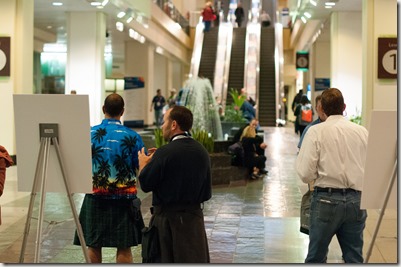
    We had no idea what to expect, and in the afternoon, we hurried to set up a few signs.

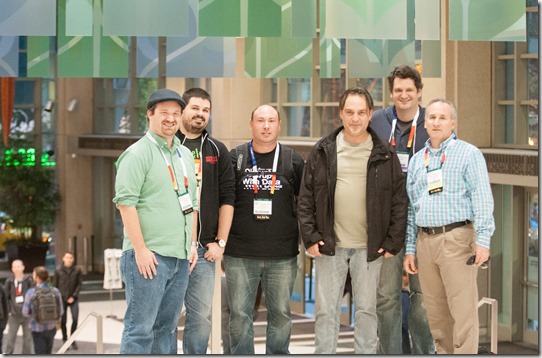
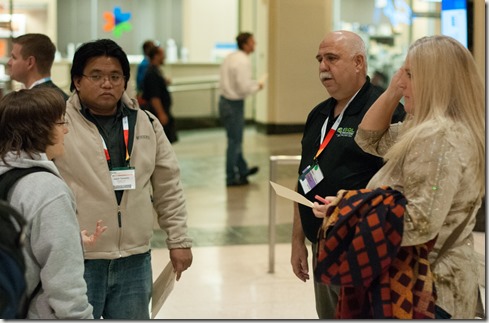
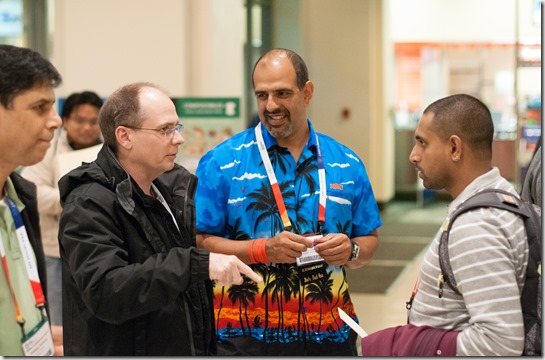
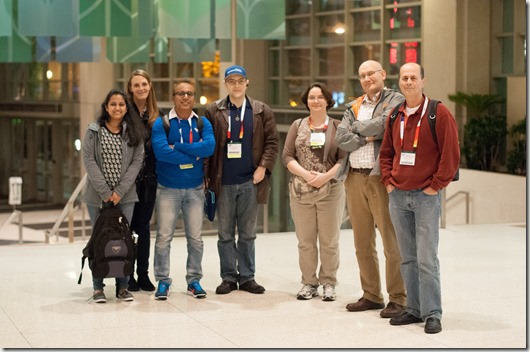
    (pictures courtesy of Doug Purnell – @sqlnikon. Kudos and praise to Doug for his assistance.)
    sqldinner_h

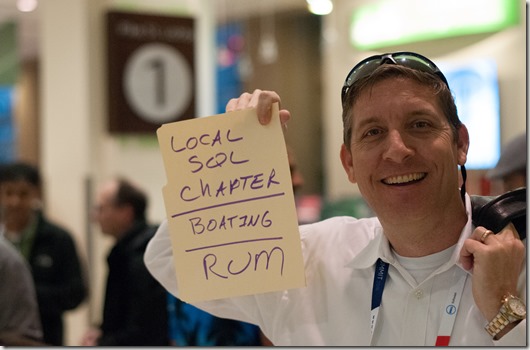
    We had recruited a few volunteers to help us organize people. The idea was that we’d get people to show up in the lobby of the convention center, ask the to write 3 topics on a card (technical or not), and then our volunteers would help them find 4-5 other people they could go to dinner with.
    sqldinner_d

    That’s it. Find someone to spend an hour with that you might enjoy.
    sqldinner_k

    As people wandered down, we got them to talk in groups and look for a group with some common interest. Andy held people in the area for a bit to build a little crowd and then we sent them off. We had cards with restaurant names on them, to try and encourage people to spread out to a variety of locations. If everyone had gone across the street to the Cheesecake Factory, the wait would have spanned hours.
    sqldinner_t

    The Good

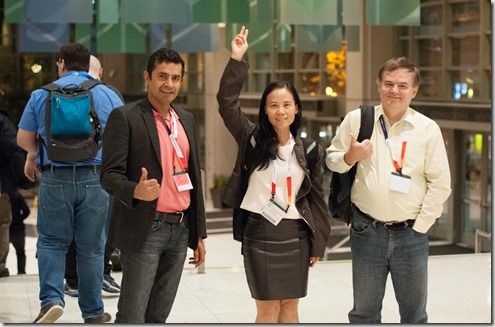
    I think things went well, and we ended up sending lots of groups out together, most of them having met their companions for the first time that night. We heard back from a dozen or so people later that night or Friday that they really enjoyed themselves.
    sqldinner_p

    This was an experiment for us, and we had no idea of 20 people or 200 would come. The result was better than expected.

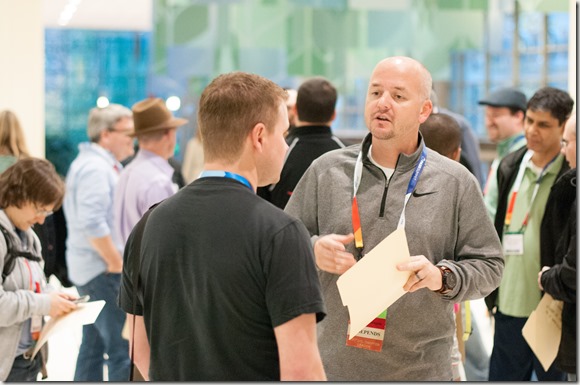
    We had a large crowd. I never did a count, but at one point most of the lobby between the escalators and the lower area was full of people. My conservative estimate is that there were over 300 people there, but it could have been more. Andy and I have had success with some of these events, and they tend to spiral slightly out of control. In a good way, but larger than we expect.
    sqldinner_e

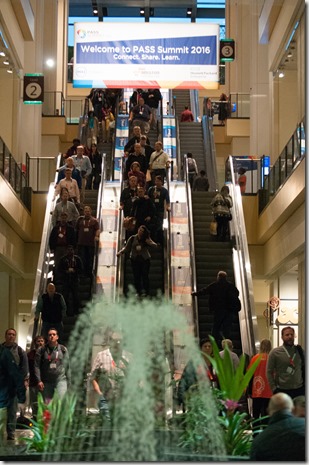
    The location was great. About 50-70 people came down between 5:30-6, but when the last sessions ended, hundreds of attendees were coming down the escalators. Scott Gleason and Ted Stathakis were very helpful in holding up signs at the bottom of the escalator and encouraging people with no plans to come meet others. I think this really contributed to the size of the crowd.
    sqldinner_j

    The idea of having people list a few topics was great. While there were attendees that never did more than carry a card at their side, others used this as an ice-breaker to ask others what they were interested in. Some other people walked around looking for those with topics they might like.

    Things to Work On

    These aren’t bad things, but items that need help.

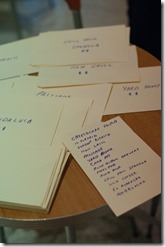
    First, the restaurants. My handwritten cards got lost in the crowd, and we hadn’t disseminated the information to enough volunteers. We really need a way to display a list of restaurants in a highly visible way, perhaps on a large whiteboard or on  a wall. We went with just names, and certainly I know most people can use their phones to look up details, but I think we should have listed the name, price, and a short caption of the type of food. This would help people decide where to go. I’m thinking little tear-off strips at the bottom that might let us manage load as well. Tear off a name and walk away with a group.
    sqldinner_s

    We didn’t train the volunteers that well. Partially because of time, partially because we weren’t sure how this would go and wanted to experiment. In the worst care, everyone would just walk away and find a place to eat.

    However, that’s what they would do anyway.

    No great risk here, but next year I’d like to have a few people pitching the idea to attendees, and others that had specific goals of matching people up. Then a few that might manage the restaurant selection. I envision a bit of a workflow with volunteers.
    sqldinner_c

    The space was great, but it needs more signage, and organization so that we can get groups together and send them to a spot for restaurants, and finally a picture location. Doug got some great shots, and I can’t thank him enough. It would be easier if we organized this a bit, and I’d love to see this as part of the montage before the Friday keynote.
    sqldinner_q

    The other thing is that I didn’t get my own dinner. Between this, Game Night, and the #RedgateRocks party, I didn’t get anything to eat until I returned to my hotel around midnight. Fortunately, I had a protein bar in my room.

    Next Year

    I really hope PASS will do this next year as an official meetup. I’m happy to help, but getting some marketing behind the effort, organizing volunteers, and helping with some logistics like a large sign with restaurants would help.

    I also think this is the type of thing PASS should be doing. Encourage and promote networking, giving attendees a safe, comfortable way to enjoy their time at the conference.

  • Generating Our Own Bad Data

    I’ve worked in a few different industries and for a number of companies throughout my life. In almost every position, employees were given goals to improve the performance of the company. Often these were revenue-related goals that were supposed to drive additional sales. The one thing I learned when these goals directly related to sales was that there would always be unintended consequences that might skew business in a way that management didn’t expect. This is especially true when the rewards for meeting goals lead to direct compensation for employees. In fact, additional compensation has always led some percentage of the staff to work towards improving their own pay, even with fraudulent or unethical activity. Hopefully this has usually been a small percentage of people, but perhaps that’s not always the case.

    What does this have to do with data and databases? I recently read about fraudulent activity at Wells Fargo, where a sales policy caused a number of problems. Employees used real customer data to open fake accounts in order to meet sales quotas, generate fees, and earn bonuses. While certainly criminal and immoral, this also shows what I’ve believed for a long time. While computers allow work to take place very quickly, computers also allow mistakes to be made at incredible rates. While these weren’t mistakes, the computing systems allowed this fraudulent data activity to take place at a large scale. One that resulted in not only fraudulent charges to customers, but fraudulent reporting to investors, unearned bonuses paid out, likely unearned promotions, and who knows what else.

    To be fair, this type of criminal behavior could have happened before the age of computers, and likely could have lasted just as long with employees forging paper documents to split accounts, open credit lines, or any other activity. However, I’d hope that computer systems would have detected this sooner. Too detect the bad data, customers really need to be tied into some sort of reporting system that can audit their accounts, that can examine credit bureaus, and warn them if anyone is making unauthorized changes.

    We have seen similar unintended consequences when companies have offered bug bounties to developers. More bugs appear, and not surprisingly, more bugs are fixed, with more payouts ensuing. I’d like to think that most people would be driven to be professional, but time and time again we find enough of a percentage of employees aren’t, and the programs are doomed to failure. We need to do better, though I’m not sure what would help.

    Protecting data from insiders and outsiders is our responsibility as data professionals. However, insiders can cause more problems, which is why I would hope that the auditing and transparency of data platforms would be a priority for vendors across the next decade. In my mind, not enough attention has been paid to these areas, and our systems are woefully immature in these areas.

    Steve Jones

    The Voice of the DBA Podcast

    Listen to the MP3 Audio ( 4.4MB) podcast or subscribe to the feed at iTunes and Libsyn.

  • Live 360–SQL in Orlando

    I’ll be at the last big SQL Server conference in the US for 2016 this December. VS Live is a part of Live 360, and on Dec 5-9, it’s in Orlando, FL. There are lots of sessions, pre and post cons learning to take advantage of.

    I’ll be part of the SQL area, and the Dev area, showcasing database development and security topics.

    If you have some budget left this year, and want to try a new conference where you can learn about lots of different technologies, and escape the winter weather, think about coming to Orlando.

    I’ve got a speaker code of that gives you a $500 savings. Use LSPK42 as your code to register.

    Sign up today with LSPK42.

    LSPK42