Author: way0utwest

  • Powershell in a Month Day 18–Variables

    This is part of my Powershell Challenge, to learn more about PowerShell (PoSh) using the Learn Windows Powershell 3 in a Month of Lunches book by Don Jones.

    I’m slightly behind here after holidays and some travel. Apparently my pop-up reminder for my own studies bears about as much value as quite a few other reminders that appear from people at work.

    I’ve had to deal with variables in any number of languages in my career: BASIC, Pascal, C, C++, Java, C#, VB6, VB.NET, Foxpro, T-SQL, and a few more. I thought this chapter would be simple and it certainly started out that way, but I learned a few things and was pleasantly surprised.

    NOTE: The editor here is substituting left and right quotes, and left and right double quotes as part of formal writing. In executing this code, the normal straight quote and double quotes are needed in PoSh.

    The chapter starts out with the simple stuff, assigning values to variables. Unlike most languages,we don’t need to declare variables. You need one, just use it.

    $domain = ‘SSCLab’

    I’ve done this quite a bit in some of the practice for this series, but also in setting up my virtual lab. However I wasn’t sure why single and double quotes matter. If you’re not sure, this this:

    $computer = ‘Tiny’

    $Phrase = ‘Computer: $computer’

    $phrase

    and then this

    $computer = ‘Tiny’

    $Phrase = “Computer: $computer”

    $phrase

    You’ll see a difference. The first produces

    Computer: $computer

    The second actually does substitution and produces

    Computer: Tiny

    That means that you really need to pay attention to which set of quotes you are using in code. That’s an area I need to be careful. I also learned about the backtick as an escape character, but that’s an easy one as it’s similar in lots of languages to escape things out for newline and other special characters.

    What’s interesting about PoSh variables, and probably one of the more powerful things, is that the variables can contain objects. That’s big. It’s like being able to overload classes into variables easily and quickly. I’m sure the exercises just scratch the surface, but it’s cool.

    The lab was easy, just getting a job running and putting results in a variable. A combination of a few of the last few chapters.

  • Geeky Entertainment

    The 2014 Oscars are this weekend, and while I only have a passing interest in who wins the various awards, I did manage to see a number of the nominees and enjoyed most of them. I missed a few as well, and am hoping to find time to watch some of these movies later this spring.

    I didn’t see many technological, science fiction, or “geeky” movies this past year, but my daughter and I did enjoy the latest Marvel installment of Thor and are looking forward to Captain America later this year. I’m not sure I want to see Guardians of the Galaxy, but my “Marvel fan girl” may talk me into it. I did enjoy Ender’s Game last year, and thought it was an interesting take on a book I enjoyed many years ago.

    With a few new movies in the works (Star Wars and Star Trek), I wanted to ask you what you might hope for.

    What “geeky” movie would you like to see made?

    It could be a comic book based movie, another installment of an existing movie franchise, or perhaps a book that you wish would appear on the large screen.

    I’ve read a lot of books over the years, comic and longer format, and of all of them, I think I’d like to see the Old Man’s War series produced as movies. Or perhaps even as a TV show. I also enjoyed Red Thunder more than once, and think that might make a thrilling movie. Hyperion is an amazing story as well, though I’m not sure it would fit into a movie. Perhaps we’ll see that produced at some point as a multi-year adventure show.

    Steve Jones

    The Voice of the DBA Podcast

    Listen to the MP3 Audio ( 2.0MB) podcast or subscribe to the feed at iTunes and Mevio . feed

    The Voice of the DBA podcast features music by Everyday Jones. No relation, but I stumbled on to them and really like the music. Support this great duo at www.everydayjones.com.

  • Virtual Lab – Setting up a new VM

    This is part of a series where I set up a virtual lab for testing and misc. work. The other parts in the series are here: Building a Virtual Lab with Hyper-V.

    I have my disks set up, now it’s time to create my virtual machines. I’m going to show you how to create one, but all really are done the same way. The names change, but no matter what my purpose is, this is how I set up the VMs. Once this is done, I’ll use other posts to go into the customizations for each machine.

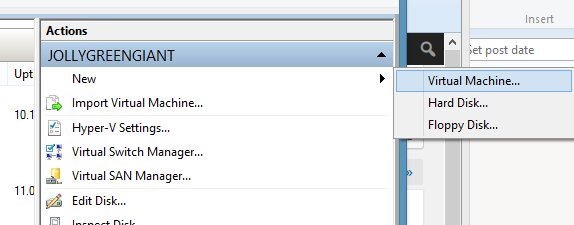
    We’ll start in Hyper-V manager, selecting a new VM.

    virtlab_p

    After the welcome screen, you need to name your VM and choose a location. I’ve got a folder set up for this lab on my machine, so I choose that, and set the name (for this machine) as DenverDC. This will be my domain controller and the first machine I set up.

    virtlab_q

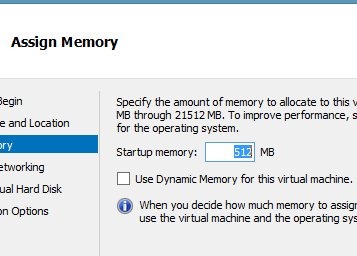
    Next we assign memory. I’ll want more for the SQL Servers, but this is easily changed at a later date, so I’ll leave this alone. One of the advantages of Core is less memory needed, and I could probably get by with less, but since I have 24GB on the host, I can spare half a gig.

    virtlab_r

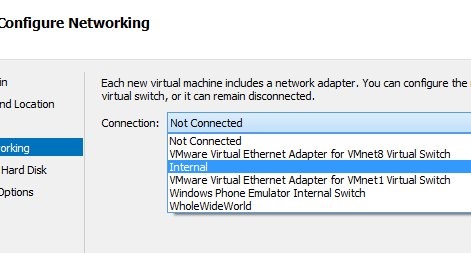
    After memory comes the networking. As you can see, I have a number of choices. The "WholeWideWorld" is the connection some of my VMs use to access the internet. In this case, I’m choosing the Internal network, which is the Internal switch I have set up. This is limited to connections between the VMs and since I want this to be an isolated network, this works fine.

    virtlab_s

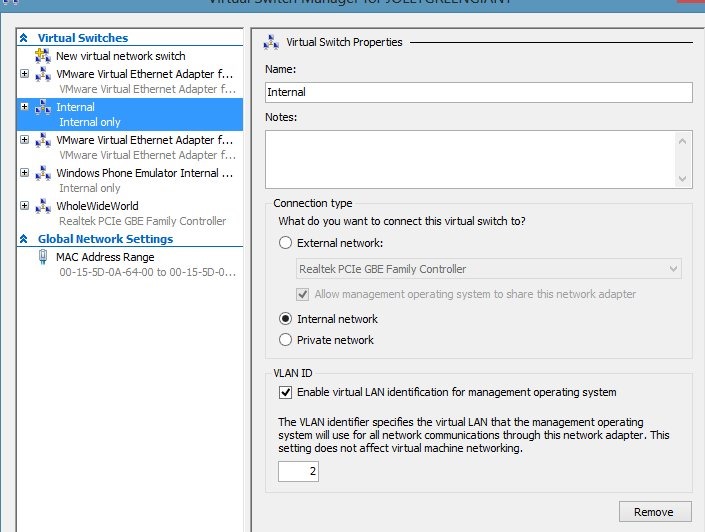
    My internal switch is actually configured as follows:

    virtlab_v

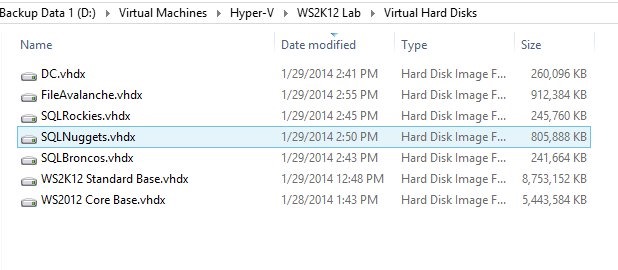
    Now we need to set storage. Since I set up my disks before this and named them in a way that I can understand, I choose the one I need. The default here is a new hard disk, but I’m saving space with differencing disks.

    virtlab_t

    I get a summary. Please check this as you set things up. Note that my differencing disk is set.

    virtlab_u

    I click finish, and I have a VM. I start it up from Hyper-V Manager and connect.

    virtlab_w

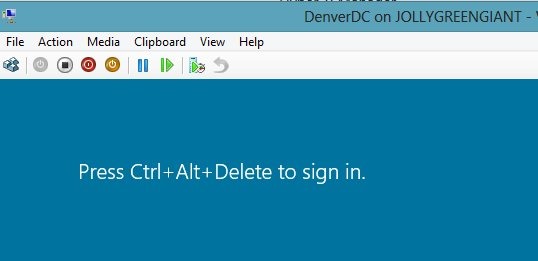
    Inside of Windows, I get the familiar Windows start screen (for Win8/WS2012). I click CTRL+ALT+DEL (leftmost icon on the toolbar) and then get prompted to change my password

    virtlab_x

    I change it,and I’ll use the same admin password on this machine that I use on a number of VMs.

    NOTE: This is NOT the password I use for any other services, including my VMWware VMs. At all. It’s only for Hyper-V VMs, but since I may have a few generations of VMs, I don’t want to forget this password. I also may end up starting up a few random VMs for talks, so I need to be able to get in.

    Once I log in, I get a basic session. Not much in Core.

    virtlab_y

    The only thing I really want to do here is rename the computer. I need to do more, but those will be in other posts. Let’s get the hostname.

    I could start server config (sconfig.exe) and get a basic setup, but I wanted to play with my PowerShell knowledge. So I started PoSh, and Google helped me find the computer name. I also used Google to find out the rename.

    virtlab_z

    The computer name (hostname) comes from

    $env:computername

    It doesn’t make sense, so I rename it with

    Rename-Computer -Newname "DenverDC"

    Once this machine restarts (Restart-Computer), it will have a new name.

    I know that I could use sconfig and it’s fast, or click around on my Standard servers and rename the machine, but once I get used to typing these commands in Powershell, it’s very, very quick.

    Note that my disks have been updated with changes. Their sizes have grown from the original 4MB.

    virtlab_aa

    I repeat this process for all the other machines, just to get them set with a password and name. Once they’ve rebooted, they’re ready for the next step.

  • Fixing CREATE TABLE

    I’ve always wondered about this. When I create a stored procedure I do this:

    CREATE PROCEDURE MyProc
      @param1 int
     as
     BEGIN
       -- add code here
     END;

    As is often the case, I realize that I’ve made some mistake and need to change the code later. So I’ll do this:

    ALTER PROCEDURE MyProc
      @param1 int
     as
     BEGIN
       -- add better code here
     END;

    In both cases, I’ve repeated lots of the code that I used the first time, though hopefully less of the bugs. If I create a function or view, I do something similar. However when I build a table, I do this:

    CREATE TABLE MyTable
     ( MyInt int
     );

    If I decide that’s not enough data storage, and it’s likely not, I would do this:

    ALTER TABLE MyTable
      ADD MyChar varchar(50);

    We’re used to this, but why do we do this? Why not this?

    ALTER TABLE MyTable
     ( MyInt int
     , MyChar varchar(50)
     );

    It’s almost as though DDL mixes the idea of code submission with architectural scaffolding. It’s inconsistent, and it’s the big reason why we can’t use comments in our table code like this:

    ALTER TABLE MyTable
     ( MyInt int  -- integer to store a pointer to this row, requires unique index for integrity
     , MyChar varchar(50) -- random value of some data I need to store for this example.
     );

    I don’t have any hopes that things will change, but it does make me wonder why SQL, which is often simple and highly versatile with a few consistent structures, would create this strange inconsistency.

    Steve Jones

    The Voice of the DBA Podcast

    Listen to the MP3 Audio ( 2.4MB) podcast or subscribe to the feed at iTunes and Mevio . feed

    The Voice of the DBA podcast features music by Everyday Jones. No relation, but I stumbled on to them and really like the music. Support this great duo at www.everydayjones.com.