Author: way0utwest

  • Two Steps Ahead


    think ahead
    Are you thinking ahead? Using the data from your systems to be proactive?

    Exceptional DBAs do more than respond to events and issues in their environments. In many cases, I think they even go beyond using metrics that detect problematic activity on their systems before users notify them. I think the best DBAs will actually mine the information they have about their systems to anticipate problems in advance.

    In the past I’ve had monitoring systems that would respond to issues, and I had alerts setup on the system to notify of unusual events, like an unexpected data growth. What I had started to do before I became a manager was start to write system checks that anticipated future problems and allowed me as much lead time as possible to prepare for issues. An example of this was a set of queries I wrote that calculated data growth for all databases on an instance and then used that to calculate how many days would elapse before I ran out of space on the data drives.

    You can write similar queries to look for other trends. Tracking the execution times of often-run queries, or those queries which are important to the application can allow a DBA to find potential issues. If the execution times are growing, the DBA can anticipate a problem occurring in the near future and begin taking action to rewrite, tune, change indexing, or some other measure. A broad spectrum of queries taking longer might be an indication that hardware needs to be upgraded. There’s even a site devoted to metrics.

    Instrumentation is important in understanding, analyzing, and predicting system performance. More and more tools are being released to gather detailed metrics on .NET code, in browsers, and more, but there is a wealth of information inside SQL Server on the performance of the platform. A little work can help you track and monitor the performance of your system and proactively maintain performance before your users complain.

    Steve Jones


    The Voice of the DBA Podcasts

    We publish three versions of the podcast each day for you to enjoy.

  • Windows 8 First Impressions

    I haven’t worked with Window 8 at all. I’m not a big beta tester, and it’s been a busy few months for me, so I haven’t bothered to mess with any of the previews. My Win 7 desktop works well for me, and I haven’t bothered to think about doing anything different.

    Today I was at Best Buy, needing to get a new UPS for my computer since I had a power outage and a failure of the battery in my existing system. I grabbed two, but as I was walking by, I saw laptops with Windows 8 on them. It isn’t supposed to release until Friday, and perhaps these were just setup since there weren’t prices, but I stopped to look at them.

    The first one was a Lenovo Yoga. It’s interesting, and I was reading about it recently in that it has a cover that folds completely over. It can become a tablet, but the keyboard is exposed.

    yoga13_web_detail_000

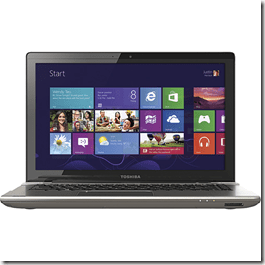
    The other was a Toshiba Satellite S4310. Nothing fancy here, but definitely a more reasonable cost. I checked later and found it at $900 for a nice setup.

    toshiba4310

    In both machines the start menu was up, and it’s obvious you pick one of the tiles to get to the app. However getting back to the start menu wasn’t obvious. I hit the Windows key, which brought it up, but I couldn’t figure out a swipe method to get it back. I’m sure there’s a shortcut, but in 4-5 minutes of trying stuff, I couldn’t figure it out.

    I did get to swipe over from the left and change applications. That was interesting, and it worked fine. It was smooth and while I only ran 3 things, this hardware performed fine. The placement of the title bar and the view was different, but the applications are the applications. They work fine.

    I will say the response to touching the screen was fast and quick, almost too quick. In trying to scroll, two fingered, OSX style, I found it trying to zoom in or out as I moved. More me than the system, and I’m sure it’s something I’d get used to quickly.

    I like the idea of having this start screen with some information on it, but that’s more for a tablet. I can’t imagine seeing this much in my work, and wouldn’t even want to bring it up as a screen saver.

    Using a few apps, browsing, typing, it just works. I’m not sure how much of the “Windows 8” experience, I’d even bother with in daily life if I didn’t have a tablet. As it is on the iPad, I mostly live in apps. The OS isn’t really important.

    Not sure if I’ll upgrade or get anything for me, but my wife needs a new laptop, and a few of these look nice. Not sure if she’d like the tablet interface, and the Yoga seems weird, but I’ll ask her and see.

  • A SQL Server Log Reader

    SQL Log Rescue
    It would be great to have a log reader built in. If you’re still on 2000, here’s a free one.

    One of the regular problems that data professionals have to deal with is the whoops disaster, or some type of data entry error. It could be the DBA running a delete without a WHERE clause, or a user updating a bunch of data incorrectly. No matter what the cause, this is a problem that you will deal with multiple times in your career. There are a few tools available that will read the SQL Server transaction log and build reversing transactions, but there are few, mostly because there’s just no money in the tools. People don’t need the tools often, and when they do, they are likely to just download an evaluation, fix their issue and not purchase the tool or struggle to undo the damage. As an aside, if you are still working with SQL Server 2000, Red Gate has released our Log Rescue tool for free.

    With every new version of SQL Server, there’s a lot of effort spent on building new features and enhancing old ones. Marketing and sales drive a lot of resource decisions in product development, and that makes a lot of sense. But it doesn’t mean that there isn’t value in plugging holes inside of the platform and making SQL Server easier to work with.

    A log reader tool would not be that hard to build and include in SQL Server. I’m sure Microsoft could build and release limited versions that might deconstruct certain types of statements, or might only read transaction log backups. I bet this would be a great intern project, allowing the very talented youth that spend a semester or two at Microsoft the chance to make an actual impact on the product. Back-ports to previous versions of SQL Server could be done with very little cost to Microsft, provide customers with a valuable tool, and allow college students to prove they are worthy of a future job working on the product.

    The ecosystem around Microsoft products is important, both for the growth of the platform as well as filling customers’ needs. Log readers, however, are not economical separate products. They ought to be incorporated into the platform, filling a hole that would greatly benefit lots of DBAs and developers who deal with incorrect data updates every day.

    Steve Jones


    The Voice of the DBA Podcasts

    We publish three versions of the podcast each day for you to enjoy.

  • Walk on the Wild Side

    lou reed walk on the wild side
    Have you ever worked on the other side of your shop?

    In my career, I’ve worked in a variety of environments and positions. I’ve been a developer, and a production DBA, sometimes at the same time. Many of us aren’t working in environments where we are strictly performing one job. We often flex our work to meet the needs of our organizations, doing whatever is needed to get the job done.

    However many of us spend most of our time either producing software or supporting it, sometimes separated from the other side by internal rules or even regulatory requirements. Those of us that are successful usually learn to make friends with the people doing the other kind of job and these relationships allow us to bend rules and regulations to get things done quickly. That can be a good thing, but it often doesn’t really give us any appreciation for the job that others do on a regular basis.

    In a few large companies I’ve worked in, management felt it was important that the developers or engineers spent some time in the operations area. People would rotate out of their area for a month and spend time working in another area, gaining skills that might allow them to provide support in an emergency, but more as a way of helping them understand the impact of their work and how they might go back to their job with a new perspective in the future. The ultimate goal was for design and development to proceed more efficiently and at a higher quality level. It worked well at times, but often failed if the developer didn’t embrace the temporary assignment with a positive attitude.

    I’ve rarely seen administrators sent to work with development groups. Usually an administrator has to have an interest in development and is interested in making a career change. However I think that there is value from giving administrators some exposure to the development process. They might realize how complex and tedious it can be, how seemingly obvious problems slip through, and perhaps most important, they might learn how to better troubleshoot issues in production systems.

    Steve Jones


    The Voice of the DBA Podcasts

    We publish three versions of the podcast each day for you to enjoy.