Author: way0utwest

  • Marketing Data is Exploding

    GM Customer Service Facebook Cnoversation
    It would be nice to have this be the norm rather than the exception with customer service.

    The last few years have seen the rise, and explosion, of social media. While fundamentally social media isn’t introducing much that’s different from actions in the real world, it is making the reach and speed at which we can communicate grow exponentially. Facebook will surpass a billion users soon and Twitter has exploded in the world. Even in the tiny SQL world, Twitter use has grown exponentially in the few years since I’ve used it. It you’re unsure of what’s happening there with regards to SQL Server, search the #sqlhelp hash tag and see what you find out.

    All kinds of companies are starting to try and integrate this data into their systems. If you haven’t yet, I suspect you might have to some time in the next few years. There’s a short piece in how this data is in use at GM, and it’s interesting to read. I don’t know how seriously other companies take this, but I do see so many people “following the herd” and as more managers read about other managers implementing projects like this one, we’ll see more adoption.

    What’s interesting here is that it gives us data professionals a number of new opportunities. From the sheer OLTP-type work of collecting and managing this data in real-time, or near real-time, to the need to add BI analysis to trends of data. I can see a lot of new projects, and new employment in this area. It wouldn’t hurt to beef up your skills in this area, and maybe get a better understanding of how social media can work, as well as how you can manage the data.

    Steve Jones


    The Voice of the DBA Podcasts

    We publish three versions of the podcast each day for you to enjoy.

  • The Home Server is Back

    After reading about the Amazon/Apple attack this morning, I grabbed a second cup of coffee and went in search of a monitor cord. We’d given a monitor to a friend recently, which was the one rarely used for the Home Server. It wasn’t a big deal since we always log into the Home Server remotely, but we had a power outage and the server went down. Since it’s virtualized, I needed a console to get it started again.

    After getting a monitor connected and my virtual server set back up, I immediately kicked off a backup. It’s been down a few weeks, and I’d hate to lose a bunch of work if something happened to the other machines on my network.

    I also enabled remote desktop access, so that I can more easily restart things in the future.

    Back up your systems. You never know when disaster will strike, which could something as cruel as a hacker or virus wiping your system. As data professionals, we should be more cognizant of the impact of losing information.

  • Learning C

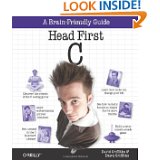
    Head First C
    I think C is important to teach the basics of programming.

    Someone else gets it. Besides me, I mean. We should be teaching people the C programming language. An interview with David Griffiths, author of Head First C, says that learning C is a good idea. I concur, and I stand by my statement.

    It’s not that I think everyone should be a C expert, but I’d like to see more programmers spend 5 months, a semester, early in their programming careers. If you’ve written your own iOS app, this would be a piece of cake. If you’re a Python guru, it would broaden your horizons. Getting closer to hardware helps you write code in a more thoughtful way.

    I’d like to see a C programming course as a semester requirement for quite a few fields that might need to develop programs. Not only computer science majors, but also scientists that might need to deal with building their own algorithms. In the same vein, perhaps it’s worth a SQL class for everyone to better understand how to work with sets of data. A query class could also include some of the other query languages, perhaps MDX and XQuery would make sense as well.

    I know this sounds like busy work, but as we become more and more dependent on data and scripting for all sorts of jobs I think it makes sense to start setting a baseline of expected skill for knowledge workers. Those people that knew programming could potentially pass a C test,  and they would be exempt. As we evolve into the future, especially as we may move to more vocational type training, I think it would be good to still require some basics of people as they begin their journey to working with code and computers.

    Steve Jones


    The Voice of the DBA Podcasts

    We publish three versions of the podcast each day for you to enjoy.

  • Milk

    cow
    It’s amazing how much knowledge goes into selecting cows for milk production.

    I love this quote: “[we] ran it through a fairly sophisticated computing gobbledygook. It spit out at the other end predicted transmitting ability, predicted genetic values of whatever sort.”  How would you like to explain your complex analysis to a business user using those terms? In most cases, those might be the best way to describe things to most users.

    However that quote comes from a scientist that has spent a lot of time and knowledge refining models and using lots of data to try and predict the bulls whose progeny will result in the best dairy cow performance. The article is very interesting and talks a bit about the complexity of using genome data on cattle and how far it is from the experiments Mendel performed on pea plants. I still remember the dominant/recessive gene explanations from biology, though that explanation seems simplistic now. Comparing it to the work done by scientists predicting cow performance is like comparing horse drawn carriages to Formula 1 race cars.

    Big data is in the news, with so many companies building products they want to sell to help you tame, analyze, and use the data your organization has available. However as this article hints, it’s much more than managing all that data. There is a tremendous amount of knowledge and intelligence needed to use those tools and actually generate useful information.

    As data professionals, we don’t necessarily need all that knowledge, but we do need to communicate with those individuals that may have the knowledge and work closely with them to ensure their ideas are accurately applied against data in the algorithms we write. In addition to writing code and understanding statistics, strong communication skills are important to moving your career forward.

    Steve Jones


    The Voice of the DBA Podcasts

    We publish three versions of the podcast each day for you to enjoy.