Author: way0utwest

  • Hard Data v Gut Feel

    basic instinct picture
    Instincts are great, but they need data behind them

    One of the mantras that has guided Google through so many of its product development routines is the fact that the data matters. If you can show that there is data to support a decision, it is more likely to be well received than one based on the experience, instinct, or hunches of any person.

    Often in the past I wished that the companies I worked for had operated in a similar manner. Many times I’ve had managers decide to pursue some course of action based on something other than data. At times I’ve even had managers ask if we could rework queries or reports to support their position. It wasn’t entirely unreasonable to question the queries we had written as we may not have approached the problem in the best way, but asking for evidence to support a pre-determined result felt wrong to me.

    Companies spend thousands, or millions, of dollars every year on all sorts of resources to collect, manage, and analyze an ever growing set of data points. Many of us find our jobs revolving around data, looking for new ways to analyze data and drive better decisions. At the same time, many companies struggle with decision makers that trust their own instincts more than the data reports they review.

    There isn’t a lot we can do as data professionals, other than continue to refine the models we build and work more closely to convince managers to tune our models, using the actual data before and after the decisions to analyze the results. We can also champion the ideas that the data is more objective, and should be a significant part of the decision process, while allowing for some input by the people that have a wealth of experience in our particular industry. We want their gut feel, but we don’t want to ignore the data.

    As with most things in business, communication and compromise help to drive us forward to better decisions in the future.

    Steve Jones


    The Voice of the DBA Podcasts

    We publish three versions of the podcast each day for you to enjoy.

  • Back Across the Pond

    SQL in the CityThis coming weekend is SQL in the City – London 2012. Friday, July 13, and Saturday, July 14, I’ll be at One Wimpole Street in London. This is the Royal Society of Medicine, a fantastic venue for events near Oxford Circus. I’m looking forward to the event and the venue.

    This is the first stop in 2012 for our SQL in the City tour. These are the only two days in Europe and then we come back to the US with a 5 city, 11 day tour of the US. I’m looking forward to the events, but not the travel. It’s a lot of flights in a short time, and quite a few hotels. Fortunately I’ve consolidated down to one carry on bag and a backpack for travel, so I should be in and out of airports quickly.

    This week I fly overnight on Wednesday to arrive in London and recover on Thursday before the Friday and Saturday events. Then I’m back home on Sunday, just in time to start another week of work. A quick trip, and likely not much sightseeing for me, but if you’re up early, you might find me running down Oxford Street in the mornings.

    I’ll be delivering two sessions in London. They are both new and while I’ll link them to a few of the Red Gate tools, these aren’t sessions built around our products. These are sessions that talk about the issues of Disaster Recovery and Contained Databases.

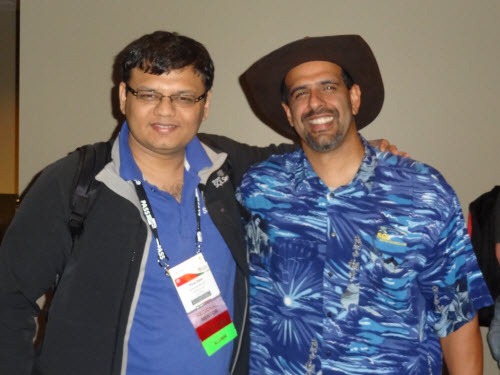
    If you’re coming to one of the London events, please feel free to grab me and shake my hand. I’ll be the guy in the Hawaiian shirt and cowboy hat Winking smile

    sqlpassfriends03

  • The DBA Tax

    Are you an asset or a tax?

    When I started working with a small company in Denver over a decade ago, SQL Server 7 had just been released. One of the marketing messages for the product was that it was self-tuning and didn’t need a DBA. More than a few of my friends asked if I was worried about my job. If we upgraded from SQL Server 6.5, would I lose my job? Was I worried? I wasn’t and we’ve seen in the decade since that there’s no shortage of a need for DBAs to manage database systems.

    That hasn’t stopped many companies from trying to build products and solutions that don’t have a DBA tax. They want a tool that doesn’t need a DBA, or a developer to tune queries. Some get closer than others, but most still require someone with technical skills to work on the platform, and help ensure it runs smoothly.

    When PowerPivot was released a few years ago, I heard no shortage of fears from data professionals that this tool would eliminate much of their work. Since then I’ve heard no shortage of consultants and BI developers say that this tool has spurred even more work for them. It simplifies prototyping, and allows for a better front end experience, but it also requires better data, cleaner data, and better models of data for users to work with. They are drowning in work.

    It’s easy to let fear drive you. It’s easy to let your concerns over technology replacing you limit your willingness to experiment and improve the systems you work on. However if you improve yourself, and your skills, I don’t think you’ll ever be seen as a “tax” on your company’s computer systems, but rather an asset that is worth paying the ongoing cost to keep.

    Steve Jones


    The Voice of the DBA Podcasts

    We publish three versions of the podcast each day for you to enjoy.

  • Starting to Program

    Hopefully you have more recent resources for programming.

    As DBAs, I think we need to learn to program better for the future. It doesn’t matter whether you are looking to manage clusters with Powershell or add your own SQL CLR routines to your instance, it pays to learn a bit about programming. At some point. I think every DBA will be exposed to some type of code that isn’t written in T-SQL. Whether they’ll be able to do anything with the code, or understand it, is entirely up to the individual.

    As the SQL Server platform has expanded, there have been enhancements and additions to the product. In addition to the core T-SQL, there is now VB.NET and C# in Integration Services, Reporting Services uses RDL and various programming expressions. Analysis Services has XMLA, MDX, maybe more. Powerpivot introduces DAX, and the .NET language runs through all of these subsystems. PowerShell is being pushed as the future administrative language for all Microsoft technologies.

    With so much of the data professional’s job starting to require programming skills, how does one get started? We are working on some stairways to help in some areas, but this Friday I wanted to ask you this question:

    For the DBA or system administrator that wants to learn programming, what do you recommend?

    I’m looking for some links or tutorials, similar to this list for a Python programmer. Do you have a list of programming resources that might help someone learn basic concepts, get started with a particular language, or improve their skills? I’m looking for links that you’ve used, or a friend has used. I’ll look to compile these into a few lists that people can reference to get started on learning more about programming.

    Steve Jones


    The Voice of the DBA Podcasts

    We publish three versions of the podcast each day for you to enjoy.