Author: way0utwest

  • Less Energy through Better Design

    When I attended SQL Saturday #131 at the Chandler Gilbert Community College, I was struck by a few design elements that I thought were great examples of how a little thought can improve the experience of a space, and use less energy.

    The event was outside Phoenix, which is hot. I mean really hot. It was 93F or so on the April day that I was in attendance, and it was expected to go over 100 the next weekend. A few local people told me that they really need to have fans in their houses to assist with the AC, otherwise they tend to dramatically shorten the life span of their units with the desert heat.

    As I walked up, I noticed a few things. Lots of wide overhands and buildings placed in each other to shade courtyards. Many rooms opened from an outside wall, so less hallways to cool inside buildings. I’m not sure if this is good or bad, since cooling those rooms whose doors might open frequently might be worse than trying to cool hallways. I also didn’t’ see many airlock structures, which is something we see more in cold climates.
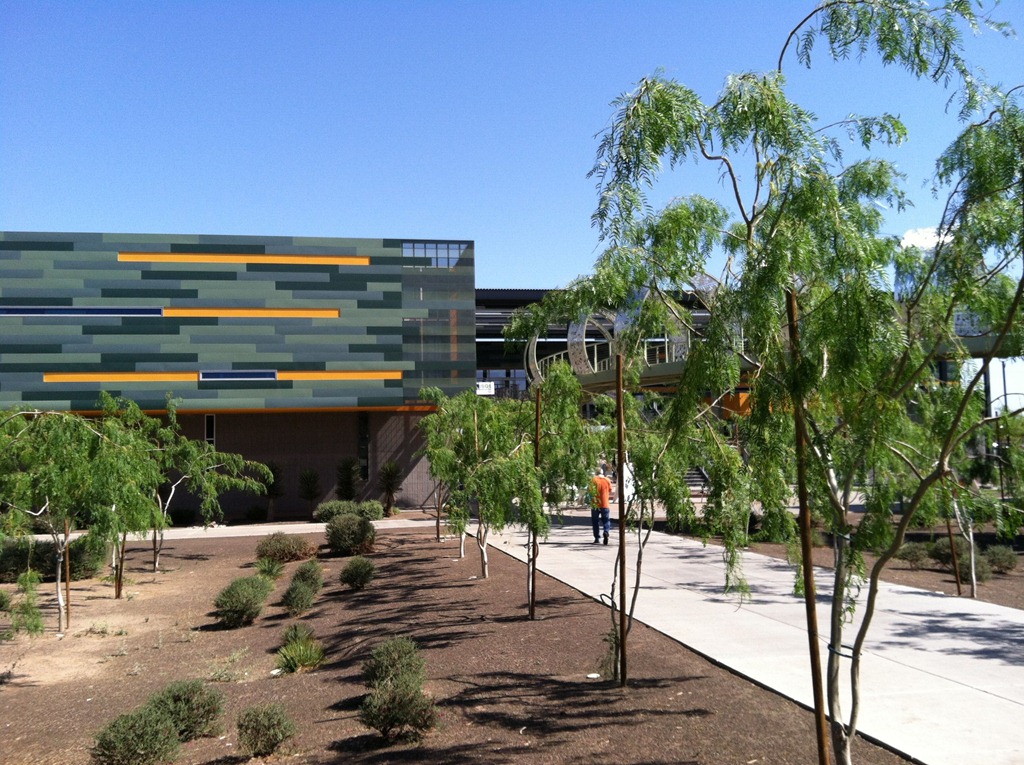
    Photo Apr 28, 10 43 37 AM

    The building above has a skin like structure outside of the main building, essentially shading the building itself. It reflects a lot of light, and at the same time, looks interesting. Not sure how the material costs compare with the energy costs, but I’ve seen this on a few buildings in the Middle East, so I’m guessing it’s a good trade-off.

    The main student center, shown below, was like a glass garage. Each 10 or 12 foot wide section could roll up. I stood just outside one open door, and you can see another across on the left side of the picture. This was a pleasant building all day, even when it was over 90F. In the upper right, you can see a large ceiling fan. The blades on this had to be at least 10ft long, possibly longer. There were two in the space, but only one ran all day, even when there were close to 200 people eating lunch.

    Photo Apr 28, 9 19 15 AM

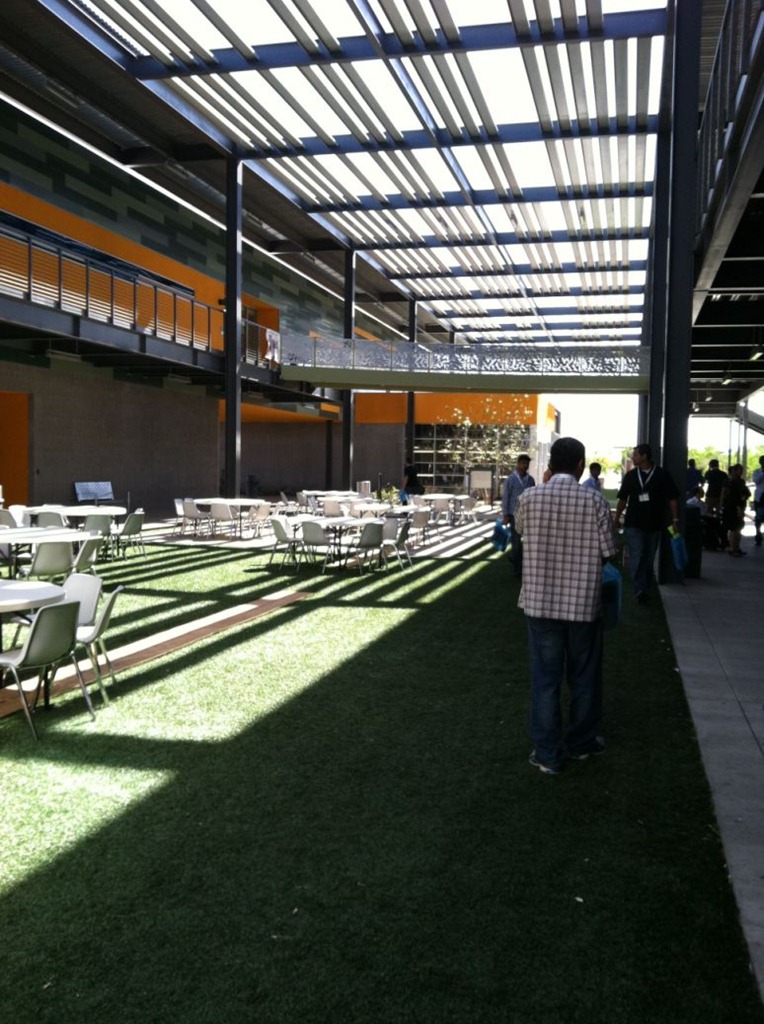
    Here’s one of the courtyard structures.

    Photo Apr 28, 10 32 15 AM

    Shaded, not completely so. Nice in the shade, definitely hot in the sun.

    There also was an elevated walkway with a spiral art structure that would provide some, but not a lot of shade. I’m sure it makes things better, and it looks really nice. It was made of metal, with designs cut into it. Many of the railings and structures around the campus were metal, which holds up better in the sun. Most with artistic designs in them.

    Photo Apr 28, 9 28 01 AM

    I’m sure many of you have seen hot air hand dryers in bathrooms before. This college had the newer Dyson dryers, which are supposed to be more efficient and cleaner for the air. However they had a few other things:

    Photo Apr 28, 2 30 53 PM

    A few simple change (probably) to the toilets, but with this plaque, you have the choice to use less water for liquid waste. I hadn’t seen this before, but I’d hope that more buildings would implement something like this. It would be great for homes as well.

    Photo Apr 28, 11 40 02 AM

    Many of the urinals in the Men’s bathroom were waterless. I’ve seen these before at various ski resorts. They get used a lot, but they don’t stink, and they’re a great idea everywhere, but especially in places like CO and AZ where the water supply is limited.

    Photo Apr 28, 9 51 48 AM

    There were plaques describing structures all over. I think this is a great idea, because it helps people to understand there’s more to the design than architecture. These items were built to add useful space to the campus without adding to the energy bill.

    There were all multi-language inspirational plaques and posts all over. This was one of the ones I passed, and I wish I’d walked around looking for more. I remember sayings like this on the grounds at Virginia, and they were always inspirational to me as I thought about all the people over time that had walked the path I was walking.

    Photo Apr 28, 10 54 14 AM

    I’m a fan of alternative energy and sustainable practices. I don’t think we need to end our dependence of fossil fuels, but I do think we ought to try to better use our resources, especially when we can use design to do so.

    I was impressed with what is being done at this college, and it shows some effort is being made to build a structure for the long term. Is it worth it? Are things working? I’d like to know both from an ROI standpoint and an energy standpoint what differences there are from other designs. I sent a note to the school, and we’ll see if they respond.

  • SQL Saturday #131 Recap

    This past weekend I attended a SQL Saturday in the desert. SQL Saturday #131 was held in Phoenix, AZ

    Photo Apr 28, 9 28 01 AM

    It’s April, but it was definitely hot. However the campus at Chandler Gilbert Community College was geared to the desert with lots of shade and open spaces. I was surprised how comfortable some of the places were on a 90+F day.

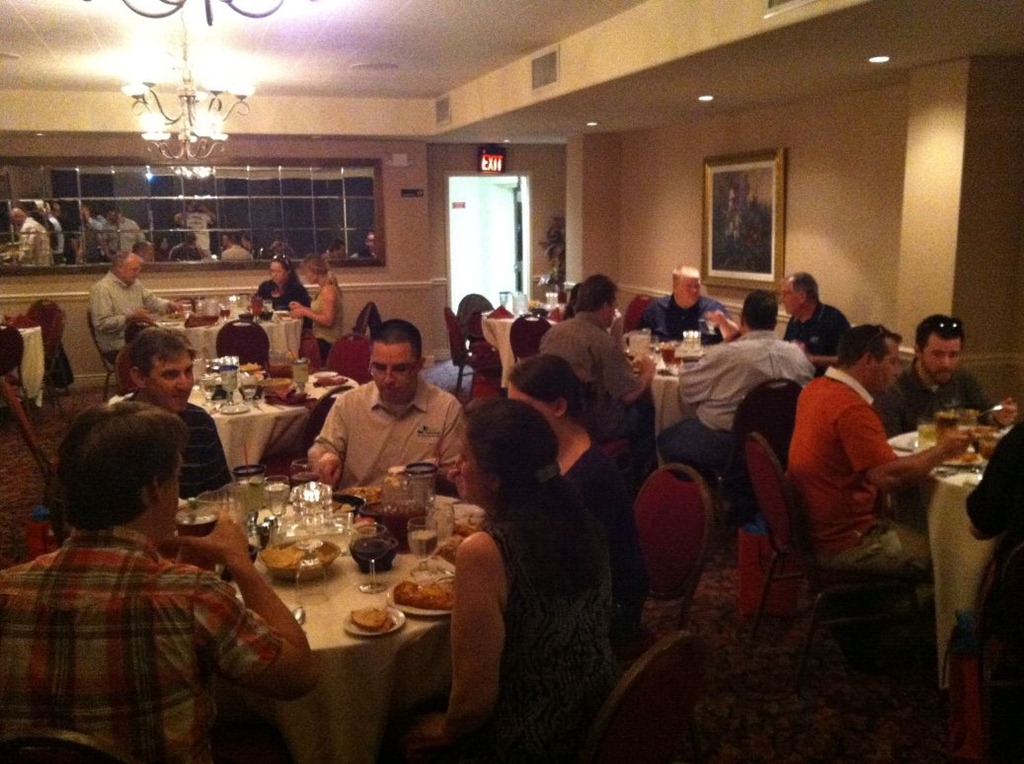
    Friday night was the speaker / volunteer dinner, at a nice Mexican restaurant in Chandler. Kudos to the SQL Saturday team for the venue. Quite a few people attended, enjoying a few drinks and good food.

    Photo Apr 27, 8 03 30 PM

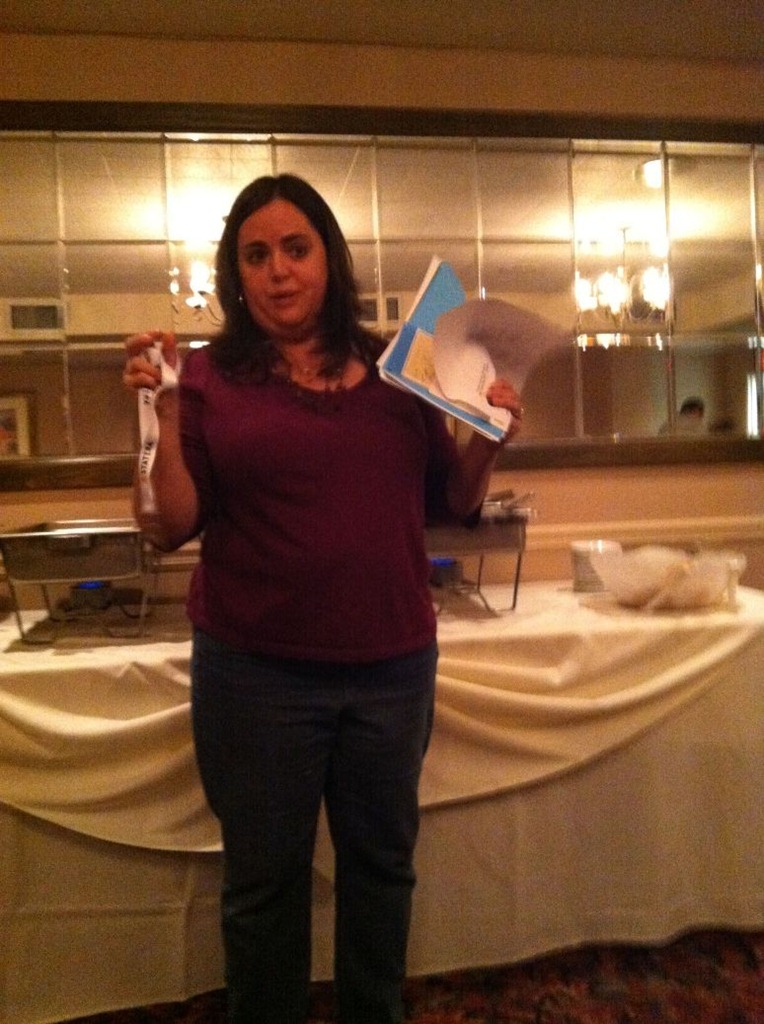
    Amy Lewis (@Amy_LewisAZ) was the organizer, and she had everyone play a little networking game. We all had to stand up and say where we were from, what we were talking about, and then tell three facts about ourselves, one of which was a lie. There were some interesting lies, and some neat facts about different people. All in all, a fun time. You can see Amy egging us on below.

    Photo Apr 27, 8 26 08 PM

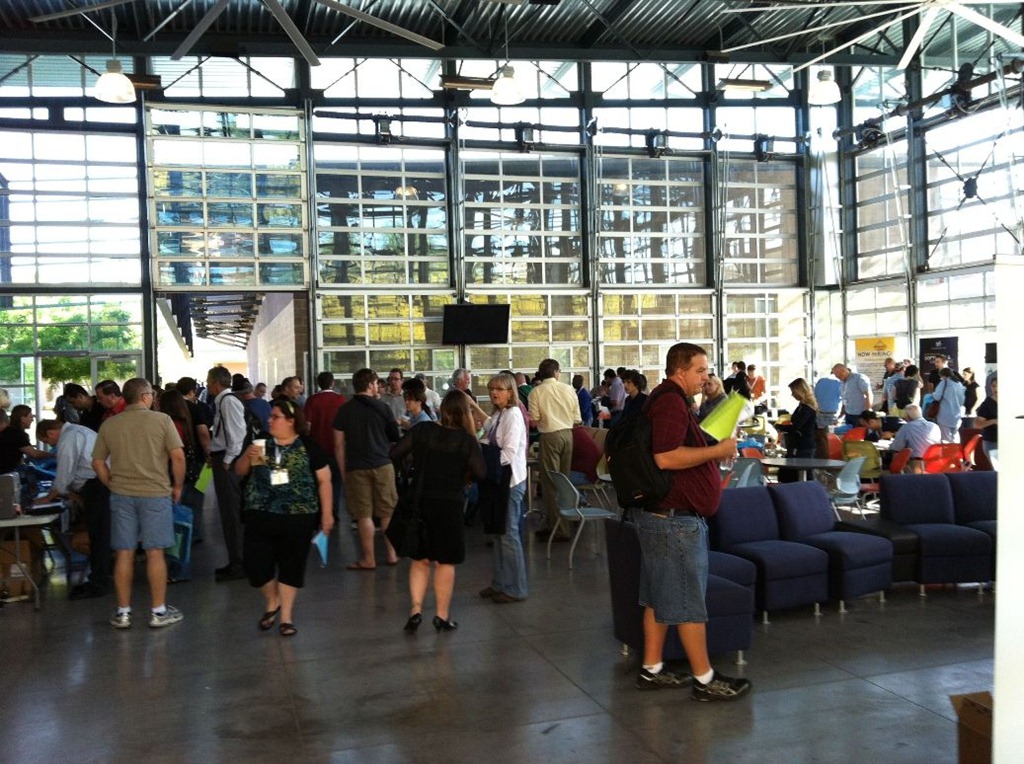
    The venue was easy to find, and it consisted of the science building at the college and one of the student centers. The student center had all the vendors, good, and a very open space, surrounded by windows.

    Photo Apr 28, 9 19 15 AM

    The speaking rooms were well equipped college rooms, with projectors and desks. A few of them were a little small, but things worked out well with 7 tracks for the 250-300 people that attended.

    Photo Apr 28, 9 37 05 AM

    I presented two sessions: Encryption in SQL Server and Branding Yourself for a Dream Job. Both went well, with no issues. Hopefully people enjoyed them. I got some good feedback, but few evaluation slips.

    I went to see a few people speak. I saw Robert Miller (@RobertMiller) talk about Change Tracking, which is a neat feature that you might want to check out if you need to audit things or manage ETL processes. I also snuck into part of Will Sisney’s (@HanSQL | blog) 9 Secrets to a Stellar Performance Review talk, which was great. I’d recommend that one for sure.

    Photo Apr 28, 10 32 15 AM

    I had a short break in the open space above, which wasn’t that hot if you weren’t in direct sunlight. I was tempted to do my Branding talk out here, but it really needs a little AV. Afterwards I wandered into Bill Pearson’s SSAS Best Practices talk. This was the first time I had the chance to see Bill speak, and he does a great job. Bill is very smart, and I enjoy listening to his Southern accent and country analogies, but a word of warning. Bill moves fast, he covers a lot of ground, and you should have some idea of the topic if you want to keep up.

    Photo Apr 28, 10 38 13 AM

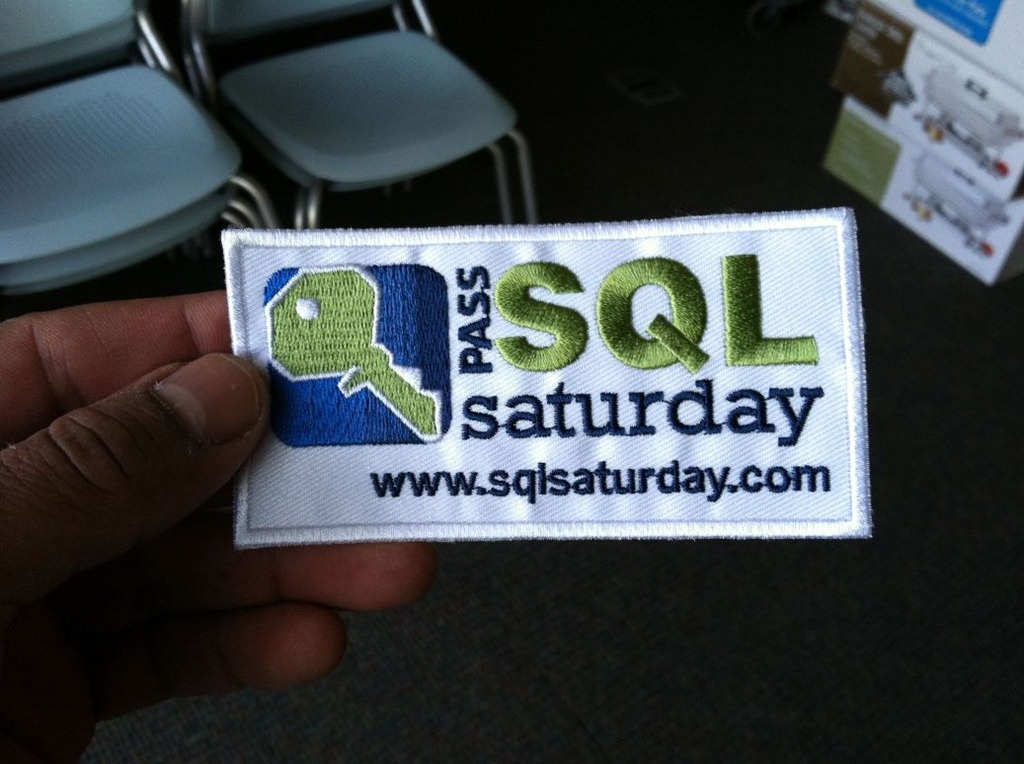
    I got a patch, which was cool. I assume these come from the national SQL Saturday people, though I’d like to get these, or pins, instead of shirts for the speakers. I’ve spoken at probably close to 20 SQL Saturdays, and that’s enough shirts for a solid month of business work. I’ve gotten some nice shirts, but at this point, I’d like to see something else.

    And a nice special treat in the speaker room. Cookies!

    Photo Apr 28, 1 41 43 PM

    A fun event, that ran smoothly, and one I enjoyed. I hope to go back there sometime in the future.

  • You need to run DBCC CheckDB regularly

    You never know when you’ll encounter corruption. It can happen at any time, usually due to some sort of hardware problem or driver issue. Corruptions don’t disappear and you can’t necessarily

    Corruptions can be caused by numerous factors, and it isn’t something you can predict. However sooner or later, you’ll get corruption on one of your instances. I don’t know which one, whether it’s the finance production instance or the vacation tracker development database, but it will happen somewhere.

    Since corruption can flow through to backups, and can exist in your system for some time, you could end up losing lots of data. Your best defense is to run DBCC on a regular basis and ensure that you catch corruption or problems as early as possible.

    My recommendations in order. If you can’t do #1, do #2, or #3, but try to get something in place.

    1. Run DBCC on every database, every day – If you can, run this on all your servers. I know it’s a large request for some of you, but if you can do it, do it.
    2. Run DBCC on every database on another instance, restoring from last night’s backup – If you can’t run DBCC on your main server, offload it onto another one.
    3. Run DBCC every day on some database, rotating so that all databases are covered – Do this so that at least every week or two you have a DBCC run on your production databases. You can do a random sample of some sort, but hit all of them as often as possible.
    4. Work on a your resume or CV – If management won’t let you run DBCC checks, sooner or later you’ll have an issue, take some blame, and need a new job. Be prepared for that, if for nothing else.


    sqlbackuproOne of the recommendations to minimize impact from CHECKDB operations is to run them on another server, using an automated process. SQL Backup Pro 7 from Red Gate makes this very easy to do with automated backup file copy operations, restores, and CHECKDB execution.

  • Being Responsible for Code

    I read this great account of how Facebook releases new code, and found it to be very interesting. Apparently the entire FB site compiles to a single 1.5GB binary at this time. That in and of itself is interesting, but their deployment strategy caught my eye as well. They use bittorrent to deploy the large file to all their servers. Very creative and interesting look at things from one of the largest web sites in the world.

    The process is interesting, but one of the comments caught my eye. It includes a quote from the article:

    developers must be held responsible
    I’m sure many DBAs wish developers were held responsible for issues.

    I know there’s no shortage of developers that make mistakes and don’t want to have responsibility for the code they release. I like the idea of tracking these metrics, and letting people’s actual performance being a part of their evaluation each year. Not trusting the manager’s memory, or the recent complaints from co-workers, but actually looking at the relative mistakes being made. This leaves out scale, but I’m not sure the scale of the mistake is as important as the frequency.

    However this is a double edged sword. Some people will perform worse if you place them under this pressure and may find it too stressful an environment. If you don’t have the same pressures as a company like Facebook, you might end up driving away good employees that could fit in elsewhere.

    My recommendation would be that you hold people accountable for their work and use metrics like this to actually track that back to specific incidents, but that you use this as only a portion of someone’s evaluation. Track other measures available that help you determine if a particular worker is contributing value to your company outside of the bugs they might have in their code.

    Steve Jones


    The Voice of the DBA Podcasts

    We publish three versions of the podcast each day for you to enjoy.