Author: way0utwest

  • Mobile Password Protection

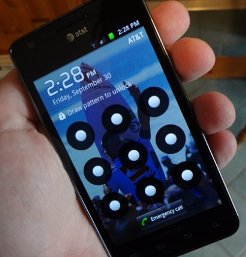
    mobile phone lock screen
    Please put a password on your smartphone.

    I recommend people that have smartphones install a password on their phones. Not that it provides a lot of protection, but it does limit the access that a casual phone-picker-upper gets if they take the phone as a target of opportunity. I’d like to think that the average smartphone thief would wipe, or throw away your phone rather than mess with the password, and move on to easier targets.

    However thieves that target your phone as a different story, and for them, getting past a four digit lock on your phone might be trivial. There are firms that help police get past codes, and I’m sure there are plenty of instructions and utilities around that a thief with decent computer skills could use. It’s also likely that there are more than a few utilities available to duplicate this functionality.

    As more and more of our customers use mobile devices, including tablets, to access systems, we need to be more conscious of security on these devices. Passwords are a start, but remote wipe or disabling are also important. However the thing you might want to invest in most as a data professional is monitoring and analysis of the access to your database. If you can’t completely secure your database, the next best thing is detecting security breaches.

    Steve Jones


    The Voice of the DBA Podcasts

    We publish three versions of the podcast each day for you to enjoy.

  • The Best Way to Learn

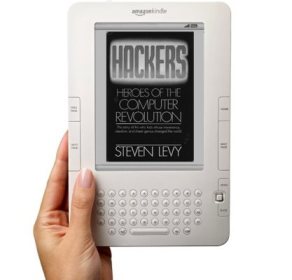
    Kindle
    How can we help you learn better?

    I constantly see people asking the question about how they should learn more about some aspect of SQL Server. We have lots of articles here on SQLServerCentral, and there are any number of other sources on the Internet, but I’ve typically recommended that people buy a book. I’ve been an author, and I like to support authors, but that isn’t why I recommend books.

    When you try to learn some new topic, say Reporting Services, there is so much information you can find on Google, but it’s all unorganized. It can be hard to learn without a plan, and books are usually organized in a way to walk you through a technology. That along can be valuable, and you can supplement chapters with articles you find around the web. This was the inspiration for our Stairway Series of topics, which we’ll eventually compile into books at some point. The Stairway on Reporting Services, by Jessica Moss, is excellent, and if you read through it, you’ll see what I mean.

    The book market is evolving, and e-books are exploding. I see more and more Kindles and other e-readers everywhere I go and it seems there’s a resurgence of reading, at least for some people. I know that technical books haven’t necessarily been popular on e-readers, but I’m sure that will change over time. I still think books are one of the best ways to tackle some new technology, but I think the static way we present information in most books could be improved. This week, I wanted to get some ideas from you.

    What would you like to see in an e-book that would help you learn?

    Would you like to see video included, or demos/screencasts of some feature being used? Should reference implementations of functions be linked from the book, or perhaps you’d like to see more interactive questions, puzzles, and evaluations of your knowledge as you proceed. One thing I thought might be interesting would be a pre-chapter quiz that could let you know if it’s even worth reading that section.

    I suspect that we’ll start to see more integration of platforms, perhaps even allowing you to sync your e-reader with an application on your desktop that allows you to cut/paste code from the book into SSMS while you have your e-reader on the desk. Give us your ideas today for ways that might make is easier for you to learn.

    Steve Jones


    The Voice of the DBA Podcasts

    We publish three versions of the podcast each day for you to enjoy.

  • Living a Dream

    It was a little over a year ago that I stood on stage at the Rocky Mountain Tech Trifecta and gave a keynote speech in which I said these words:

    “My wife works in the mobility/cellular phone industry right now, but she really wants to train horses for a living.  In the short term, which might be the next few years, she’s a little "stuck" in her current job. However we spend time and money every year improving her skills, and I support her in doing the "professional development" she needs to do in order to be a horse trainer some day. I know she’ll get there at some point, and I am sure she’ll be ready for her next career with all the work and training she is doing now.”

    As I write this today, my wife is finishing her last day of work in corporate America. She resigned a month ago, and today, May 4th, is her last day working for her company. She had a farewell dinner with her boss last night. She is packing up her equipment and shipping it back. She’s having final calls with co-workers and saying good-bye.

    Her dream has been to work with horses for a living. She has been working part time for years boarding and training horses and people to work with them, and we’ve been working for years to try and adjust our life so she could work on her dream full time.

    That starts tonight, as one job ends and she commits to building her business full time, and with a passion that amazes me. I have no doubt this will be a success for her, and for our family.

    We know there will be an adjustment, and finances will get tighter, but we all think it’s a trade that is worth making. Life is short, very short, and you only get to live it once. We have lost a number of friends in the last year, all too young to leave this Earth, and it’s helped to make us realize that it’s important we don’t delay this change any longer than we need to, even if it’s uncomfortable.

    Life is short, but we never know how short it will be for each of us. Any of us could leave this life at any time. Remember that each day, as you choose your path in life.

  • Learn XML

    XML sign on cab
    XML is going to be more important for DBAs in the future.

    I first learned a lot about XML from the PDC conference in Denver in 1998. I attended a number of sessions and thought this was a great technology that would soon dominate the data exchange markets. At the time I was developing an interface for an EDI system, and we knew XML would be important in the future.

    Over the years I’ve seen XML use grow, especially as a way to move data around between many systems, but I’m not sure it dominates data exchanges. There are still plenty of Excel documents and CSV files produced on a regular basis that must be imported into SQL Server. Many DBAs have an idea of what XML is, but they don’t often feel comfortable working with it, especially when it comes to the various XQuery functions inside SQL Server.

    As I’ve seen the use of XML increase in SQL Server. Not inside the database, but in the tools that we use as DBAs and data professionals. Our execution plans are XML documents, and XML is slowly becoming a more prevalent part of SQL Server with every release. There’s one place, however, that makes a very compelling case for all DBAs to learn how to work with and query XML: Extended Events.

    Understanding eventing will be more and more important over time. Profiler has been deprecated and will be removed at some point. DBAs should understand Extended Events and learn to work with them. That includes learning to query the data returned from the events, which you might have guessed, is in XML. I watched Jonathan Kehayias demonstrate this last year, and I’ve been following his writing on the topic, which includes

    Do yourself a favor, and learn how to work with XML and become comfortable querying them over the next year. We have some great articles on XML here on the site, and I you’ll be glad you did in the future.

    Steve Jones