Author: way0utwest

  • Living Moore’s Law

    I’m not much of a hardware geek these days. For the most part I just want my computers to work. Actually if I think about it, I really just want my services to work. I don’t care what specs they have, or the technology used.

    If I went back to managing databases, I would be looking for databases to work on, not individual machines. I think that’s one reason that the idea of cloud database services appeals to me. Not necessarily clouds on the Internet, but as a series of machines in my data center that I could just plug together and have SQL Server run various services across them.

    In reading a little about eBay and their new data center, I think it might be very cool to work there. The director of their data center talks about living Moore’s Law, with the new data center in Utah. While I’m sure many of the large internet companies like Microsoft, Google, Rackspace, etc. would also be interesting, I’m not sure how many of them are on a two year cycle, replacing all of their systems on a rotating basis.

    I live on a 35 acre ranch, and it’s a lot of work keeping it up. That can help me appreciate the scale of the new eBay data center, which is a 60 acre campus. Their phase one approach has 7.2MW of server load in the building with some racks generating over 30,000W of heat. That’s quite a hot aisle!

    At that pace of change, I have to think that it’s both exciting and a challenge to keep systems running on new hardware and also modifying code to take advantage of the new capabilities offered by hardware changes. It’s a challenge that I would love to tackle at some point in my life.

    Steve Jones
  • Software Assurance Cuts Back

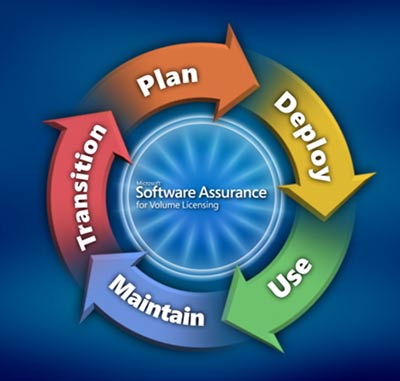
    Did anyone ever use this benefit of Software Assurance (SA)? Apparently if your company had SA on Microsoft software, you could purchase that software for a discounted price for use in your own home.

    I wasn’t aware of it, and it’s never been a perk that any of my employers have offered me. I have had the chance to use Microsoft Office on my home computer if I was licensed for it at work, but I never knew I could “own” something like Visual Studio at a discount. I’m not even sure I would have taken advantage of it, but I’m sure there are lots of people that might have appreciated it. Plenty of my friends that wanted Microsoft Office at home, instead of Microsoft Works. I’m sure a few of them would have purchased a copy of Office at a discount from their company if they could have.

    However it doesn’t matter anymore since this perk is being removed from Software Assurance. I wonder how much money that Microsoft thinks they’re saving here, or maybe how much money they think they might earn. Those extra copies of software don’t cost Microsoft anything, though perhaps there is a significant administrative cost savings involved. More people probably use the Home Use Program instead, which allows people to use a copy of software at home.

    I don’t know that these programs add much to the value that a company gets from SA. Perhaps if they did include home software, or XBOX games, this might be a nice perk to attract employees, but I doubt it. I don’t know that these discounts would make a different in helping me choose where to work. To me they just help Microsoft continue to dominate in some areas of software as corporate workers look to use the same software at home that they have at work.

    If that’s the goal, Microsoft ought to sell the software at a nominal cost, like $25, just to get people to use it at home.

    Steve Jones

  • Copyright

    This is actually amazing. A talk on what YouTube does with copyright and how they view it, from TED. It’s interesting, and there are two things in there to watch. Note, that I caught this link from Jeff Atwood (@CodingHorror) on his blog.

    The first thing is that YouTube scans over 100 years of video every day. 100 years! That’s freaking amazing. That is an incredible amount of video processing that’s taking place, and a low of power being spent to enforce copyright. Forget about the legal issues for a minute and think about the technology. That is just amazing.

    The second thing in the talk is that content owners can, and are choosing, to not block this content, but rather use it to generate some benefits from them. They ought to be able to receive some benefits, and I agree, but knocking down some kid’s video because he used a copyrighted song seems silly. Especially as in the case of the wedding video, you never know what will go viral and what benefits you’ll get. Including selling more copies of your stuff.

    However the thing that worries me is that we are now not looking out for Fair Use. If a copyright holder wants to block their content, can we still get our 30sec of use of it in a video we make? Or a mashup?

    7231[1] The copyright office doesn’t necessarily define the fair use guidelines, but I think they need to. We ought to have some idea of what portion of audio, video, imagery, and text can be used, with citation. Even with automatic citation, that may benefit the copyright holder.

    We publish books here through Simple Talk Publishing. We typically offer books for free as marketing materials here on the site, and also sell them on Amazon and other retailers. Regularly I find these republished, or even for sale, on the Internet on other sites. I understand people wanting to share, but ultimately it’s a problem for us if all our books become too widely distributed for free. I know there are a lot of debates on piracy, and I’m not completely sure where I stand. I don’t actively worry about piracy, but I do act to have things removed when I find it.

    We need to do something here to both protect the copyright holders, but also allow people to reuse ideas and build on them. I certainly wouldn’t mind someone republishing portions of my work, or building their own knowledge publications based on it, just don’t wholesale copy what I’ve done without giving me any credit.

    I think YouTube has a good balance here, though I’d like to see more efforts from content owners to share and allow others to build on their work.

  • Kindle v iPad

    I don’t have either, but I ran across this comparison on the devices. It says get both, if you’re a consumer of media and culture. To some extent I do think that it’s got a perspective that makes sense, and if you can afford a $500 iPad (or more), then you can probably add in a $140 Kindle without worrying about it.

    I had a Gen 1 Kindle, and I have an iPhone that is my primary way to read. I read on flights, and while I do take breaks and play some games, I think it’s a matter of attention span. Books that are really, really good hold my attention, and I won’t move on to anything else.

    Books that I struggle with, or require more thinking, I switch off at times. When I read business books, I sometimes need to think about something, so I’ll close the Kindle app for a minute, maybe play a game, and let my mind wander with what I’ve read.

    There definitely is a difference in reading on an LCD and e-ink. It doesn’t bother me, or it doesn’t appear to, but I understand that it might bother some people, and if that’s the case, a Kindle/Nook/eReader makes more sense.

    I’m not sure if I’ll get an iPad. It has to function in my life and add something to it, and I’m not sure it’s that much better than an iPhone. Talking with someone recently that carries an iPhone, iPad, and laptop, they tended to use the iPad regularly, but it didn’t remove the need for the other devices. We’ll see if I make a case in my mind to get one.

    However you do it, go read. It’s good for you.