Author: way0utwest

  • T-SQL Tuesday #108

    tsqltuesdayIt’s that time of month, and this is a good topic as it relates to career learning. I’m a big fan of improving your career, so I like this topic. The invitation is from Mala, one of the people I look forward to seeing each year at various events.

    Non SQL Server Tech

    At heart, I’m something of a data person, though I dabble in various other technologies at times. This year, I made it a point to work on learning two new technologies, one of which was outside of SQL Server. Python was what I chose and I ended up spending some time on various Python courses for about 5 months. Then life and work got in the way.

    I still want to spend a bit more time on Python, but I also recognize that I need a new challenge, so I’m going to pick something else for 2019. For me, this will be CosmosDB.

    I think CosmosDB is a neat technology and has some really good things inside of it, but I really don’t know enough about it. I’ve had minor exposure to NoSQL structures, but not really enough to know how well I’d use them for a project.

    The Plan

    For 2019, or at least for the first quarter(ish), I want to port a database from SQL Server to CosmosDB and play with the differences. I have a few sample ones, but I’ve been compiling a database of some SQL Saturday data and want to use that as a test. I’ll work on moving the data to the different CosmosDB structures, likely a document structure and a graph structure, and gain some experience as to how these work.

    I hope to build a simple REST website that accesses these databases, which should also let me compare the differences for data access and note where one structure might work better than the other.

    I’ll set a reminder for the end of each month in 2019 (Jan-Apr) to evaluate where I am.

  • Random Pix from the 2018 PASS Summit

    A few memories from me. First, a beautiful late arrival view.

    IMG_20181108_113204

    My first session feels a little lonely

    IMG_20181108_123916

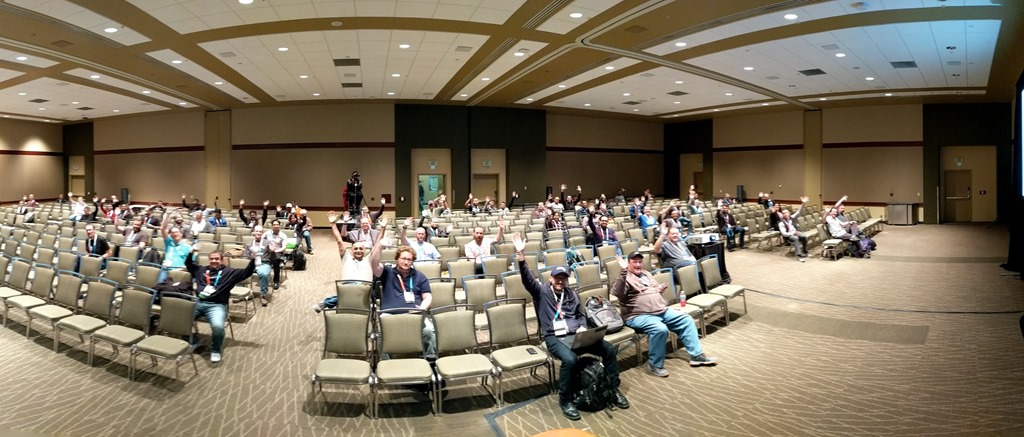
    It started to fill a bit later

    PANO_20181108_132835.vr

    A few selfies, Angela

    IMG_20181108_152737

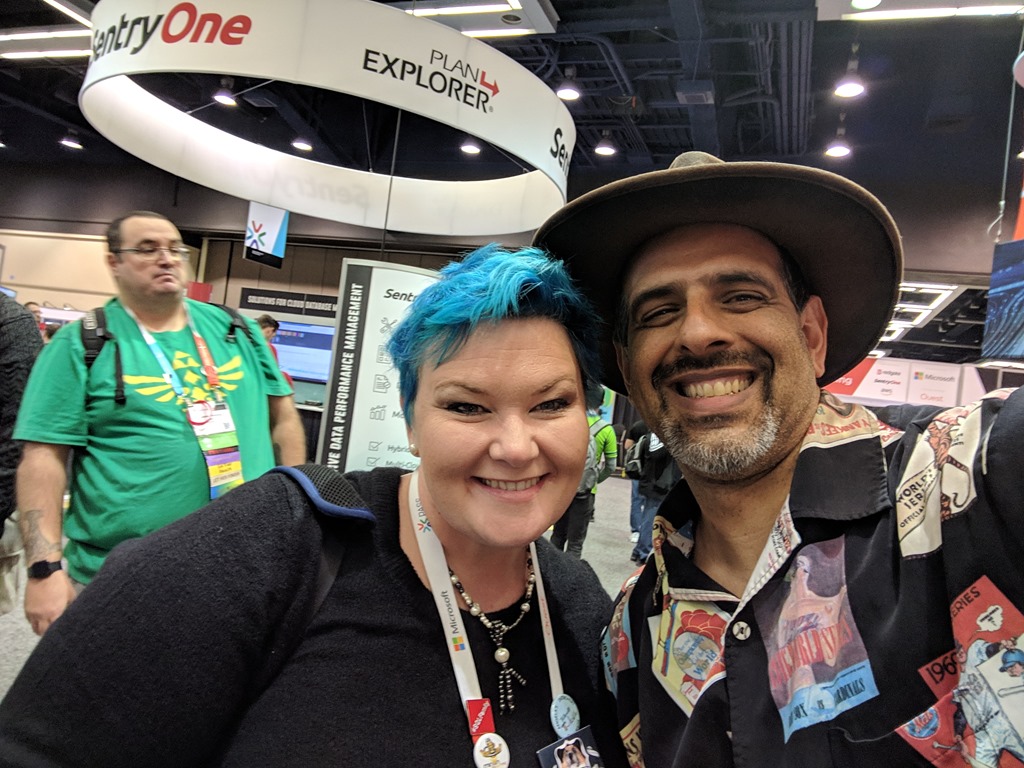
    Mala

    IMG_20181108_153104

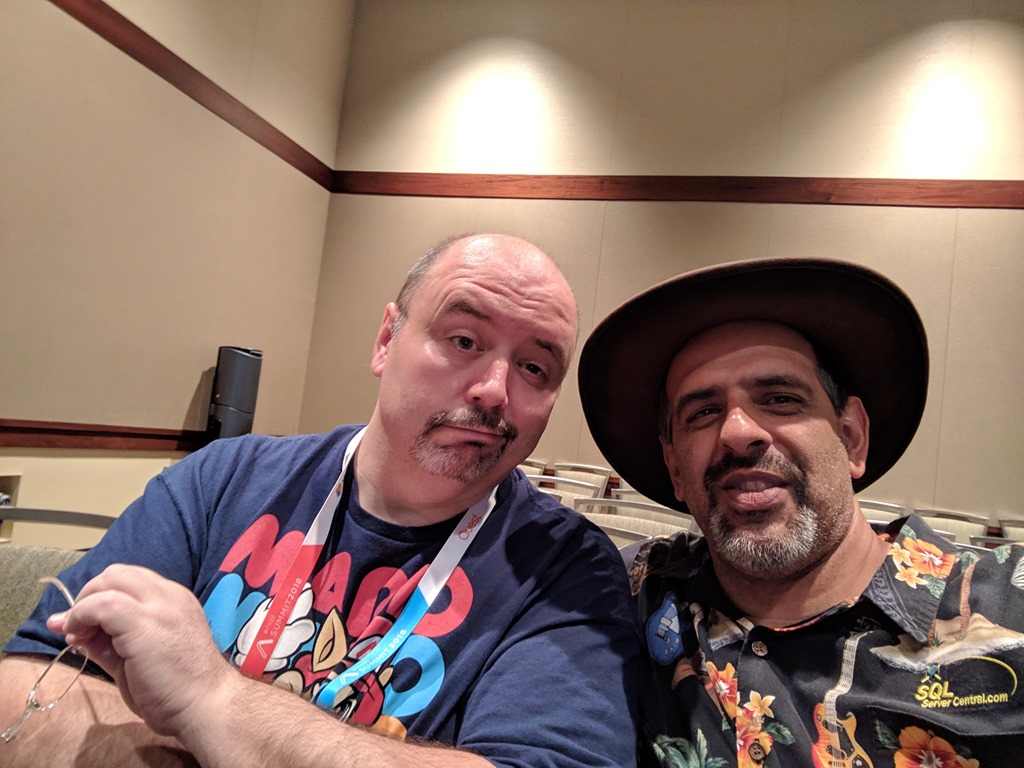
    Bert

    IMG_20181109_101630

    David

    IMG_20181109_104203

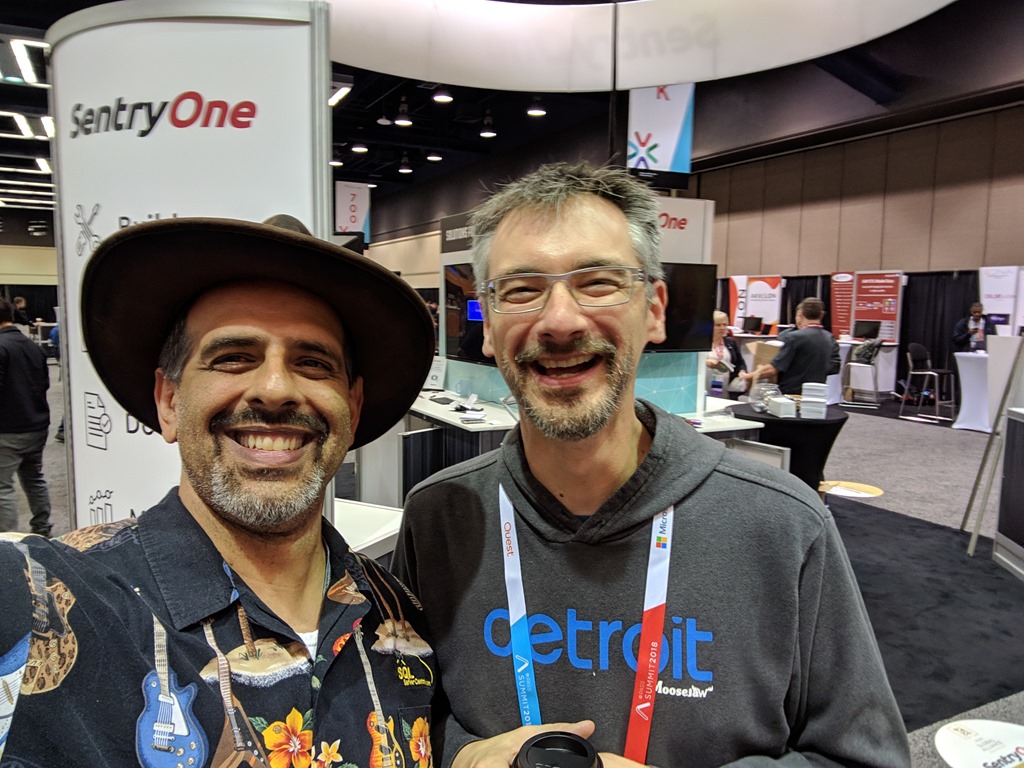
    Brent

    IMG_20181109_140649

    TJ

    IMG_20181109_140711_1

    and my view during a break after Thursday’s sessions.

    IMG_20181108_184625

    Where’s my room?

    IMG_20181109_170845

    It’s a wrap

    IMG_20181109_171149IMG_20181109_171153

    After Friday, a nice walk out the convention center and outside

    IMG_20181109_171323

    IMG_20181109_172519

    Until next year.

  • Internal Controls

    I was browsing the Internet and stumbled on a small part of a larger story that struck me. Many of you may have heard of the story of Jamal Khashoggi, the journalist for the Washington Post that was killed. I hadn’t spent much time reading about the story, and I don’t really want to discuss that topic here. The politics of the situation are not relevent here.

    There’s a part of the NY Times background story that caught my eye when a quote was posted on Twitter. This is part of that quote: ” The intelligence officials told the Twitter executives that Mr. Alzabarah had grown closer to Saudi intelligence operatives, who eventually persuaded him to peer into several user accounts”. Essentially, an employee at Twitter was accused of accessing, and potentially disclosing, sensitive data about customers. This is what I want to discuss.

    In my career, there are quite a few times that I’ve had to access data to solve some problem, debug an application, or produce a report. In many cases, I’ve had to maintain some confidentiality of the data, not even discussing specifics with other employees that were not supposed to view that information. To me, that’s just part of being a professional. We handle all sorts of data, some of which we should never use outside of solving an issue or producing a report.

    As I thought about what was alleged here, I wonder how many social media companies have controls or auditing to determine who has accessed information. Would they be able to actually produce a report that validates some assertion that data was, or was not, accessed. I doubt many companies have these kinds of controls. Unless some Excel file or other export was on a file share, would there be evidence?

    Then I thought does anyone really do a good job of producing audit records for information access? I know some government and law enforcement systems do this (and some legal software), actually tying queries and results to some individual and even a piece of work. That’s not the nature of information for most of us, though perhaps it ought to be.

    Auditing data, especially for information access, could be a huge amount of data. Even keeping a record of all user access for a week in most SQL Server databases might be more data than many of us have in our database. I do think we ought to have the option, and I’d hope that we get more detailed, more capable, and more configurable methods of auditing SQL Server activity in the future (Hint, give us SQL Audit data in a csv).

    Steve Jones

    The Voice of the DBA Podcast

    Listen to the MP3 Audio ( 3.2MB) podcast or subscribe to the feed at iTunes and Libsyn.

  • November Data Platform Releases

    This past week was the PASS Summit in Seattle. It’s an annual conference that attracts thousands of SQL Server and data platform professionals. I am lucky in that I usually get to attend, and this year was no different, although it was a short summit for me. There are some live blogs of the keynotes from Kendra for Day 1, 2, and 3 if you want to catch up.

    Microsoft was there with a large presence, and as always, they delivered a keynote and had plenty of demos that showcase new changes and enhancements for the data platform. In this case, center stage is really SQL Server 2019, though there were plenty of other items shown as well. I was surprised to see the Azure Managed Instance get so many mentions. I suspect this is an easy for for many companies to transition away from an expensive local data center, or to find ways to use less staff and continue to run a SQL Server outside of their existing infrastructure. I don’t know if this is a good fit for most customers, but Microsoft certainly wants you to try it. The Business Critical edition (with business critical pricing) will release as generally available on December 1.

    There were a few releases as well, which you might want to play around with in your lab. First, Azure Data Studio (ADS) got it’s November release. I’m still not certain I love the tool, but Microsoft is working hard to improve it and add features. There aren’t a lot of changes this month, but there are a few more extensions and a number of bug fixes. The paradigm for ADS is just a little off for me, and I’m not quite sure why. I find VS Code to work well for C#, Python, and PowerShell, so why is ADS off for me? Not sure, but let me know in the discussion if you like the tool.

    We also have our second release of SQL Server 2019 with CTP 2.1 being announced. It’s supposed to be available Friday for download, at least as a container, but we’ll see. There aren’t a lot of changes, but there are some. What’s more impressive is Microsoft being able to release a second version a month after the first one. They hope to get to a monthly cadence, which I think is amazing for a large product like SQL Server, especially as Windows struggles with their cadence.

    There is one amazing new feature, which I think will really improve SQL Server performance for many systems: Scalar UDF Inlining. It’s not a panacea, but it should dramatically improve the use of functions in many workloads. There are restrictions, and it’s only SQL 2019, but I look forward to testing a few demos to see how well things perform with this enhancement to the query processor. You should give it a try as well, testing workloads before and enabling compatibility level 150. If you see improvement, maybe there’s a good case to upgrade your instances that might be using lots of functions.

    There are more announcements, especially in the BI area. We get some cool SSRS enhancements, and you might want to watch my friend, Patrick LeBlanc, demo the changes in Power BI. I love Power BI and I think this is going to be the de facto reporting tool for most organizations moving forward. Maybe it will even displace Excel for visuals.

    There are a lot of moving parts in the Microsoft Data Platform right now, which may feel overwhelming to many of us. That’s fine. We don’t have to learn everything, but we can pick something that looks interesting and spend a few hours playing. You never know what you might get inspired to learn more about.

    Steve Jones