Category: Blog

  • Book Review: Lights Out

    I have always been interested in GE since I was a kid. My best friend in high school had a parent that worked for the company for a bit and liked it. The parent was successful and I had GE on a list of companies I’d like to work for as I went into college. I never followed through, but I’ve been alternately impressed and disappointed in the company for much of my life.

    I picked up Lights Out as a business related book that looks at the history of the company from Jack Welch as CEO to recent times. I had always wondered how would look back at Jack Welch over the years, after looking into the company and seeing how much of their success and profitability came from finance, not products. I knew this book might be slightly skeptical of the GE management philosophy, and I read it with that in mind.

    Early Days

    The book is a bit of a flashback. It starts briefly with the transition of the CEO role to John Flannery. It sets the stage that the company is struggling. From there it goes back to Jack Welch, his growth in the company and then the success through his reign.

    The book notes that a lot of the pressure he put on managers was to meet the external expectations of the public and investors. He expanded the role of GE Capital, their financial arm, using the tripe A rating of the industrial company to loan customers money and help finance purchases. This made GE a de facto bank, in addition to their industrial might, and helped stabilize poor performance in some sectors.

    It also allowed the high profits of banking to grow the company without the regulation and oversight banks have.

    Welch also added lots of companies, growing the breadth of GE’s business. At the same time, they turned out impressive managers who could run their businesses. While I always suspected that this wasn’t all true, this book talks about some of the pressures managers faced, the power of a conglomerate to help them hide some shortcomings from investors, while ensuring the overall success of GE continued. I think if I’d joined the company in 1990, I’ve have been at the tail end of a successful run. I also might have expected that dividend to continue through my career, which would have been a problem.

    Immelt

    Welch’s successor struggled. Not the least of which was after 9/11, but some of the success GE had before that was tempered with more regulation of the company as a pseudo-bank.

    I don’t quite know what to think of the GE of 2001-2017. As they tried to lesson their reliance on finance, grow into software, and continue to prove success to Wall Street. In some sense, I saw this as the slow decline of a company that struggled to reinvent itself and move away from some of the heavy industry and finance that had been it’s success story.

    I also think that the author misses some of the changing nature of the world. GE did learn to build better products that lasted longer. Even with the maintenance contracts, sustaining growth in power plants and jet engines would be hard. Certainly they haven’t been able to dominate in software, and it doesn’t seem that Immelt kept up managerial excellence.

    The book doesn’t quite dive deeply into the GE world, being more of a summary across time of what was published about the company and might be inferred.

    Overall

    I don’t know that I learned a lot about business here, other than what I’ve thought. It’s very messy, there isn’t a magic bullet, and you need a lot of resources to recover from the possible bad decisions and mistakes your management makes.

    GE is a success in some ways, but like one of the reviewer’s comments I read. It’s an American story, getting caught up in finance and money, not the basics of building a great product and selling it.
  • Daily Coping 27 Sep 2021

    I started to add a daily coping tip to the SQLServerCentral newsletter and to the Community Circle, which is helping me deal with the issues in the world. I’m adding my responses for each day here. All my coping tips are under this tag.

    Today’s tip is to experiment with a new healthy recipe today for a meal.

    I like cooking, but even if you don’t, find something and give it to the person that cooks for you. Or try something new at a restaurant.

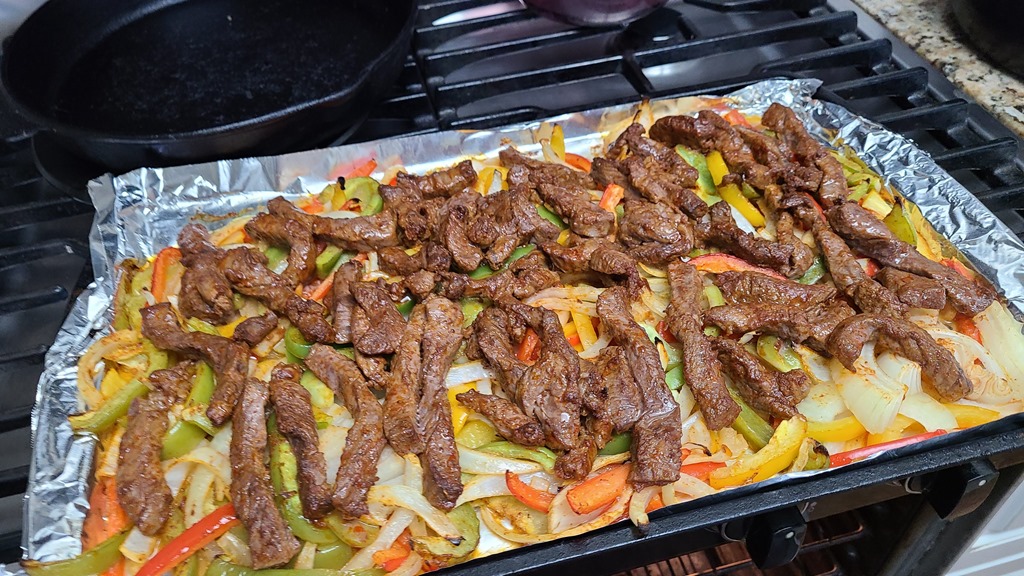
    My wife wanted to do the Whole 30 diet. I’m working to accomodate her, and find some recipes that work for her. I had planned on one thing, and altered it slightly for her to meet the diet. I made some sheet pan fajitas, served over lettuce. Chicken in this link, but  switched to steak.

    20210919_182955

    A big hit with the family, though she didn’t get the guacamole that the rest of us did.

  • The Tesla Charging Experience

    This is part of a series that covers my experience with a Tesla Model Y.

    It’s been a little over two weeks, and the odometer shows about 600 miles. Quite a bit, since we were gone for 5 days out of town without the car. We’ve driven most days, but not all of them, and the charging experience has been interesting.

    This was a capture recently of the main screen after a trip to town:

    20210922_103929

    If you look closely, this is plugged into a 110/120V circuit, pulling 12A, and charging at 5mi/hr. Since a trip to town is 25 miles for me (roundtrip), this means it takes about 5 hours to recharge.

    That’s slightly deceiving as I still have over 250mi of range after a trip to town. These trips usually use about 6% of my battery, but that means I could drive this without charging for over a week back and forth each day without issue.

    Well, the car would be fine. I might be a little concerned.

    Catching Up After Delivery

    We definitely had range anxiety after the first day of driving. We picked up the car and went over 100 miles. When I plugged in at home, the car said it would be over 24 hours to recharge.

    That’s disconcerting, but unlike a quick fill up at a gas station, I can keep recharging each day. While we hadn’t recovered back to a 90% charge before I drove it to the gym the next day, across 3-4 days, we did recover while also driving the car. Each overnight charging session got us a little closer to 90%, with some loss during the day from driving.

    It’s a weird feeling, but I’m getting used to relaxing about the charging.

    Maintaining 88%

    For most of these 2 weeks, I’ve had the max charge set to 88%. Tesla doesn’t recommend going to 100% unless you have a long trip the next day. I see all sorts of recommendations from 70-90, and I ended up at 88%, mostly because the granularity on the slider in the app isn’t great and I got close enough and decided to stop there.

    Almost every night I catch back up 88% after a trip or two each day to town. My wife takes it to do a few errands and some friends have wanted rides, so we sometimes get 50-80 miles of usage in a day, but rarely multiple days in a row.

    If the car hasn’t recharged to 88% before I drive it one morning, it usually does by the next day.

    Better Charging

    I was worried about recharging before I started tracking my mileage. Since then I’ve relaxed a bit, but mostly for the next month or so. In November the weather changes, and since I’ll be coaching again, there will be more trips during the week, and some longer ones to tournaments. Plus, ski season will start and I wouldn’t be surprised if we drove 100-150 miles one day for coaching and then wanted to go 200 to ski the next.

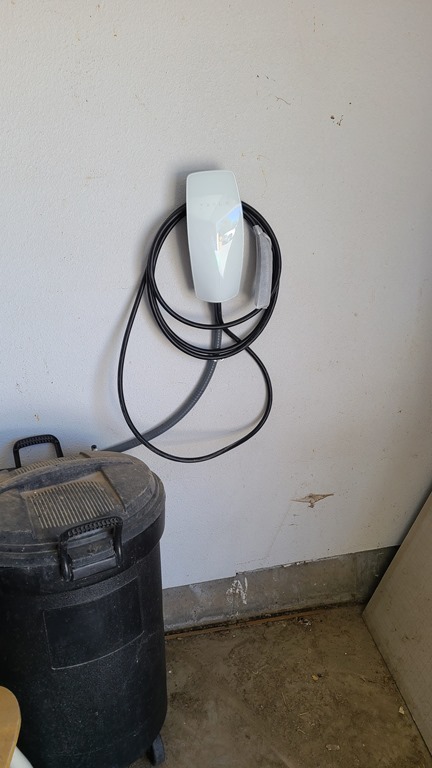
    I purchased a Tesla Wall Charger in August, but have been waiting for an electrician to come out to install it. This is a small job, and ultimately, it only took the team of 2 about 15 minutes to get it hooked up.

    I went from this:

    20210922_103830

    to this:

    20210922_113910

    Charging went up as well:

    20210922_114102

    At this rate, a completely empty battery, which I wouldn’t want, could go from 0-80 in about 6 hours. That’s likely an overnight charge any day of the year for me, since I’m rarely out late.

    I don’t know that we need it, but the US$500 for the charger is worth some piece of mind. The install was $250, but with the 30% tax credit, we would likely get most of that back, so really it’s a $500 investment for me.

    The Bottom Line

    As I noted in the charging post, I think a 110V charging solution would work most of the time. At least, after tracking my mileage I think that. However, that’s summer, and I know that my pattern of driving is different in the winter.

    The Tesla charger seems like a good investment to me, but I had a setup that made this a relatively cheap install. If your breaker box isn’t close to the garage, this could cost more and a few people have said their cost was closer to $500-1000 for an install on top of the charger cost.

    We’ll see how I feel about the investment over time as I track our trips and mileage, but so far, charging hasn’t been an issue. Hopefully my range anxiety will lesson.

    The other bottom line is the cost of driving. Using a few apps (I’m testing them), it seems that I use about 3.5kW to get to town and back. With my current power rates, that’s about $0.45 for the trip. In the BMW, it’s about a $3.80-$4.00 trip right now. If we still had the Prius, this would still be about a $2.00 trip.

    It takes a long time to get a payback for that on a $50,000 car, but it certainly is a dramatic savings over what I was paying in the BMW to go to the gym.

    A video of this post is available as well.

  • Daily Coping 23 Sept 2021

    I started to add a daily coping tip to the SQLServerCentral newsletter and to the Community Circle, which is helping me deal with the issues in the world. I’m adding my responses for each day here. All my coping tips are under this tag.

    Today’s tip is to touch base with a friend and share something you appreciate about having them in your life.

    I don’t do this enough. I did earlier in the pandemic, but I’m starting to try and rebuild some of this habit.

    Today I reached out to a friend in Denver and texted back and forth for a few minutes to catch up and schedule lunch. I told them how much I appreciate the little time we get together and the change to share in each others’ lives.