Tag: car update

  • Favorite Cars

    Ars Technica recently wrote about their favorite cars of 2019, which is an interesting list. They get to test a lot and I read their reviews to see what they glean. I love cars, and enjoy driving different vehicles, and I’ve owned a lot in my life. I think I’ve probably owned and regularly driven 30 cars since I started driving at 16. There was even a period of a few years in my life where I traded in my car for another used one every 11 months.

    I do get to drive or ride in a decent number of cars as I travel regularly and do rent cars at times. In the past year, I managed to rent eight or nine cars last year, all different, though not very exotic ones. Still, it’s always interesting to see how manufacturers change their designs and add technology. I’ve been surprised how much I enjoyed driving around a few cars, such as the Kia Soul.

    This week, I’m wondering what you fellow data professionals out there like to drive. Are there any cars or trucks that you have look forward to getting behind the wheel of and puttering around? I’ve got a long break coming up and perhaps I’ll take a few hours and go drive something around. Give me some ideas of what you like, new or old.

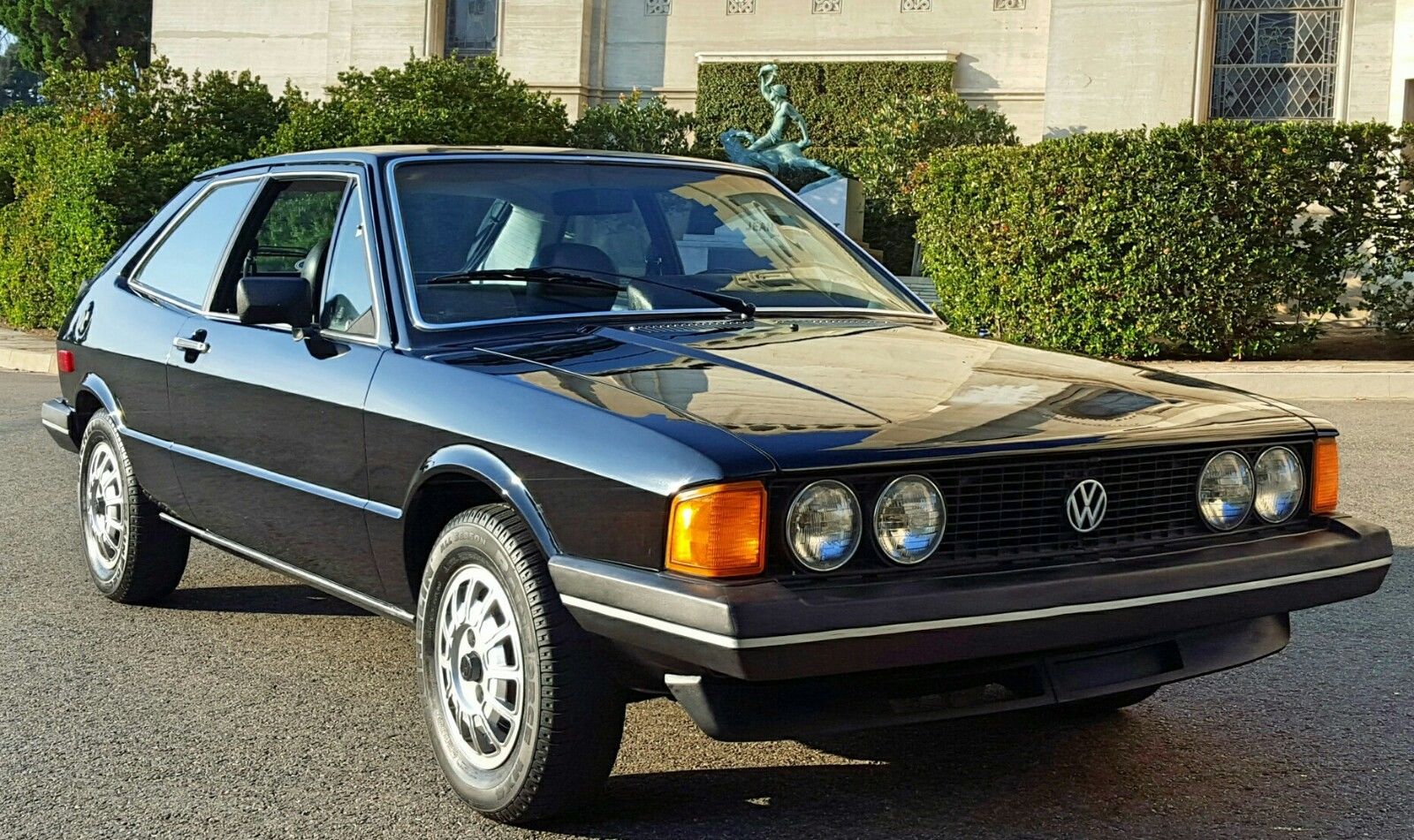
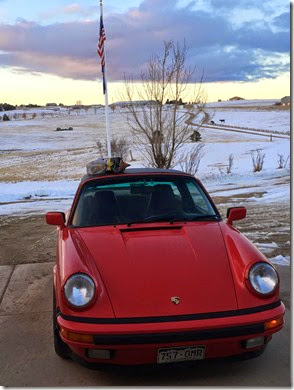
    In my car history, I’ve had quite a few cars I really enjoyed. I’ve had 3 Isuzu Troopers over the years, all of which I liked. The two Suburbans (1988, 2001) I owned were both some of the vehicles I liked taking on trips. An old VW Scirocco in college was a great beach vehicle for me. My 914 and 911s are two I slightly regret letting go, but it was a good decision at the time. I enjoyed our first Prius, mostly because of the MPG when gas was US$4/gal, but it’s not a car I look forward to driving. I would like to get behind the wheel of hybrid Toyota CH-R and see what that’s like. That’s not in the US, but I could try the ICE version.

    My wife likes the Tesla, and I’ve ridden in a few. Not sure it’s the car I want, but it’s very interesting to drive. The idea of electric vehicles makes sense to me, and I expect to see more and more over time. Not sure if we’re ready for one, but we will likely look to get another vehicle in the next 2-3 years, so maybe that will be on the short list. Let me know if you think that’s a good idea.

    Steve Jones

    Listen to the podcast at Libsyn, Stitcher or iTunes.

  • Unreliable Data Sensors

    I like data, and I like cars. I think there have been some really creative and useful integrations between the two. I also think there have been a lot of gimmicks and poorly architect-ed systems, including those that insecurely allow access to vehicular systems. I even worry (very slightly) about the integrations of networks in airplanes.

    The US NTSA has said no to cameras and displays in place of side view mirrors. These are on the new Audi e-tron SUV, and would use a camera and a display on the door to show the rear view. While this certainly might help mileage, and it could allow for technology to perhaps sharpen or identify something in the display, I also worry about a couple issues. If you want to know what this looks like, here’s a review that shows this.

    First, there is the safety issue. I find backup cameras, even very new clear ones, to be harder to look at than a rear view mirror. Granted, these do show a view the mirror can’t show, but I wouldn’t want to use these when I was moving at anything above a slow 5mph backup speed. The ability to gauge distance is much harder. I would worry that I’ve both look in the wrong place, and also struggle to see the display in some weather conditions. Not to mention potential dirt, water, etc. on the camera lens. Already my backup camera is often too dirty to use.

    The second issue, and this is the bigger one for me, is that this technology isn’t anywhere near reliable enough to use in this situation. While it might work well at any point in time, I find too many issues with advanced electronics in cars that fail more often and with a much higher cost. At just over 4 years, when the warranty in my current car expired, one of the cameras in the side mirror failed. While it doesn’t appear to be hard to fix this, it’s a an expensive part (US$400). And an annoying, albeit unimportant, error on the display.

    I’m all for new technology, and I think things like the lane change warning and other tools are fantastic. ABS and traction control are lifesavers. Backup cameras have saved me or others a few times. Adjusting mirrors and other responsive improvements are fantastic, though I certainly want to ensure these devices let me know if there is any failure. Others have been less exciting, like locks that don’t operate without power.

    We know there are issues with lots of data, and we know that sensor data also needs to be checked and verified, as well as occasionally discarded. Vehicles have dramatically opened up our world and given billions abilities to access goods and services they might never otherwise see. However, there are safety issues that should override any new technology that hasn’t proven itself not only to operate at a very high reliability level, but also in a way that operators can easily adapt to using.

    Steve Jones

    Listen to the podcast at Libsyn, Stitcher or iTunes.

  • The Android Car

    I’ve been a car guy for most of my life, admiring them, owning quite a few (20+), and enjoying lots of time behind the wheel of a vehicle. I’ve been lucky enough to own my dream car for a few years and even had the chance to drive a few unusual cards. While I haven’t driven a Tesla, I have ridden in one when the pedal was mashed to the floorboard (thanks, @GlennAlanBerry). That’s quite an experience, and one I’d recommend if you don’t have heart issues.

    This week I ran across a note that Volvo’s spin-off brand, Polestar, was unveiling an all electric car. This is their answer to a changing world where it seems every manufacturer wants to combat Tesla with an electric version of something. I might consider the Porsche Macan in an all electric version at some point, but the Polestar 2 is interesting for a reason besides the electric drive train. It’s the first production car that is build around Google’s Android system as the operating system for the car. There are entertainment systems using Android Auto, but this is a step higher.

    What I find interesting, and perhaps disturbing, is this move to more electronic integration for our vehicles, and the potential for issues if the operating system fails. I already think that we’ve built a few too many integrations in mechanical cars at times, where we can’t easily open doors, tow cars, or more if the electrical system fails. While I trust a plane or ship more because they are better maintained by mechanics, I worry about the durability and potential issues with updates for cars that are in daily use by users that might not take the best car of them. After all, people drive every day with small mechanical issues. I worry what this will mean for autos.

    There’s also the trust that we must have in both Google and Volvo to ensure that security is tight, patches are extremely well tested, and perhaps just as important, our privacy is respected. Google already gathers lots of data about us; do we want to give them more about how lifestyle? Will they sell data to insurance companies or others? I don’t know what other data might be captured, but I do worry that there are issues I haven’t considered, especially around security. Maybe even more disconcerting might be the charges for keys, updates, and more that will get added onto already expensive vehicles. What if systems become locked down to the point that only vendor mechanics can work on them?

    I like the idea of better designed and more efficient vehicles, and think that all electric is the future. This despite my longing for a manual transmission in my next car. However, I’m not quite sure I’m ready to trust a phone operating system to run lots of parts of my car. Already I think there ought to be open-source, embedded systems for any mechanical control  and security features that are completely separate from entertainment, without any access to the outside world. While I like DevOps and innovative software, what I worry about is the focus from many companies on features and costs, and not on security and quality.

    Steve Jones

  • Auto DevOps

    As much as I like DevOps, this scares me. There are a lot of employees (20%) at BMW that are software engineers. They want to increase that to a larger percentage, which I assume means that we’ll have more and more code in our automobiles, with more systems tightly integrated. We’re even gathering more and more data in modern vehicles. Maybe there are good database job opportunities for some of you with automakers.

    If there’s one thing we’ve learned in a few decades of writing software, it’s that large monolithic systems are a mess. They contain vulnerabilities, and more importantly, they are very difficult to patch and change. All of the DevOps success stories I’ve seen from large systems have either been a complete rewrite, or a long term refactoring that removes dependencies and tight couplings between modules.

    In cars, we’ve seen all sorts of hacking issues. Hackers can attack a vehicle remotely and a faulty (or hacked) update might leave you in trouble. Granted these things aren’t that likely, yet, though I think this piece understates the potential problems. I think that because once a hack is discovered, how sure are we that a) it will be reported to vendors (hackers might just exploit it), or b) that a fix will certainly be developed that works well and doesn’t cause any issues (remember 10s of millions of lines of code current year cars), and c) consumers will apply the patch. That last item worries me, especially if cars become more connected and share data about operation or as we move to autonomous (semi- or total) vehicles.

    Personally I’m not against code in vehicles. I’m not even against some connected systems. What I am against is a monolithic, tightly coupled system. I don’t want engine control or drive by wire sharing a network or code with a CD player or navigation system. I don’t want one computer controlling vehicular functions, entertainment, and climate control. I also want to be sure that there is some protection for all this data, to be sure it doesn’t overwhelm any system. I’ll also admit I like idea of upgrading or replacing parts from different vendors, some of whom might do a much better job of building systems.

    We’ve learned a lot about software and complex systems. While I don’t want all manufacturers to use one system or have tight regulations, I would like to see some mandates that separate critical systems from each other. Both in code, and physically. We don’t need to specify code standards, or encryption, or any details, but let’s ensure that a base bar of building software is being used in any of the mass produced vehicles, planes, trains,  automobiles, or anything else of substantial size that is operated by the general public.

    Steve Jones

    The Voice of the DBA Podcast

    Listen to the MP3 Audio ( 4.7MB) podcast or subscribe to the feed at iTunes and Libsyn.