Tag: car update

  • Energy news that caught my eye

    I’ve been a big fan of nuclear energy ever since I worked at a power plant. Before that I was terrified and didn’t think it was a good idea, but I learned quite a bit about how it works and while there are issues, I think it’s a good source to consider.

    If we redesign the reactors. Right now we use old designs, old technology, and we could make them more efficient and much more safe.

    I ran across this piece on Small Nuclear reactors. These are in the 200-300MW range, as opposed to the 1,000-2,000MW reactors that we use today. Those large ones cost $10b, as opposed to a $1-2b investment, a much more manageable cost for many power companies. I could see smaller companies putting these up, with much lower operating costs and potentially giving us true energy independence.

    I have a fascination with wind power. I’ve wanted to get a vertical axis wind turbine (VAWT), but few companies make them, and there are mixed views on whether or not these are efficient. I caught a piece on a field of VAWT. These are much less noisy, and potentially the wakes from them don’t interfere with the other turbines, resulting in more density. I hope these work, and become affordable enough for me to get one.

    Barring the VAWT, the HAWTs now can come with batteries, to keep power flowing more consistently. This isn’t really for residential users, but for large commercial users, giving power vendors the chance to ramp up more expensive (and dirty) alternatives if the load is growing.

    Also, some auto news. Finally I see something on fuel cell vehicles. I had high hopes for these years ago, with thin platforms. This is similar to what the Tesla has, and the idea would be that you could actually purchase multiple bodies (sports car, truck, sedan) and change them out on demand.

    fuelcell

    With hybrids and fuel becoming cheaper (after two wars), this idea dropped off the radar.

    Perhaps it’s back. I know the hydrogen infrastructure is an issue, but the same thing holds true for natural gas vehicles, and I have friends buying those now. There are only a few stations in Denver, but they make them work, especially for commuting.

    I like the Tesla, and I loved the 90s battery change. The economics don’t make sense, but the idea is great. I would love to see this for fuel cells as well. Rather than fueling to start, what about changing out jerry-can sized “fuel” cells at a station. The station and refill them as needed, and drivers wouldn’t spend too much time filling their cars.
  • Car Data

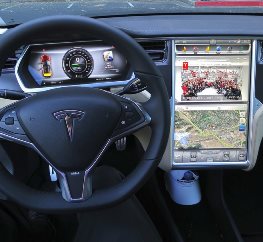
    I don't know if I like this layout, but I like more data being available from my car usage.
    I don’t know if I like this layout, but I like more data being available from my car usage.

    I really like cars. In my lifetime I have owned more than my share of vehicles, and I always look forward to renting new makes and models when I travel, just to drive something different. As cars have evolved over the last few decades, there are some things about the changes I love, and some things I dislike. Personally I like the idea of a key fob that enables me to unlock the car and start the engine with a button without pulling the keys out of my pocket. However, as someone that’s lost my share of keys, I’d prefer a real key as a backup mechanism. Unfortunately that doesn’t seem to be an option many manufacturers want to provide. I dread having to replace a $200 “smart key” at some point in order to drive my car.

    Cars have implemented a wide array of technology over time, some of which drivers are not even aware. These days cars gather an impressive amount of data, though probably not quite at the scale of the new Dreamliner. Or maybe they do. According to this article, cars can produce “hundreds of MB/s” in data acquisition. I would guess most of that data is thrown away, but some may not. I was quite impressed with the amount of data Tesla logged during the recent test drive controversy with one of their vehicles.

    All this data, and the potential need to manage it, mine it, and perhaps make it available to other applications, is another sign of just how important our jobs as data professionals may be in the future. More and more of the things we encounter on a daily basis are creating data that we may turn into information for business decisions through creative uses of software. While some parts of our database systems may become easier to use, I suspect there are no shortage of new skills we will need to learn in the future to make sense of our data.

    Mobile technology, whether with cell phones or transportation (planes, trains, and automobiles), will become more prevalent in our lives in the next decade. I suspect this will mean many more opportunities for data professionals. Especially as I’m sure there will be new regulations and requirements that will keep software developers and database professionals busy modifying applications as legislation tries to catch up with the creativity of technologists.

    Steve Jones


    The Voice of the DBA Podcasts

    We publish three versions of the podcast each day for you to enjoy.

  • The Auto OS

    Will we see more integration of computers and cars in the future?
    Will we see more integration of computers and cars in the future?

    Those of you who have followed SQLServerCentral for a long time know that I like cars. I used to do car updates periodically, and still get in car debates on times over Twitter. I love my cars, and despite the age of a few of them, they’re all doing well. My Prius still gets 47-50 mpg (depending on weather) and it’s proven itself to be a great investment. It’s even paid off, and as gas prices rise, I use it more and more.

    For much of automotive history, the advancements have taken place under the hood or in the mechanical systems of the car. Computers have been a part of design and even operation for a long time, but primarily to keep the mechanical systems operating at a high efficiency. The interactions with drivers have mostly  come from entertainment or climate systems.

    That changed a little with the introduction of navigation systems, that allow a driver to spend less time finding destinations and concentrate on driving. I know that hybrids that surface efficiency information to the driver have changed the way I drive, even when I’m in another car. I suspect the same is true for many people that purchased cars with the idea they would save money on fuel. I suspect in the future we will get more interactions with cars in new ways, perhaps even in ways we hadn’t considered before.

    Cars are becoming more complex, and many have their own OSes inside. This might be the next OS war, after the mobile phone competitions that are ongoing between iOS, Android, and Window Phone. I suspect that these two are closely intertwined as I think integration between a mobile vehicle and a mobile phone is essential and I hope there are good APIs and standards that allow any phone to work with any car.

    Data integrity and security will become more important in the mobile platforms as we use them for more services. I hope that companies are paying attention to these issues, and ensuring they not only hire great developers and software engineers, but also good data professionals to help them build their systems. I suspect that isn’t the case, but perhaps a few of you will find jobs in the automotive industry and become strong advocates for data security.

    Steve Jones


    The Voice of the DBA Podcasts

    We publish three versions of the podcast each day for you to enjoy.